
DiamondTrail Ranch Florida field guide
💧Emergency Water Storage for Homestead Animals
Calculate, store and rotate a realistic water reserve for mixed livestock during Florida heat, hurricanes and well-power failures.
The direct answer
Start here
Base emergency water storage on each species' observed normal daily use, then add margin for heat, lactation, spills, container failure and delayed resupply. Store potable water in safe containers, rotate it and maintain a backup way to move or produce more water.
The Florida difference
Why generic advice is not enough
Heat, humidity, tropical rain, long parasite seasons, sandy soils and hurricane disruptions change how this topic should be managed in Central Florida.
- Well systems may stop when electricity fails.
- Heat and humidity can raise drinking needs while outages also stop fans and pumps.
- Hurricanes can block roads and contaminate wells or surface water.
- Mixed-species homesteads need separate assumptions; a rabbit and a cow cannot share one generic gallon estimate.
Step-by-step
Practical checklist
Use this as a starting routine, then adjust it for your animals, property, equipment and professional guidance.
- 01
List every animal by species, size and production stage.
- 02
Measure actual daily use during ordinary and hot weather.
- 03
Choose a planning period and add a spill and delay margin.
- 04
Use food-safe containers sized so they can be moved safely.
- 05
Label fill dates and rotate water into normal chores.
- 06
Store containers shaded, secured and above likely floodwater.
- 07
Keep clean hoses, funnels and buckets dedicated to potable water.
- 08
Identify generator, hand-pump, hauled-water and off-property refill options.
- 09
Protect wells after flooding and follow local testing guidance.
Understand the whole system
The complete written guide
Calculate from reality, not a viral chart
Published consumption ranges are useful starting points, but temperature, dry matter intake, milk production, body size and health can change use dramatically. Measure what your animals actually consume and confirm unusual needs with a veterinarian or Extension professional.
Calculate each group separately: normal daily quantity multiplied by animal count and reserve days, then add a safety percentage. The website calculator handles the arithmetic but cannot determine the correct biological input for you.
Choose containers that can actually be used
Large tanks hold efficiently but become immovable when full. Smaller food-safe containers are easier to carry but create more lids and surfaces to keep clean. A layered system can combine bulk storage with manageable transfer containers.
Do not repurpose containers that held fuel, pesticides or unknown chemicals. Keep stored water away from sunlight, manure, rodents and flood exposure.
- One gallon of water weighs about 8.3 pounds.
- Use secure lids and label potable versus non-potable water.
- Keep species-appropriate buckets and drinkers ready.
Protect quality and rotate supplies
Start with potable water and clean containers according to public-health guidance. Storage life depends on container, sanitation and conditions, so establish a rotation schedule rather than forgetting water indefinitely.
Floodwater, roof runoff and ponds may contain chemicals, sewage, salt or disease organisms. Do not offer them simply because they look clear.
Plan beyond the stored reserve
Stored water buys time; it is not the entire continuity plan. Know how the well will operate safely on generator power, where potable hauled water can be obtained and how containers will be transported if roads reopen before electricity does.
Reduce preventable waste by checking trough valves and leaks before storm season. Never restrict an animal below safe hydration needs to stretch a dwindling reserve—seek assistance before the supply becomes critical.
Avoidable setbacks
Common mistakes
- Using one gallon figure for every species
- Counting a powered well as stored water
- Using contaminated secondhand containers
- Storing everything in one tank with no transfer method
- Forgetting spills and heat margin
- Letting animals drink standing floodwater
From our two-acre Central Florida ranch
What this looks like in real life
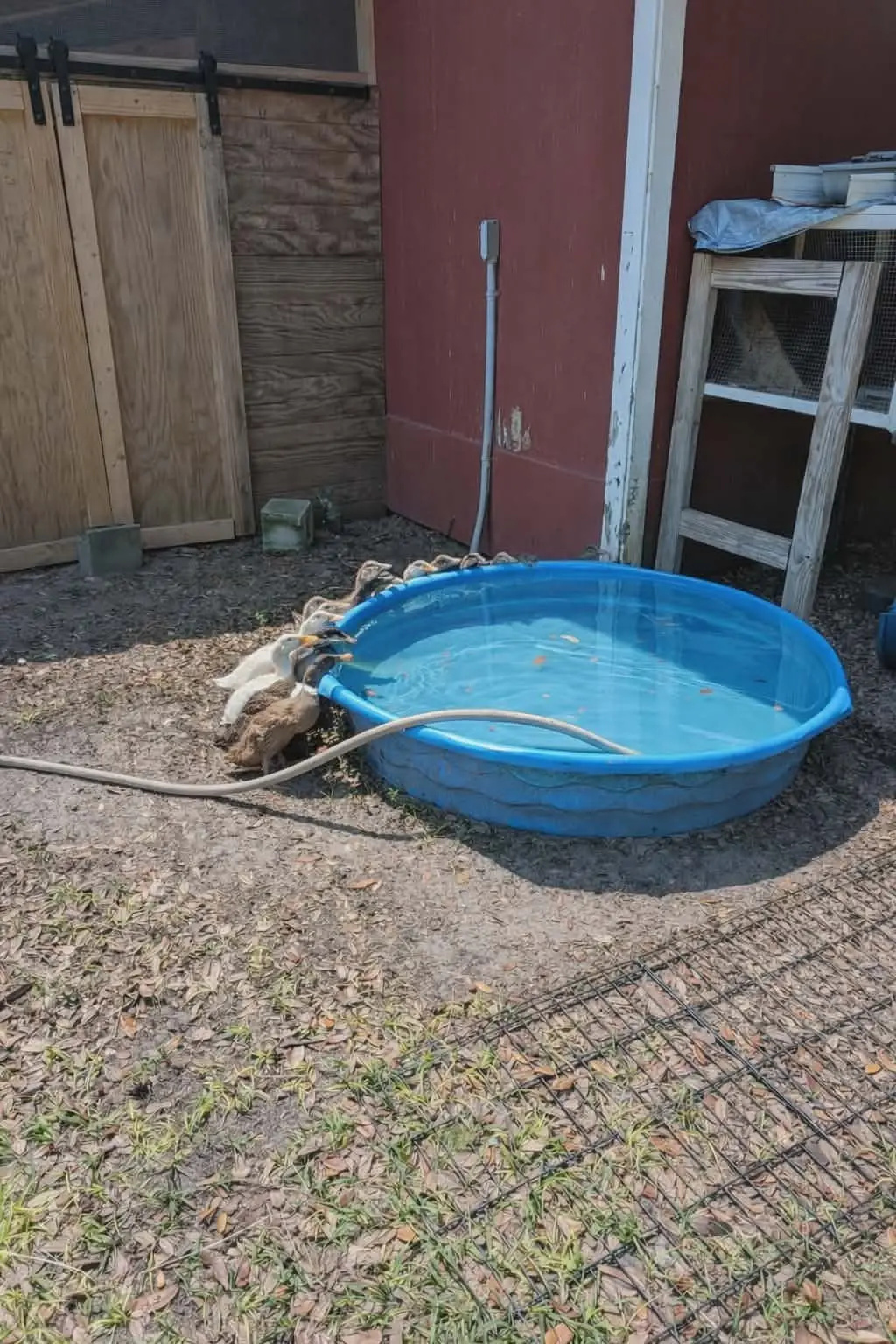
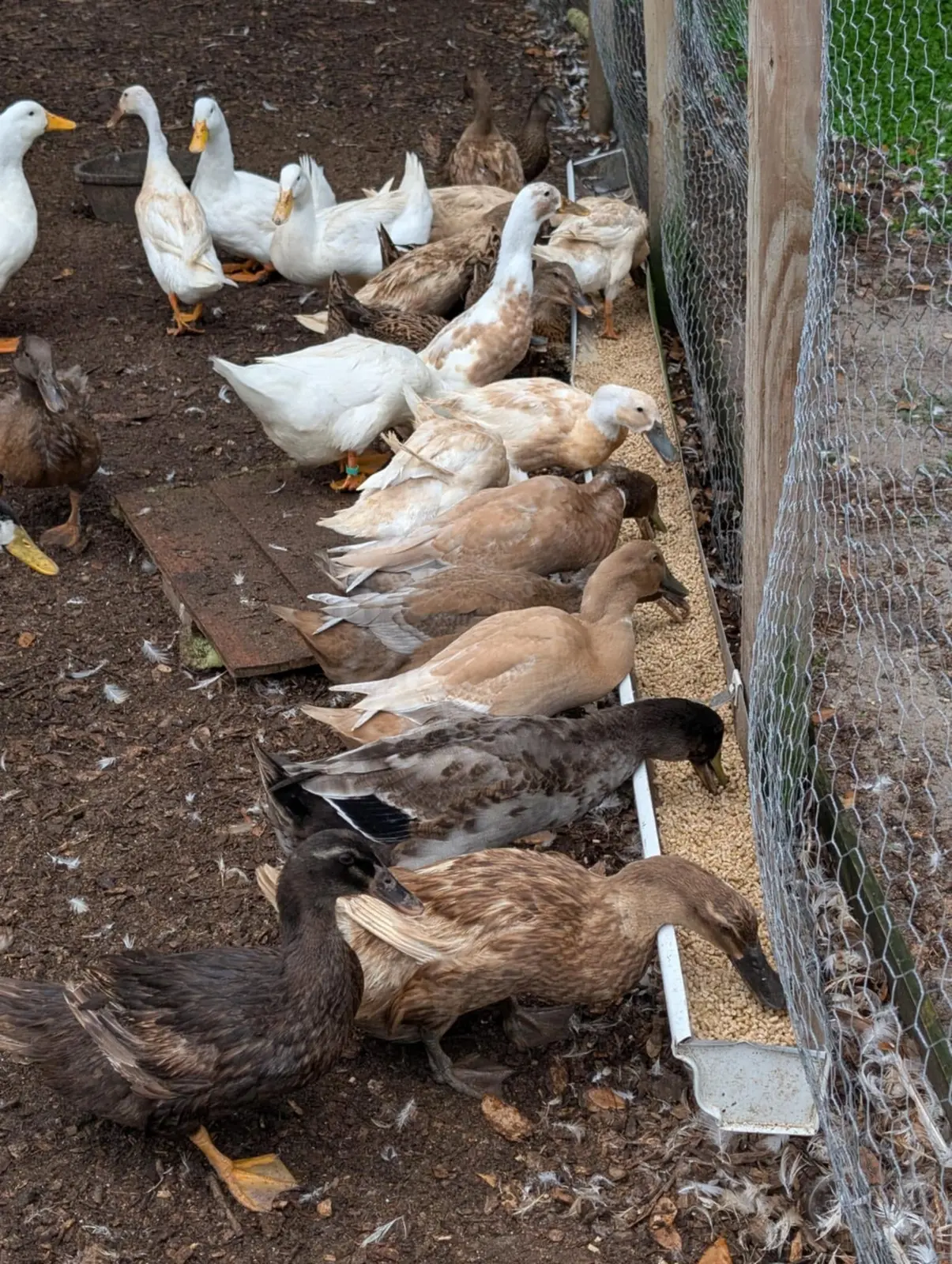
Our homestead depends on a well and includes poultry, rabbits, goats, pigs, cattle, horses, a donkey and dogs. A power outage therefore becomes a livestock water problem immediately, not only a household inconvenience.
We plan by animal group and container, because the useful question is not just total gallons—it is whether that water can be kept clean, moved and delivered to every pen.
We are building the matching video library alongside these written guides.
See it from the ranch
DiamondTrail Ranch Emergency & Hurricane Videos
Written information is most useful when you can connect it to real chores, real animals and the lessons that do not fit inside a checklist.
Continue learning
Related DiamondTrail Ranch resources
Verify and go deeper
Official & trusted sources
Faith. Family. Farming. Freedom.
Practical Florida homesteading—without pretending everything goes perfectly.
Subscribe for the videos that show how these plans work on a real Central Florida family homestead.
Subscribe on YouTube ↗Educational disclaimer: This guide provides general Florida homesteading education. It does not diagnose, prescribe, guarantee outcomes or replace veterinarians, Extension professionals, emergency managers, certified arborists, product labels or responsible local authorities. Conditions vary by animal, property and county; verify time-sensitive decisions directly.