Materials
Gather these supplies
- Two known food-grade buckets
- Permanent label
- Fine sandpaper or deburring tool
- Clean wash water
 DiamondTrail Ranch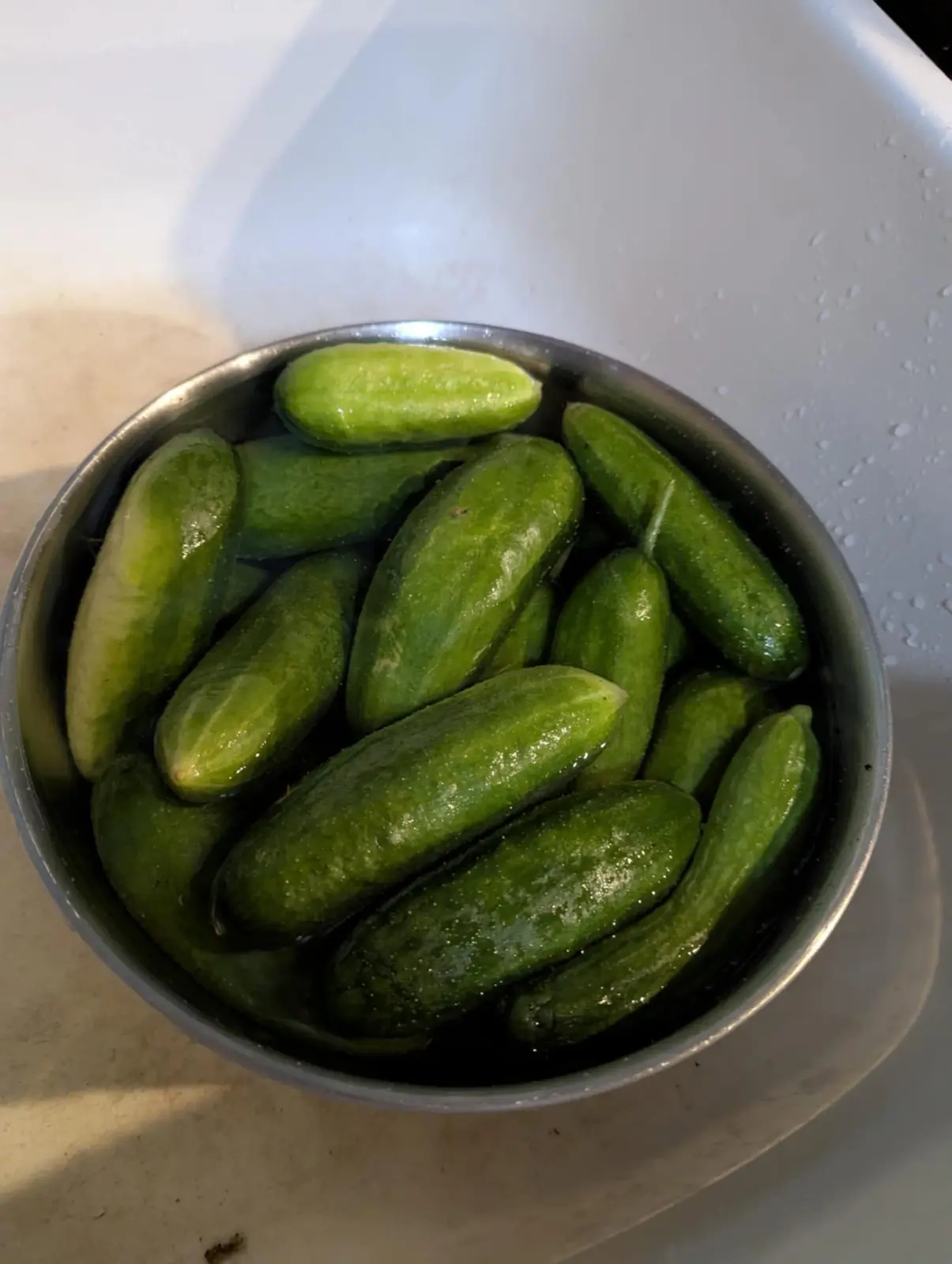
Free step-by-step project guide
A drilled inner bucket that lifts sturdy produce out of rinse water and drains above the garden.
What you are making
Pair two known food-grade buckets so the inner basket drains quickly and remains easy to scrub.
Materials
Tools
Measurements
Build it in order
Read the entire plan before making the first cut or hole. The check under each step tells you when it is ready to move forward.
Use the cleanest bucket for produce and label it only for harvest washing.
Mark holes across the bottom and lower sidewall while leaving the rim solid.
Support the bucket and drill slowly so burrs form mainly on the exterior.
Smooth both sides of every hole and wash away all plastic shavings.
Set the colander inside the solid bucket, add water and lift by both handles.
Rinse sturdy produce, lift, drain and transfer to a clean drying surface.
Use and maintenance
Safety boundaries
Build alongside our family
These written plans give you the order and measurements. Our YouTube videos show the ordinary problem-solving, repairs and family work that inspired this library.
Use the rest of the material
Reused materials and sites vary. Inspect every material, follow the manufacturer’s tool instructions and use appropriate protective equipment. Stop and ask a qualified person when structural loads, electrical work, pressurized plumbing, drinking water, hazardous coatings, animal security or local requirements exceed your experience.
 Easy · 30 minutes plus growing seasonGrow Potatoes in a 5-Gallon Bucket
 Easy · 20–45 minutesTurn a Bucket into a Garden Tool Tote