Materials
Gather these supplies
- Known food-grade or irrigation-rated lidded container
- Commercial cart/trailer with published payload
- Rated tie-down straps
- Low-flow bulkhead valve
- NON-POTABLE WATER labels
 DiamondTrail Ranch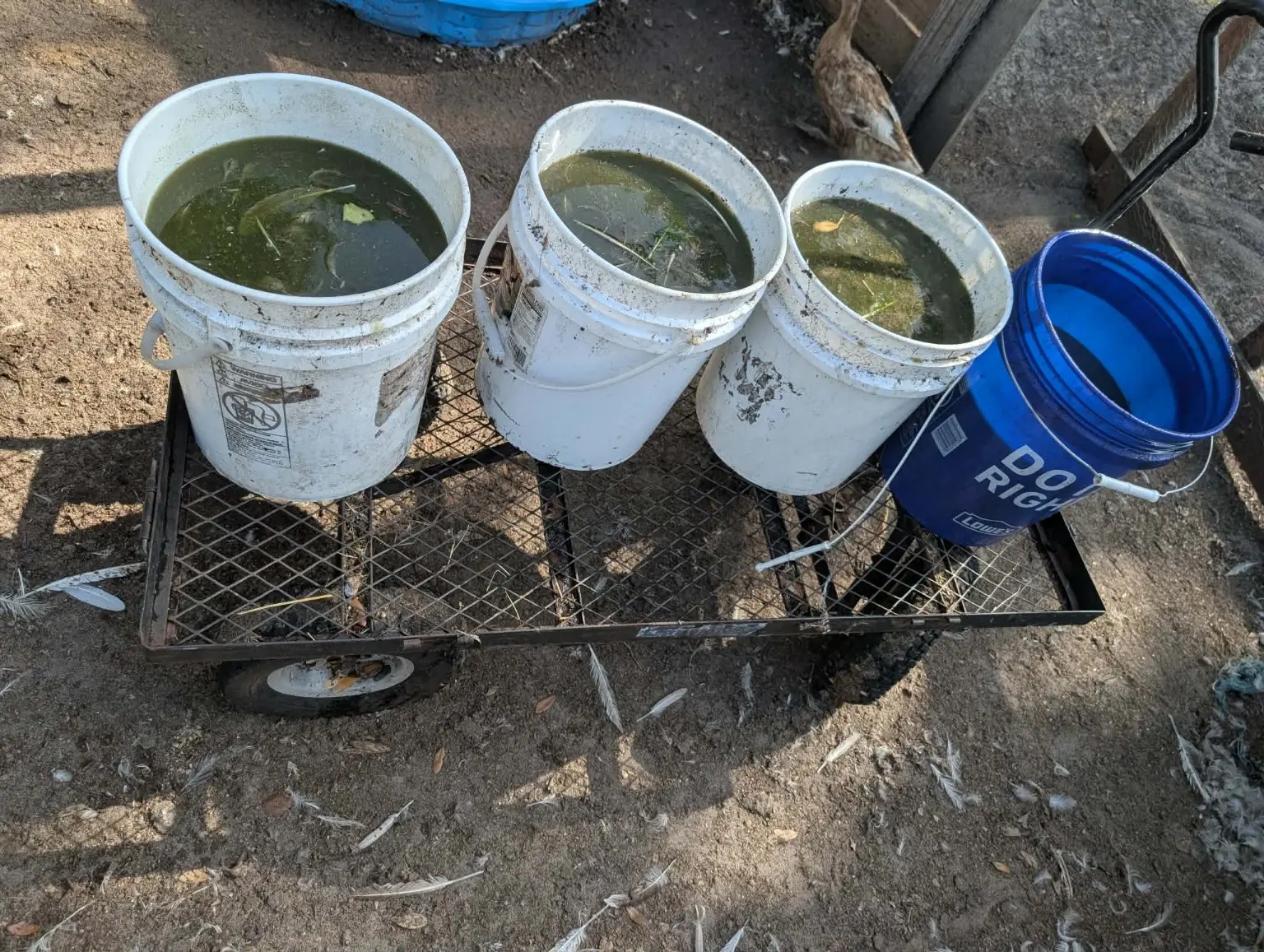
Free step-by-step project guide
A restrained guide to moving non-potable irrigation water only with equipment rated for the complete load.
What you are making
Secure a lidded barrel to a purpose-built cart or trailer whose published payload exceeds the filled system weight.
Materials
Tools
Measurements
Build it in order
Read the entire plan before making the first cut or hole. The check under each step tells you when it is ready to move forward.
Find the cart or trailer’s published payload and never infer capacity from appearance.
Calculate gallons from the remaining payload after container and hardware weight.
Use a proper bulkhead fitting and a protected valve that cannot strike the ground.
Place the container low and centered, then use rated straps in two directions to structural tie points.
Fill 10%, 25% and 50%, moving slowly only on level private ground while checking steering and braking.
Mark maximum fill, walking speed, route and unloading procedure on a waterproof card.
Use and maintenance
Safety boundaries
Build alongside our family
These written plans give you the order and measurements. Our YouTube videos show the ordinary problem-solving, repairs and family work that inspired this library.
Use the rest of the material
Reused materials and sites vary. Inspect every material, follow the manufacturer’s tool instructions and use appropriate protective equipment. Stop and ask a qualified person when structural loads, electrical work, pressurized plumbing, drinking water, hazardous coatings, animal security or local requirements exceed your experience.
 Advanced / get help · Half a dayConvert a Food-Grade Barrel into a Covered Rain Collector
 Advanced / get help · 2–3 hoursMake a Smooth Half-Barrel Hay Catch
 Moderate · 2–3 hoursBuild a Half-Barrel Container Garden