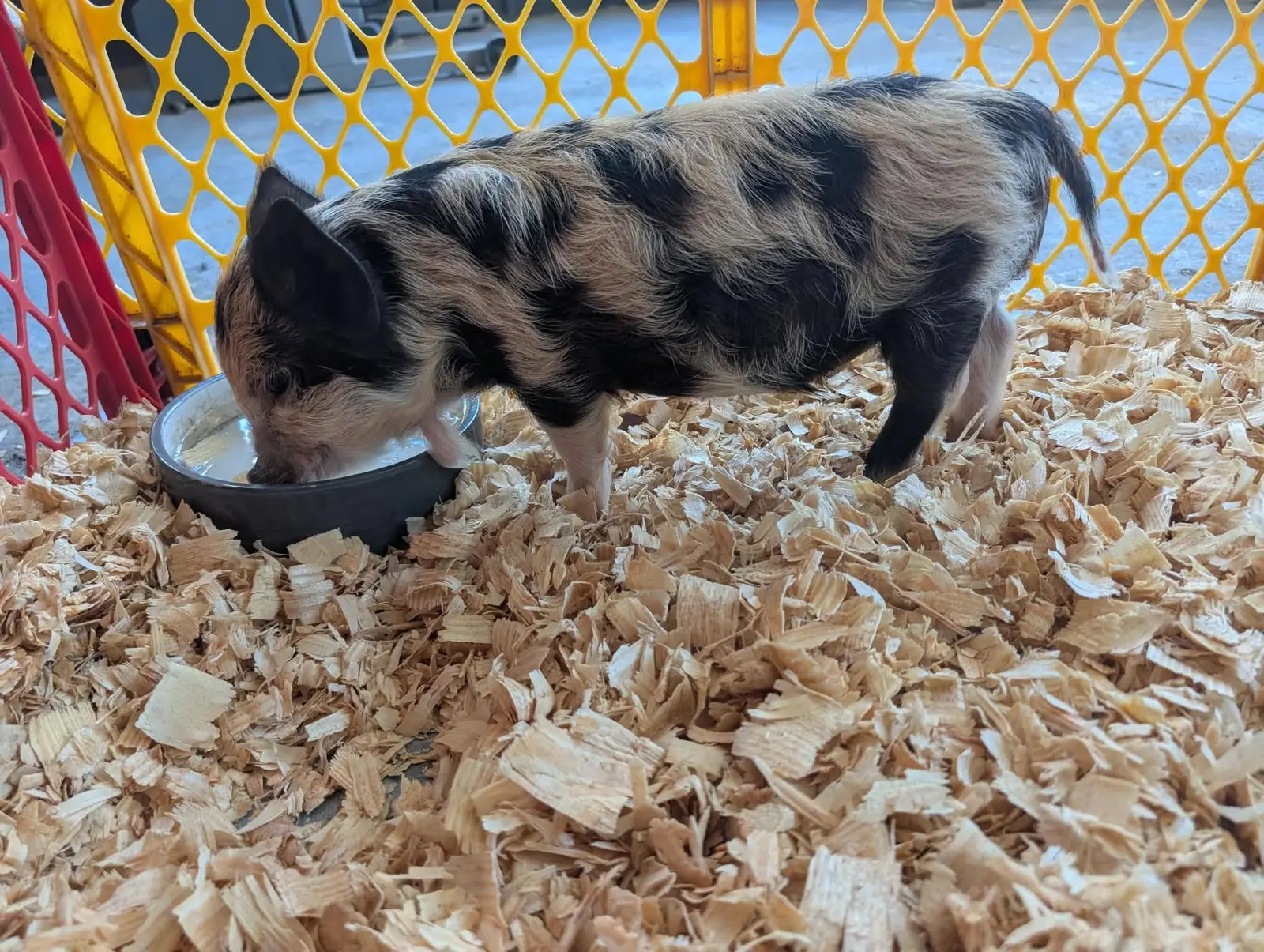
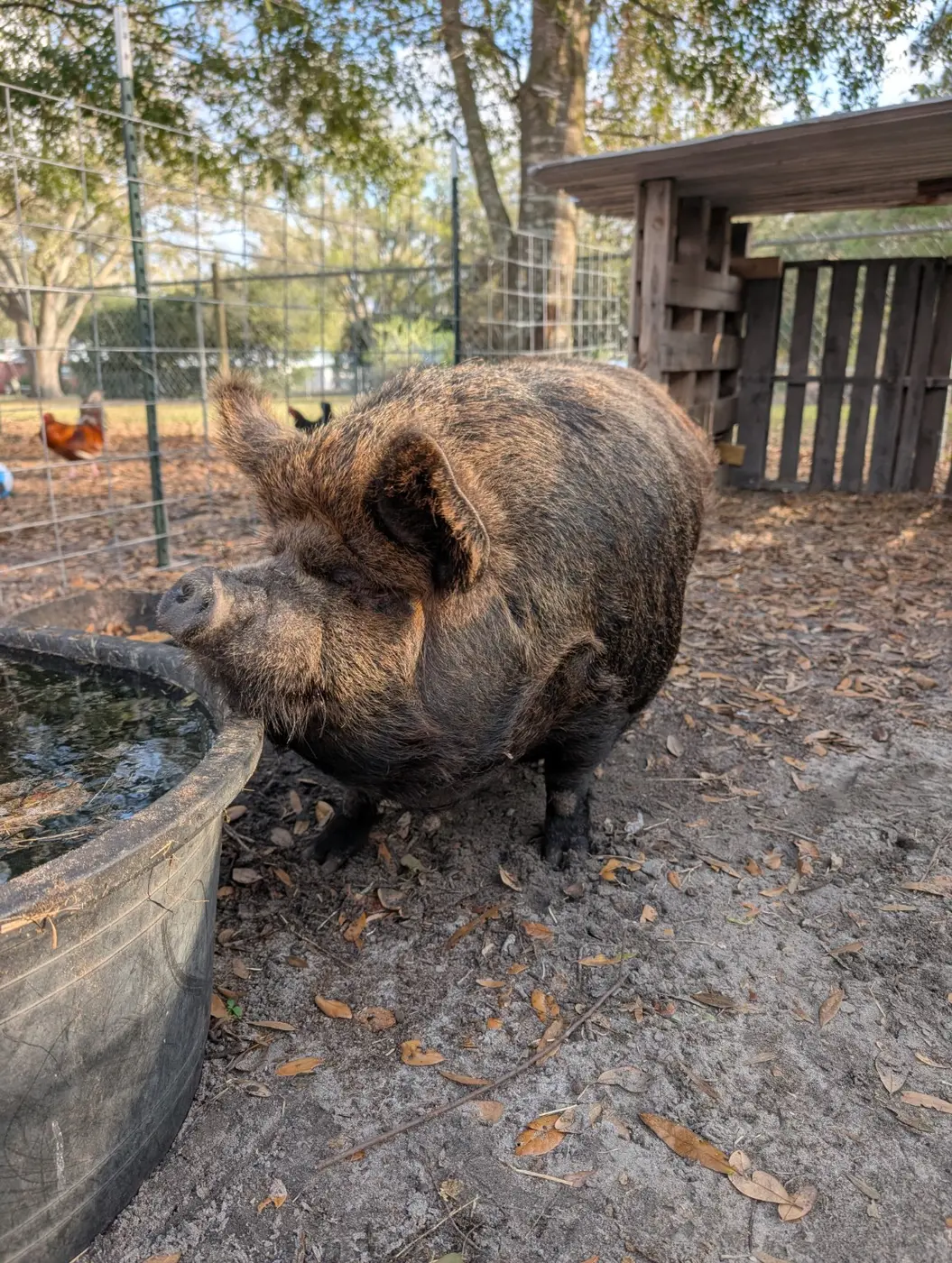
Arnold was tiny once. A good pig setup plans for an adult animal from the beginning: strong boundaries, shade, a dry bed, water that cannot disappear and a realistic feeding routine.
This is not a universal shopping list. It is the short list we would use to begin planning the property, chores and backup systems before bringing this species home.
A secure enclosure built for adult strength
A dry shaded shelter
A heavy or secured water container
Species-appropriate feed storage
A cooling and shade plan
A safe way to move or temporarily contain the pig
Kuna, whose gradual weight journey appears in our family videos
A real chapter from our Kune Kune story
Meet Kuna
Kuna is our female Kune Kune pig. She came to our family overweight, so from the day she arrived we began a gradual, closely observed plan to help her move toward a healthier condition. Our videos document that continuing journey honestly, the routines, the patience and what we learn along the way, without treating one pig’s story as a feeding plan for every pig.
Piglets grow, push, root and test. We look at every latch and fence line as if the adult pig were already there.
Solid shelter from sun and rain
Secure fencing with attention to the bottom edge
A gate wide enough for equipment
A separate space available when needed
02
Water & cooling
A tipped bowl in Florida heat is an emergency waiting to happen. Heavy containers, backups and shade make daily checks far less stressful.
A secured primary water source
A second water container
Shade over resting areas
A plan for safe cooling without creating permanently wet bedding
03
Feed & storage
Kune Kunes can make people think grazing alone answers every feeding question. We treat feeding as something to plan with reliable breed, veterinary and local guidance.
Dry rodent-resistant storage
A feeder that can be cleaned
Room to feed animals without crowding
A simple body-condition and chore journal
04
Florida reality check
Mud arrives fast during summer rain, while dry sandy areas can still become hot. Pen placement and shade matter as much as the shelter itself.
Observe drainage after a hard rain
Protect the sleeping area from runoff
Keep transport options in mind
Check fencing after storms and fallen limbs
From our YouTube channel
Kune Kune Pig School
Follow Arnold and our family’s experience raising Kune Kunes from piglets to adults in this DiamondTrail Ranch playlist.
This page’s written guide provides the practical information behind the video. The YouTube player provides caption controls when captions are available.
Family experience, not individual professional advice
These pages share our family’s experience and questions we believe beginners should ask. Needs vary by animal, property and location. Use appropriate veterinary, agricultural, emergency and local sources for decisions specific to your situation.