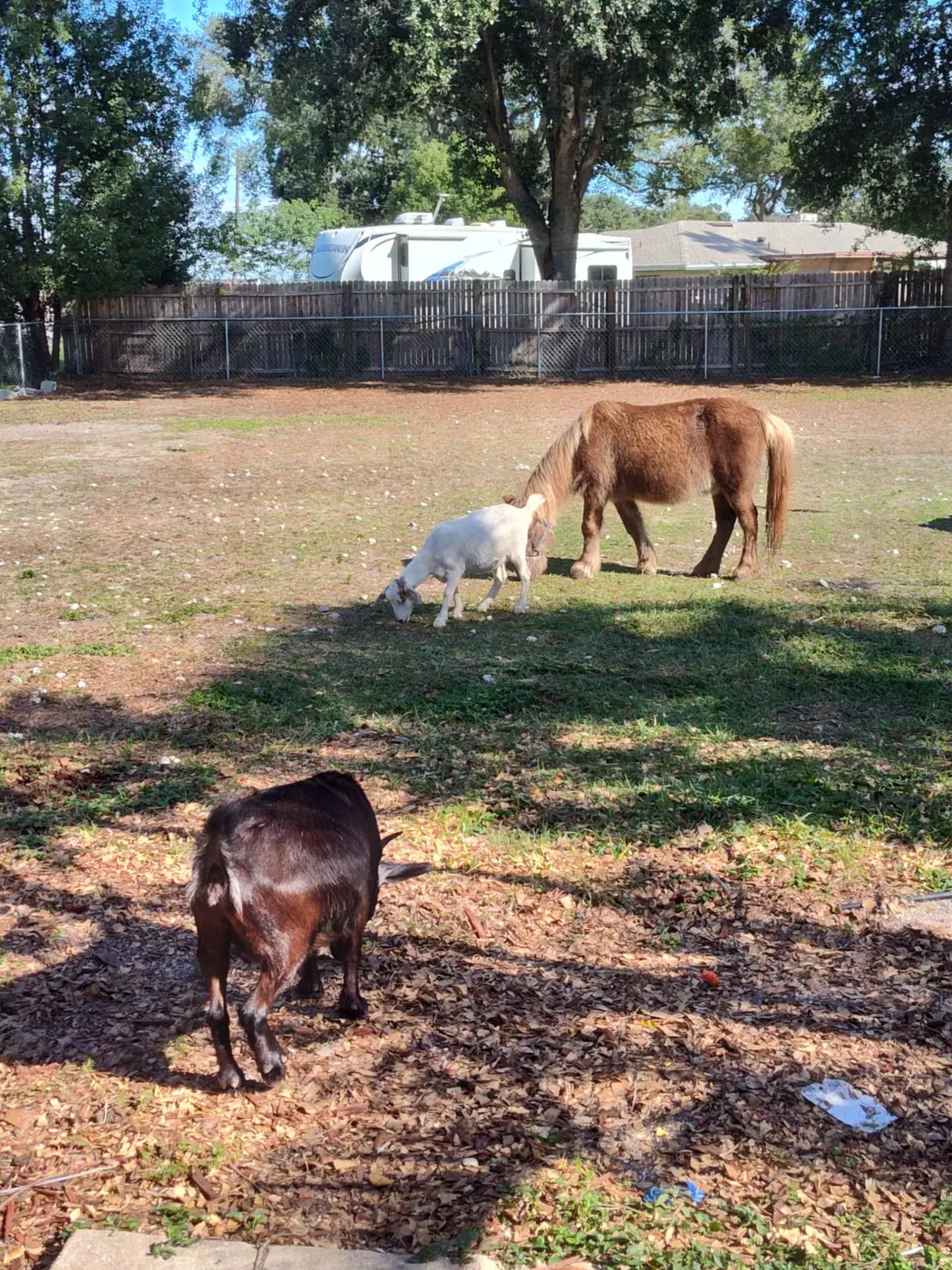
By Amanda Grimes-Shokes, owner of DiamondTrail Ranch and a Florida homesteader sharing the family's Hurricane Milton records alongside cited official guidance.
Published 2026-08-04 · Last meaningfully updated 2026-08-04
What to do first
The livestock hurricane plan
A livestock hurricane plan starts with an accurate animal inventory, identification and photographs; a species-appropriate shelter or evacuation decision; confirmed transport and destinations; separate feed and water reserves; and a safe post-storm containment plan. Weak structures should never be assumed safer than an appropriate open area solely because they have a roof.
Start with these checks
A quick household checklist
01Animal roster and ID
02Veterinary records
03Shelter or evacuation decision
04Transport and destination
05Temporary post-storm containment
01
Plan by species and by individual
Poultry, rabbits, goats, pigs, cattle and equines do not share the same transport, feed, cooling or social needs. Build one master roster, then a short sheet for each group with handling limits, medications, normal feed and water, compatible companions and emergency contacts.
Mark animals with an identification method appropriate to the species and professional guidance. Keep current photos from more than one angle and records both printed and digital.
02
Compare the actual shelter with the actual hazard
UF/IFAS notes that well-fenced open pasture on high ground may be safer than a weak barn during high winds. That is not a universal turnout instruction. Flooding, debris, power lines, trees, fence strength, local orders and the quality of each structure change the decision.
Have a veterinarian, Extension professional or other qualified local adviser review unusual species, medical needs and site hazards before hurricane season.
03
Design recovery around containment
The first post-storm release should follow a full fence and shelter inspection. Keep gates closed until fallen trees, damaged wire, debris, standing water and electrical hazards are accounted for.
Prepare a smaller safe pen or alternate pasture so animals do not have to wait in a damaged primary area while repairs are made.
Official supporting sources
Verify the details at the source
These links support the general information on this page. During a real incident, find the newest instructions for your exact location.
General educational information, not real-time emergency instruction
This page shares general information and the way our family thinks about preparedness. Conditions and official instructions change. During an emergency, follow current local authorities and qualified professionals. This is not individualized medical, veterinary, legal, electrical or emergency-management advice.