Fresh seed from a ripe papaya usually germinates readily, but the resulting plants and fruit may vary. Raise several seedlings because papaya plants can be male, female or bisexual, and protect them from cold and wet roots.
Florida timing
When this project makes sense
Start after cold danger when a long warm season remains. Papaya is tropical and can be injured by frost, wind and waterlogged soil even in Central Florida.
Gather before starting
What you will need
One ripe papaya
Fine strainer
Paper towel
Four-inch pots
Fresh sterile potting mix
Labels
Warm protected growing area
Step by step
Follow these steps
1
Scoop seeds from a ripe fruit and place them in a strainer.
2
Rub gently under running water to remove the gelatinous outer coating.
3
Dry for a day if planting immediately, or several days before short storage.
4
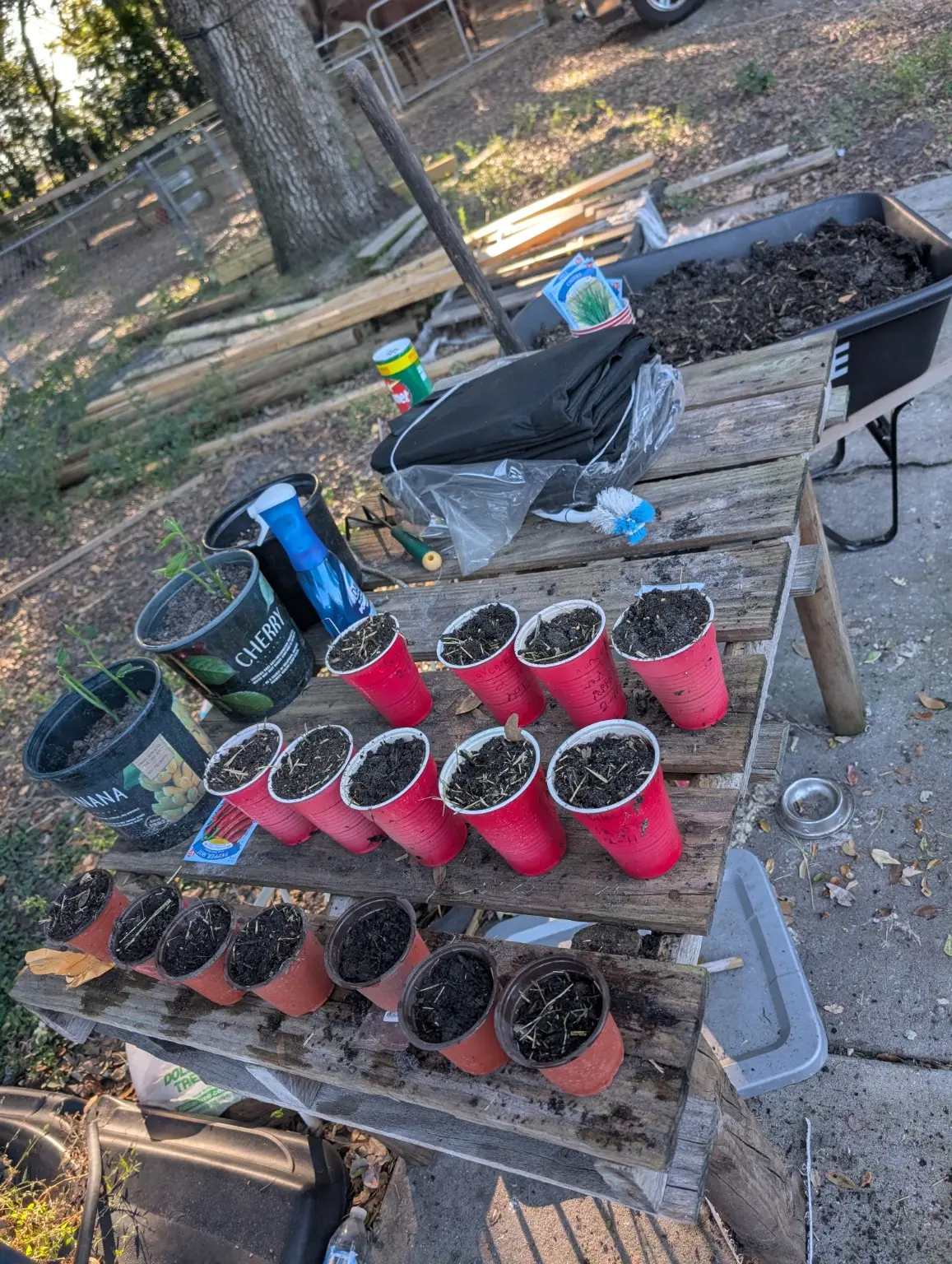
Sow several seeds one-quarter inch deep in each pot and keep warm and evenly moist.
5
Thin weak seedlings after true leaves form, retaining more than one plant for a sex-selection trial.
6
Harden seedlings gradually and transplant into full sun, excellent drainage and wind protection.
7
Mulch the root zone but keep mulch away from the soft trunk.
8
Observe flowering before deciding which mature plants to retain.
01
Grow several, not one
Papaya seedlings are not all guaranteed to flower the same way. A single seedling can grow beautifully and still fail to provide the flower type needed for dependable fruit.
Starting several plants creates options, but only if the yard has room to evaluate them without crowding.
02
Drainage is non-negotiable
Papaya roots and stems decline quickly in saturated soil. Plant on a raised, draining site rather than the low spot where summer rain collects.
A shallow basin that helps one fruit tree can become a bathtub around a papaya.
03
Cold and wind set the limits
Papaya grows quickly in warmth but has a soft trunk and large leaves. A protected microclimate can help with wind, while frost can still end the experiment.
Keep expectations regional: South Florida conditions and Central Florida conditions are not interchangeable.
Supporting sources
Verify the important details
These are the public sources we used for timing, safety and Florida-specific context. Open the newest guidance for your location.
General growing information—not a guarantee for every yard
This page shares general information and our Central Florida family-homestead experience. Weather, soil, water, plant material and county conditions differ. Check current UF/IFAS guidance, labels and the appropriate qualified source for important decisions.