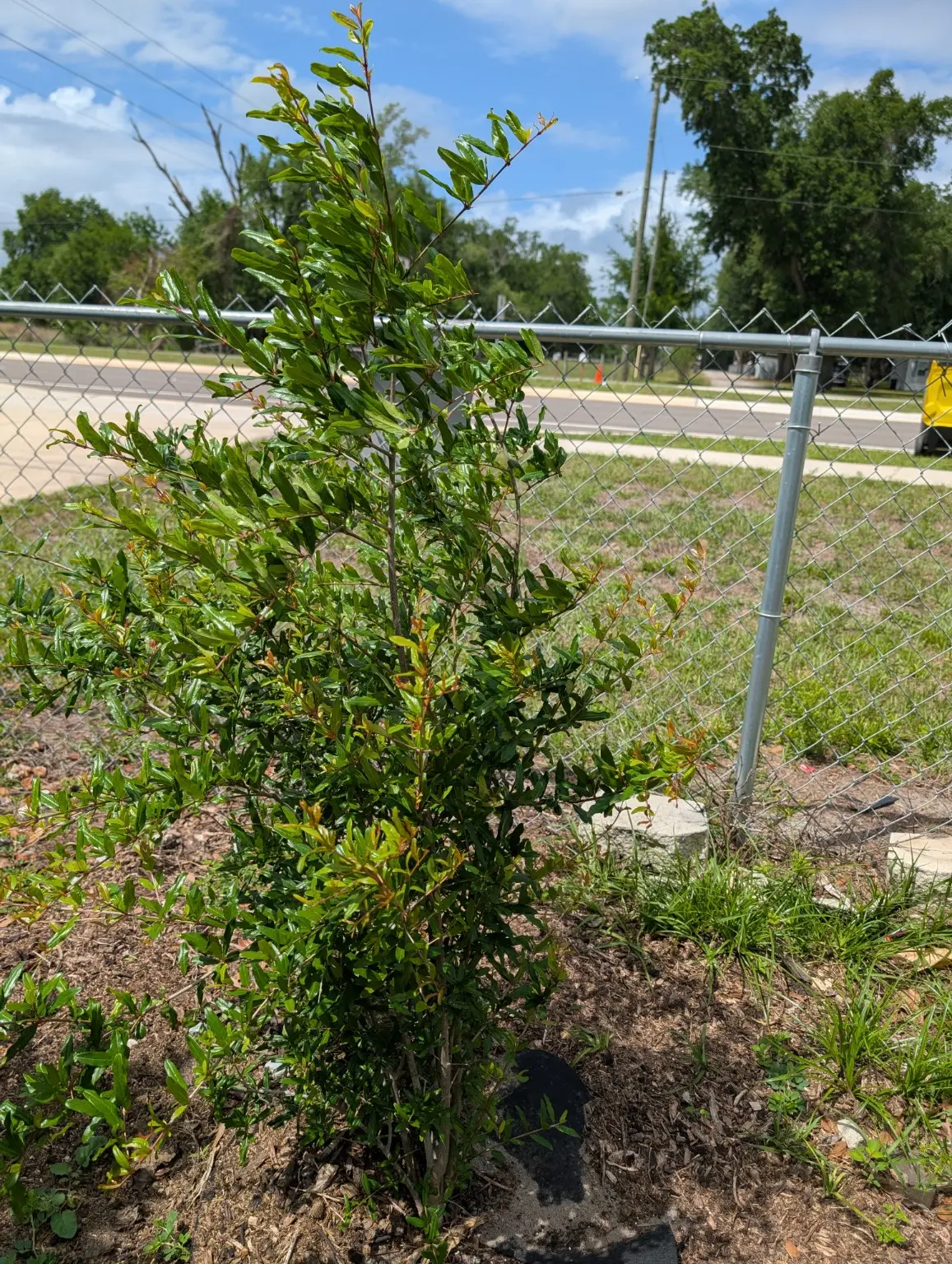
A beginner-friendly plan for choosing a Florida orchard site, selecting suitable fruit trees, spacing them honestly and planting them at the right depth.
Start smaller than your dream orchard. Map the sun, drainage, utilities, mature tree sizes and water access first; then plant two or three Florida-suitable trees correctly and learn their rhythm before filling every open space.
Florida timing
When this project makes sense
Tree selection depends on your exact Florida location. Container-grown tropical fruit can often be planted during warm weather when irrigation is dependable, while many deciduous fruit trees are easiest to establish during cooler months. Match every tree to your USDA zone, chill hours, soil drainage and local UF/IFAS guidance.
Gather before starting
What you will need
Graph paper or a simple yard sketch
Tape measure and marking flags
A nearby, dependable water source
Shovel wider than the nursery root ball
Two to three locally suitable fruit trees
Mulch for a wide ring—not a trunk volcano
Tree labels and a simple watering log
Step by step
Follow these steps
1
Watch the yard for a full day and mark areas with at least six hours of direct sun.
2
Check drainage after heavy rain and avoid spots where water stands around future roots.
3
Call 811 before digging and mark wells, septic areas, fences, overhead lines and future access lanes.
4
Choose fruit varieties for your Florida zone, chill hours and pollination needs—not only the fruit photograph on the tag.
5
Draw every tree at its mature width. Leave room to mow, prune, harvest and move a cart between trees.
6
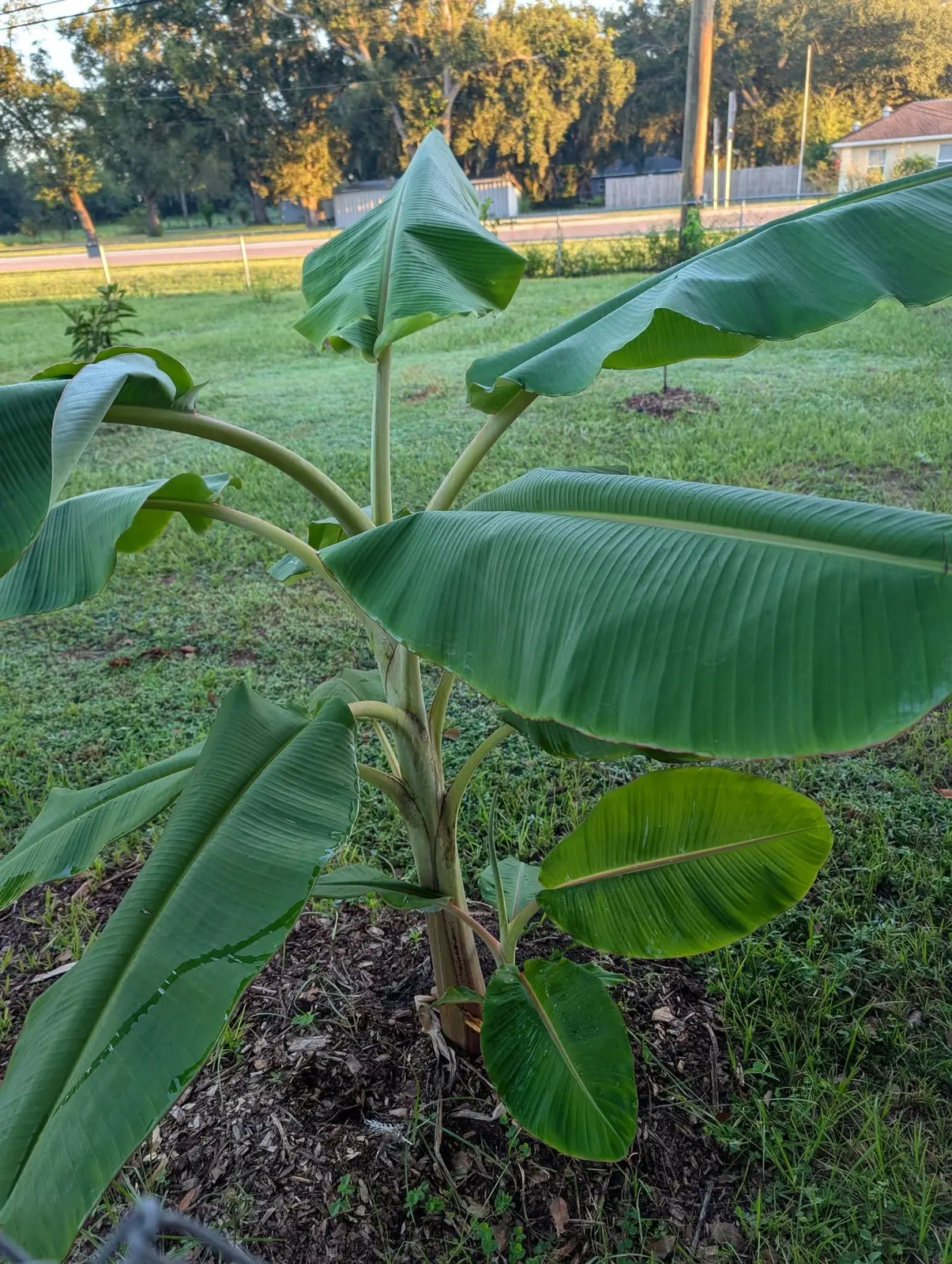
Set the first tree so the topmost main root and root flare sit at or slightly above the finished soil level.
7
Backfill with the soil that came out of the hole, water deeply and remove air pockets without burying the trunk.
8
Add a wide mulch ring, keep mulch away from the trunk and begin a first-year watering log.
01
Choose the place before choosing the trees
Our orchard decisions begin with ordinary systems: where the hose reaches, where rainwater sits, where animals travel and where a mature canopy can spread without swallowing a fence or roof.
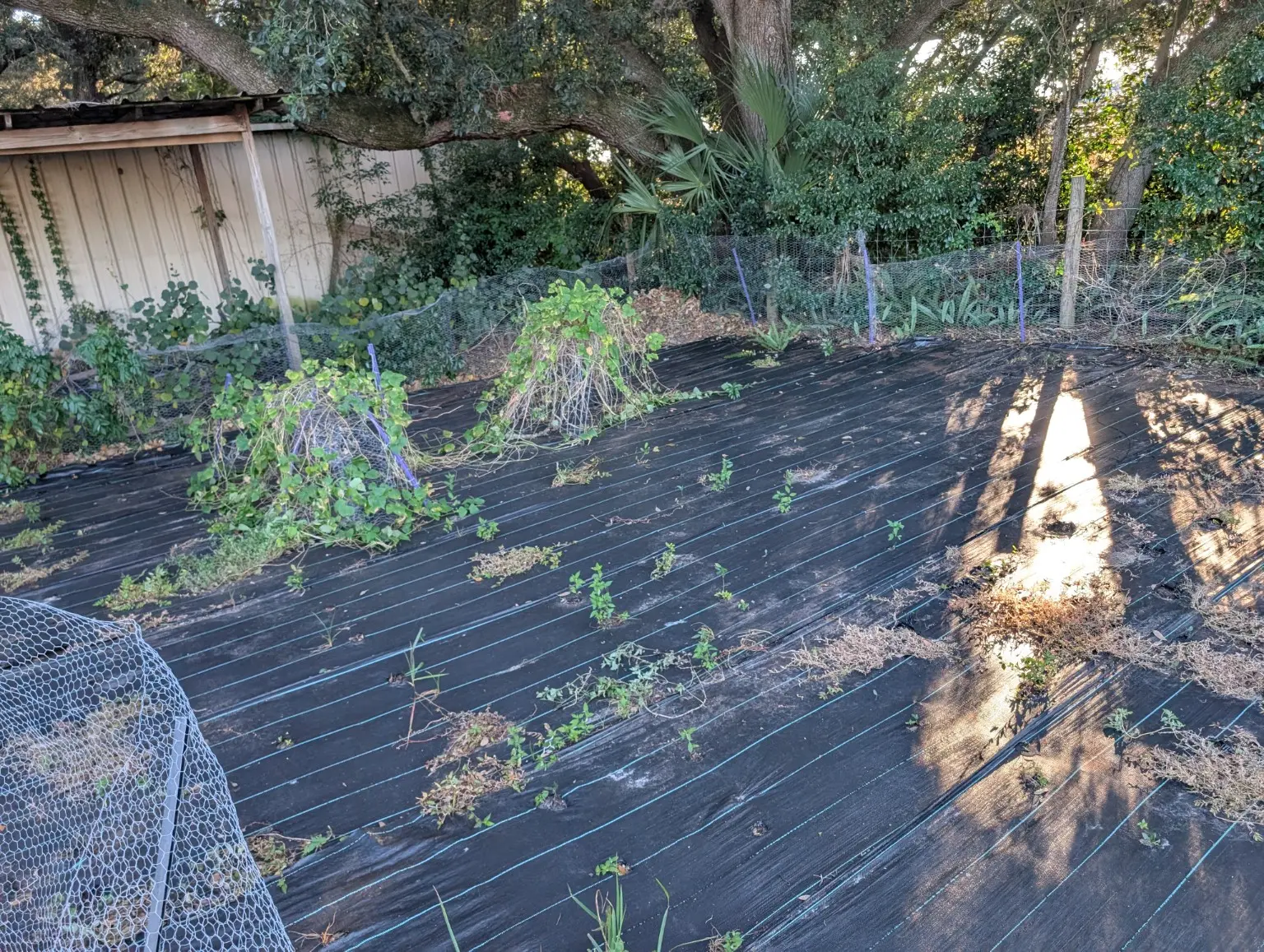
Florida yards can change dramatically between a dry spring and a wet summer. Walk the site after heavy rain before making a permanent planting plan.
02
Buy for your part of Florida
A fruit tree can be healthy and still be wrong for your yard. Chill-hour requirements matter for peaches, plums and other deciduous fruits. Heat, humidity, disease pressure, salt exposure and cold snaps also vary across the state.
Ask a reputable local nursery for the exact cultivar and rootstock, then compare it with UF/IFAS information for your county. Also check whether it needs a second compatible variety for pollination.
03
Plant high enough and leave the trunk clear
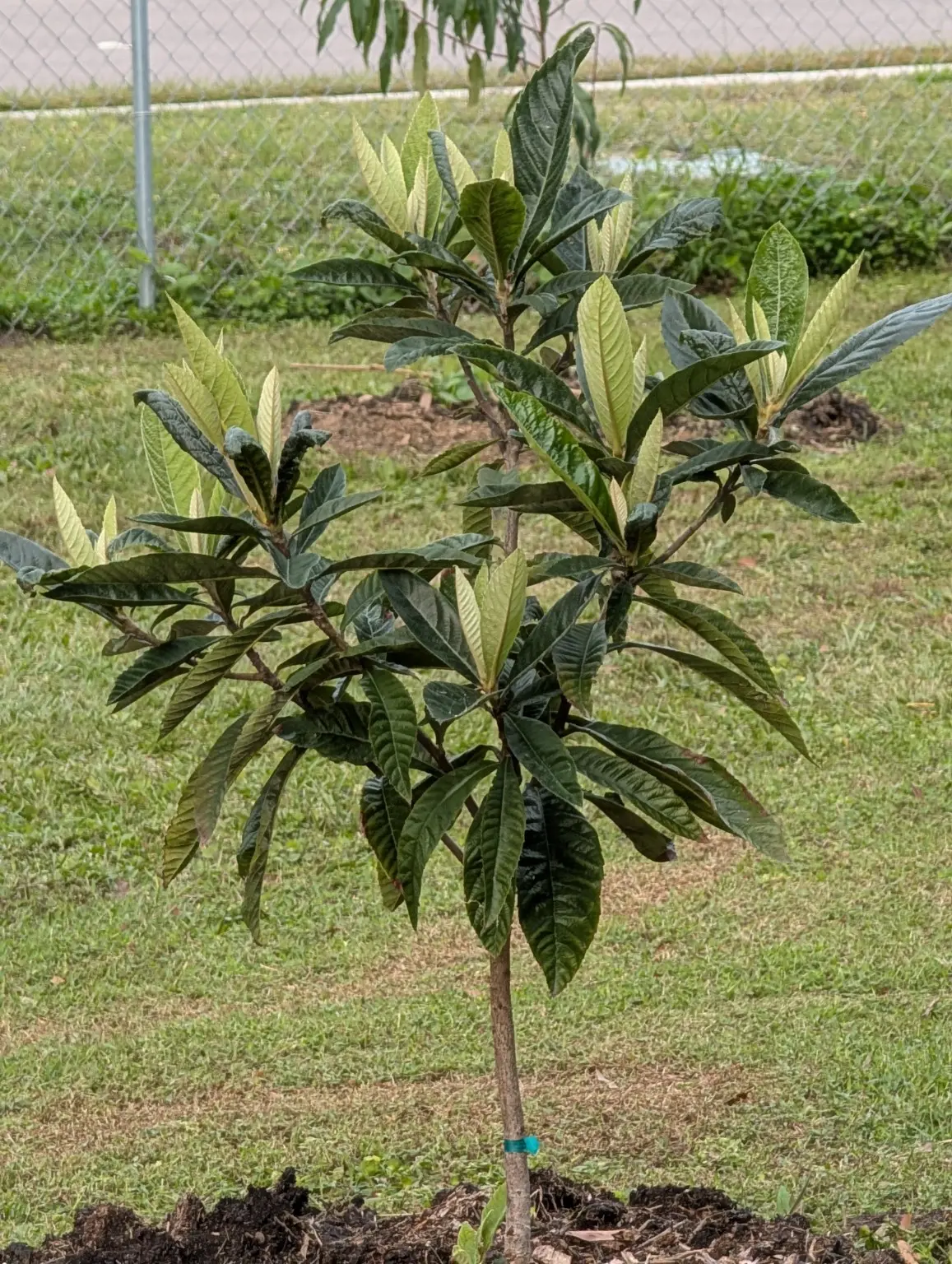
The root flare should not disappear below a mound of soil or mulch. A wide planting area is useful; an unnecessarily deep hole is not. Settle the tree at the correct height before backfilling.
Mulch helps suppress weeds and moderate soil moisture, but piling it against the trunk can hold moisture against bark and hide problems. Think doughnut, not volcano.
04
Build a repeatable first-year routine
A young orchard is mostly a watering, observation and recordkeeping project. Write down planting dates, varieties, rootstocks, rainfall and the days you irrigate.
Check the root ball rather than assuming a wet-looking lawn means the new tree is hydrated. Adjust for rainfall, drainage and the tree’s condition instead of following a rigid calendar forever.
Supporting sources
Verify the important details
These are the public sources we used for timing, safety and Florida-specific context. Open the newest guidance for your location.
General growing information—not a guarantee for every yard
This page shares general information and our Central Florida family-homestead experience. Weather, soil, water, plant material and county conditions differ. Check current UF/IFAS guidance, labels and the appropriate qualified source for important decisions.