
The before-and-after story
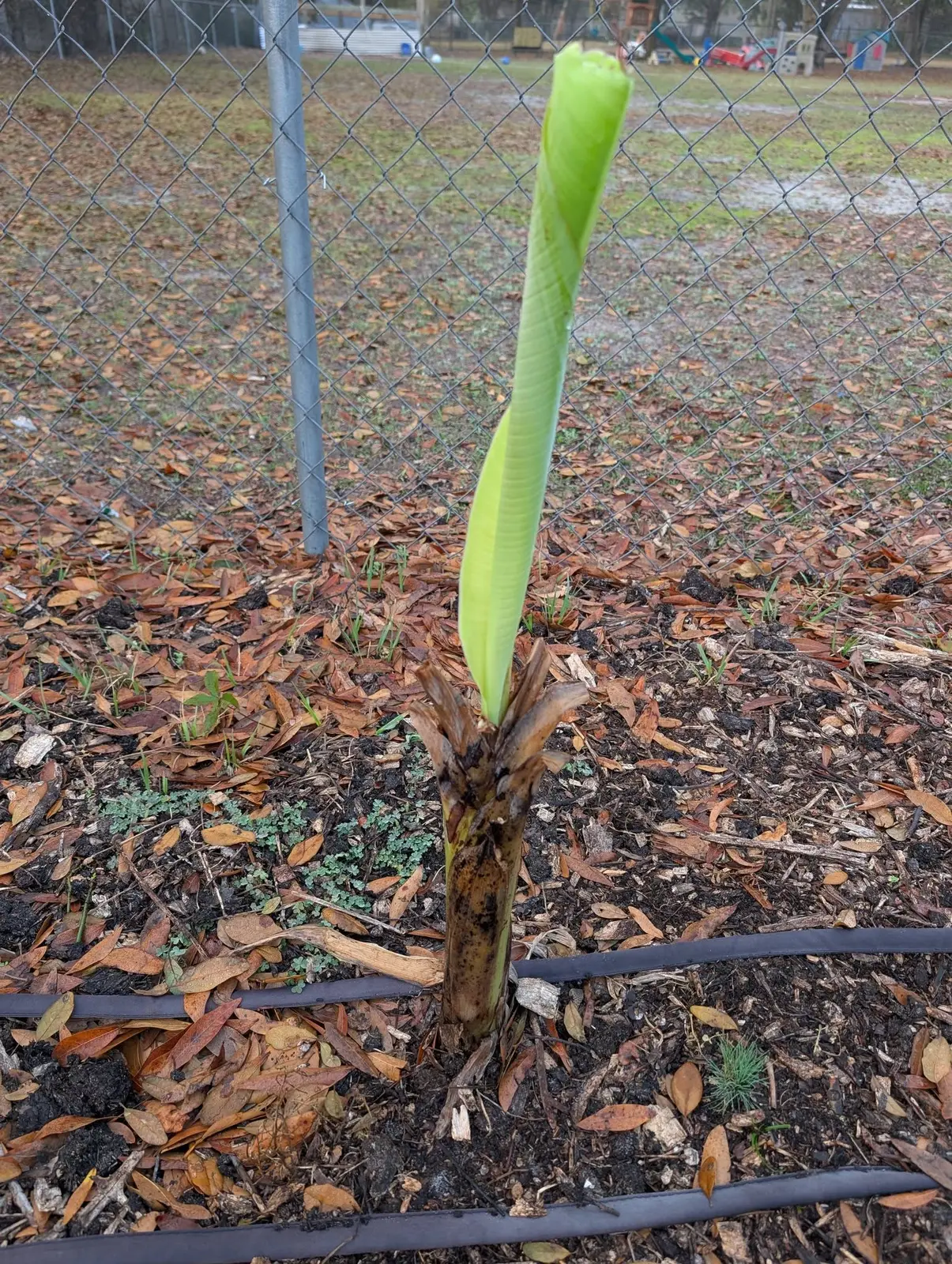
After our Florida freeze, every visible part of this banana planting looked finished. The top growth was gone and what remained did not look like a plant worth saving. We did not dig out the underground mat. That quiet decision gave the living tissue below the soil a chance to answer the question for us.
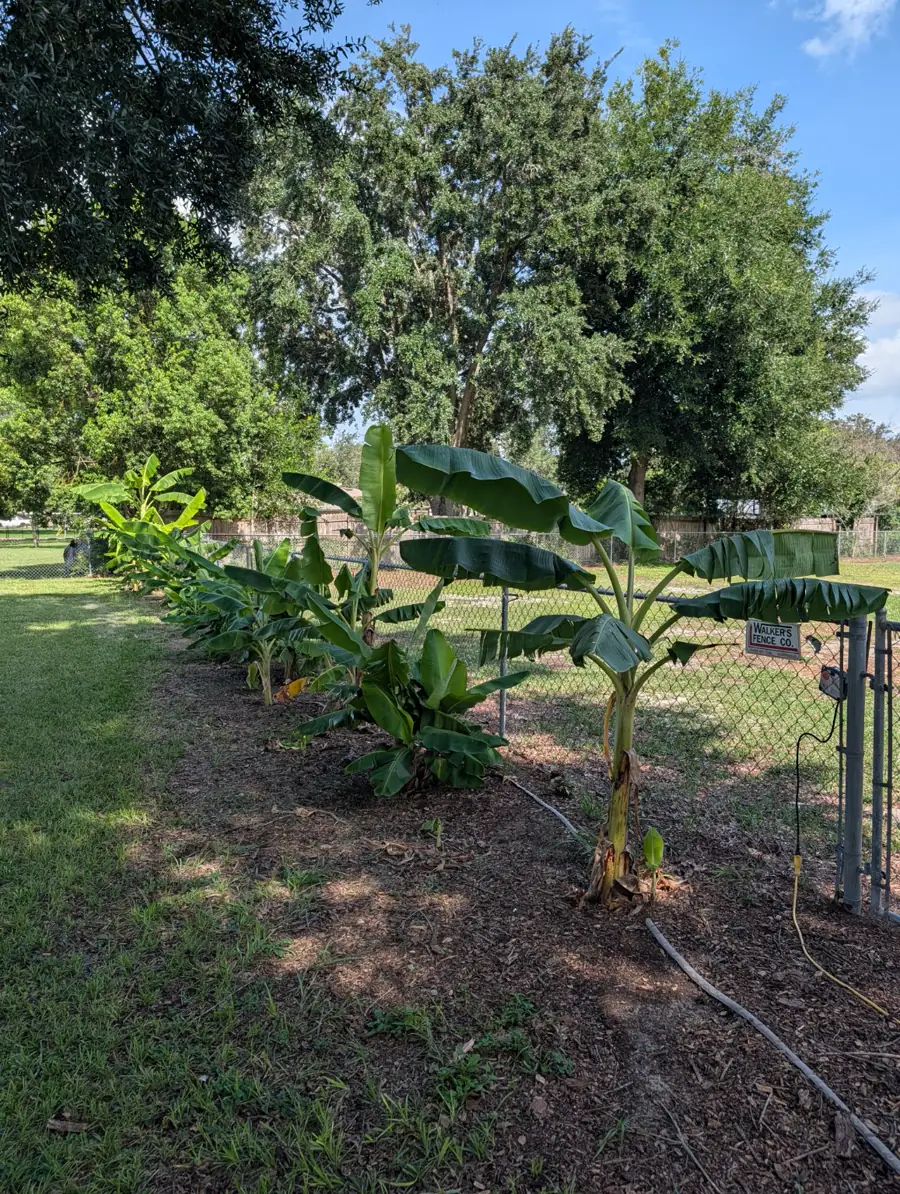
During spring and summer, new shoots began appearing. One became several, and the original planting eventually gave us seven separate banana plants. This was not a controlled propagation trial. It was a real recovery on our Florida family homestead, followed with ordinary observation, watering and patience.
What survived underground
A banana is not a woody tree. The upright trunk-like structure is a pseudostem made from tightly wrapped leaf sheaths. The lasting base is underground: the corm or rhizome and the larger mat formed as the plant produces connected suckers.
That distinction explains why a banana can look dead above ground while still having living buds below it. UF/IFAS describes suckers and pieces of rhizome as common propagation material. Our experience fits that biology, but it does not prove that every freeze-damaged mat will recover.
- Pseudostem: the visible, trunk-like stack of leaf sheaths
- Corm or rhizome: underground tissue that stores energy and produces new growth
- Mat: the connected planting made up of the mother plant, underground tissue and pups
- Pup or sucker: a new shoot arising from the underground system
How the pups appeared
The pups did not arrive as seven matching plants on one day. They appeared as separate points of growth around the old mat. Some were stronger and easier to recognize than others. We waited until there was enough visible growth to make decisions instead of cutting into the mat at the first green point.
The first useful sign was not height alone. We watched the center. When a pup continued pushing a new center leaf, it told us that active growth was still happening. That became especially important after separation, when outer leaves could droop or look rough.
Why and how we separated them
Seven plants crowded into one spot did not fit our long-term plan. We wanted to reduce crowding, create stand-alone plants and move part of the recovery to containers and a fence line. We separated several pups with the goal of keeping some underground tissue and roots with each one.
We are not claiming that every cut followed one identical textbook method. The pups differed in size and attachment, and the work happened as a practical homestead project. A clean, sharp spade and a deliberate cut are more useful than repeatedly tearing at the connection. The more intact roots and healthy corm tissue a pup keeps, the better starting point it has.
- Expose enough of the base to see where the pup joins the mat.
- Choose a line that gives the pup some attached corm tissue and roots.
- Make a firm cut with a clean, sharp tool instead of rocking the pup repeatedly.
- Move the separated plant promptly and water the new root zone thoroughly.
What we potted and what we planned for the fence
Several separated plants went into individual pots. Containers let us watch recovery closely, adjust water and move a plant if the sun or weather became too harsh. They also give us a practical way to hold pups until a permanent planting location is ready.
Other plants were planted or intended for planting along our fence as a living privacy wall. That plan is about foliage and screening first. Because the exact cultivar is unknown and winter damage is possible, we are not promising a permanent evergreen wall or a fruit harvest.
Transplant stress, watering and the center leaf
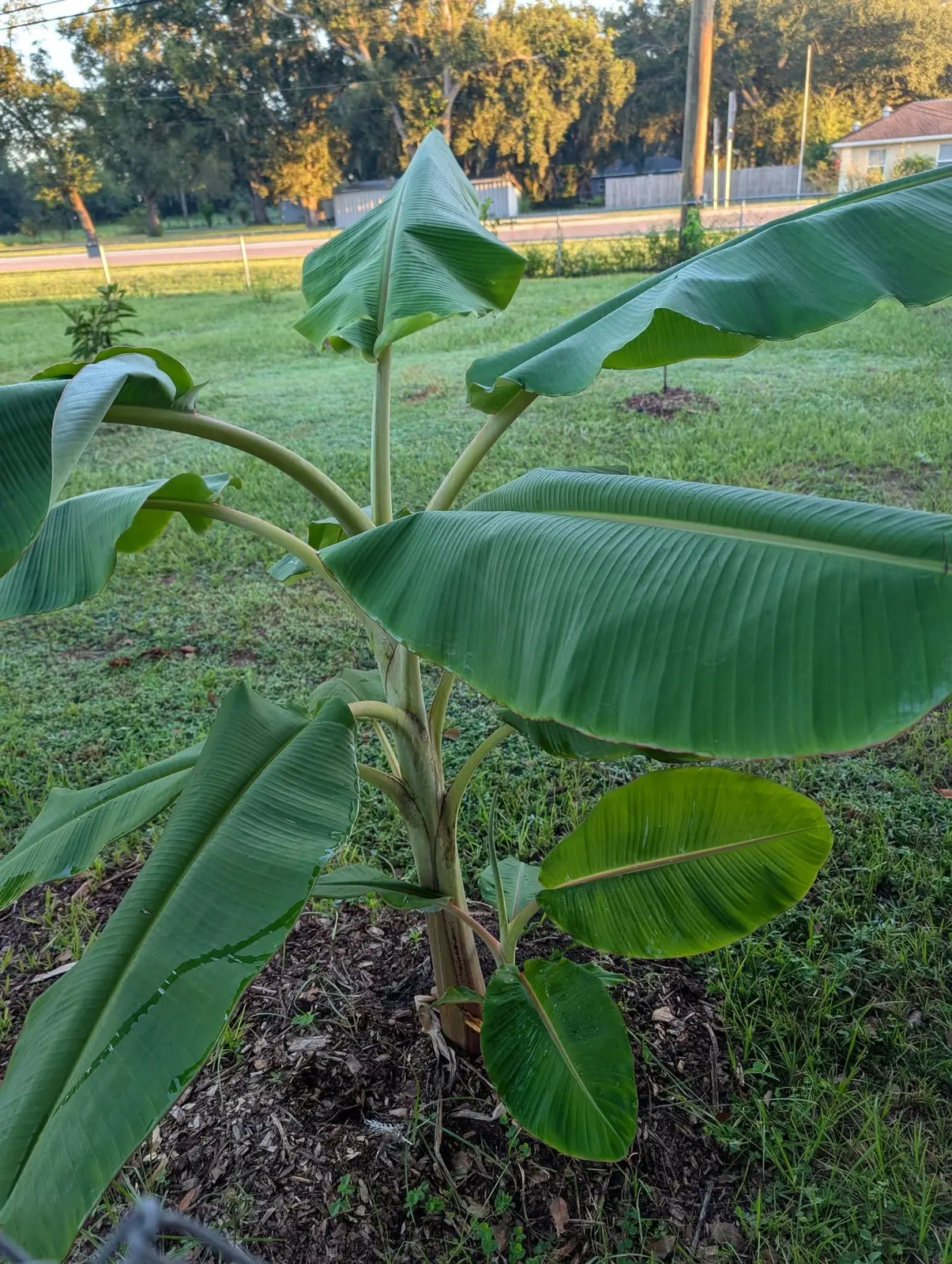
A separated pup may look worse before it looks better. Disturbed roots cannot immediately support the same leaf area, and a leaf can fold, tear, yellow or droop. We judged progress by whether the center continued moving rather than by expecting every old leaf to stay perfect.
We watered the new root zone and then observed the potting mix or soil instead of treating a fixed calendar as universal. Florida summer weather can swing between hard rain and fast drying. Constantly saturated soil is not the goal; neither is letting a newly disturbed root system dry completely.
- Water in thoroughly immediately after moving the pup.
- Check moisture where the roots are, not only the soil surface.
- Protect a badly stressed transplant from the harshest afternoon conditions while it reestablishes.
- Look for a moving center leaf before deciding the plant has failed.
What worked, what remains unknown and what we would change
Leaving the underground mat in place was the most important thing that worked. Waiting for warm-weather growth, separating only after the pups were visible and watching the center leaf also helped us make calmer decisions.
We still do not know the exact cultivar. The original plant came from Lowe’s and was sold as a dwarf variety, but that is not enough to identify it confidently. We also do not know which of these plants will fruit, how a future freeze will affect each location or whether every separated pup will grow at the same rate.
If we repeated the project, we would photograph the damaged mat earlier, label each pup on separation day and record the cut, roots, container size and first new leaf. That would turn a surprising success into a cleaner comparison without overstating the first recovery was more controlled than it was.