Will a Banana Plant Come Back After a Florida Freeze?
A Florida banana may regrow after a freeze when its underground rhizome remains alive. Learn what to watch, when to wait and why recovery is never guaranteed.
Amanda Grimes-ShokesOwner of DiamondTrail Ranch · Florida homesteader
Published Updated 6 minute read
The immediate answer
Banana Freeze Recovery
A banana plant can come back after a Florida freeze if living buds remain in the underground corm or rhizome. The leaves and pseudostem may die while the mat survives, but the result depends on the cold event, cultivar, drainage and plant health.
Key takeaways
What matters most
Do not confuse dead leaves with a dead underground mat.
Wait for sustained spring warmth before making the final call.
Soft, collapsing tissue needs different handling than a firm upright pseudostem.
Mark the mat so it is not accidentally dug up during winter cleanup.
01
What a freeze can kill first
Leaves are exposed and often show damage first. The pseudostem can then brown, soften or collapse. Because the true growing system includes underground tissue, the view above the soil does not always tell the complete story.
UF/IFAS notes that chill damage can occur below 40°F and that new growth often emerges from the underground rhizome after warmer weather returns. That is a useful reason to wait, not a promise that every mat survived.
02
Signs worth watching
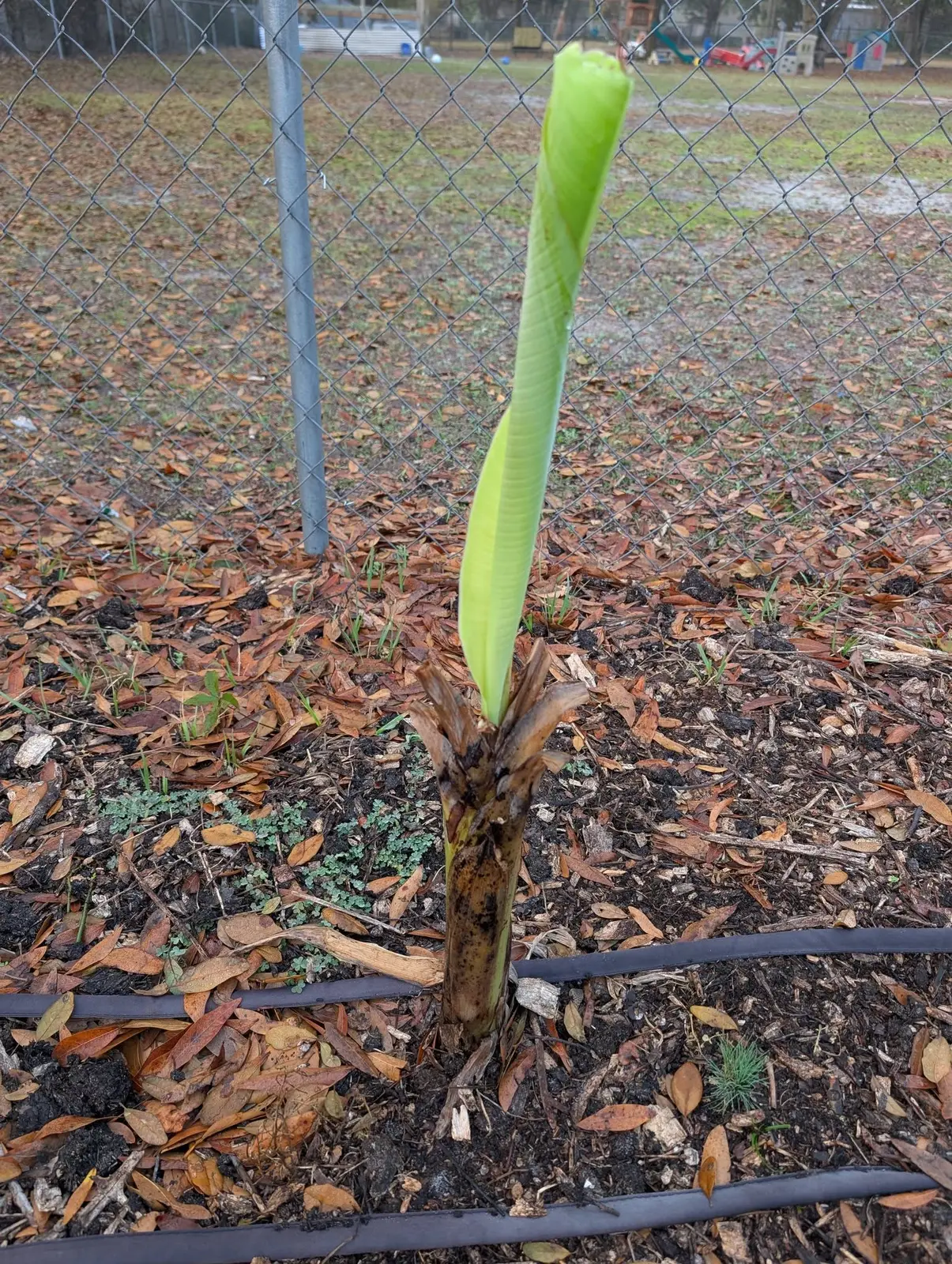
Firm tissue, an upright base and new green points near the mat are encouraging. A new center leaf from an upright pseudostem is also useful evidence. When the old pseudostem collapses, watch the surrounding soil for pups rather than assuming the entire planting is finished.
New green points at or near the mat
A center leaf beginning to move
Firm white or pale tissue inside a clean test cut
No sour odor or widespread mush at the base
03
The recovery timeline is weather-dependent
Our mat waited through the cold-damaged period and returned during spring and summer. Another planting may respond sooner, later or not at all. A brief cold snap, a hard freeze, wet soil and repeated cold nights are not the same event.
Avoid digging repeatedly to check. That can damage the buds and roots you are hoping survived. Mark the spot, keep the area from staying waterlogged and observe as warm conditions become consistent.
04
What happened on our homestead
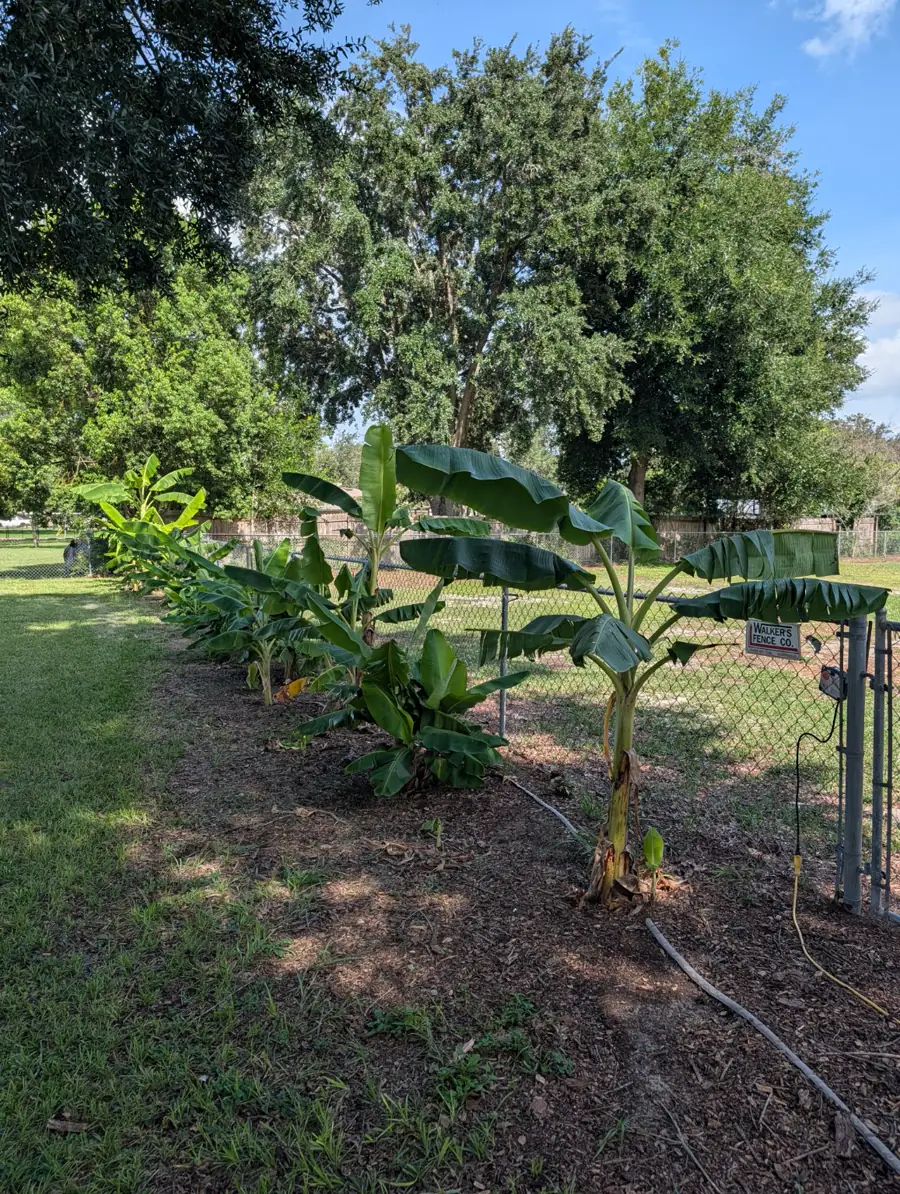
Our Lowe’s dwarf banana lost every visible sign of healthy top growth. We left the underground mat in place. It returned, produced multiple pups and ultimately gave us seven separate plants.
That outcome is why we now treat a freeze-damaged banana as a waiting question rather than an immediate removal project.
Frequently asked questions
Questions readers ask next
How long should I wait?
There is no universal date. After a damaging freeze, wait for sustained warm conditions and watch the mat rather than relying on one calendar day.
Does a brown pseudostem mean the mat is dead?
No. The pseudostem may be dead while underground buds remain alive.
Should I water a frozen banana?
Do not keep cold-damaged roots saturated. Water according to actual soil moisture, drainage and new growth.
Supporting references
Where the outside information came from
We separate our family’s experience from outside guidance. These sources support the general information used on this page.