Our Florida rabbit-heat system starts with all-day shade, airflow, redundant water, fans, frozen bottles and a ready move-to-cooler-space plan.
Amanda Grimes-ShokesOwner of DiamondTrail Ranch · Florida homesteader
Published Updated 8 minute read
The immediate answer
Rabbits in Florida Heat
We keep rabbits cooler in Florida by placing the rabbitry in dependable shade, maintaining airflow, checking more than one water source, using fans and frozen bottles as supporting tools, and preparing a cooler emergency location before the hottest day arrives.
Key takeaways
What matters most
Housing location is the first cooling system.
One bottle or bowl is a single point of failure.
Fans and frozen bottles support, not replace, shade and water.
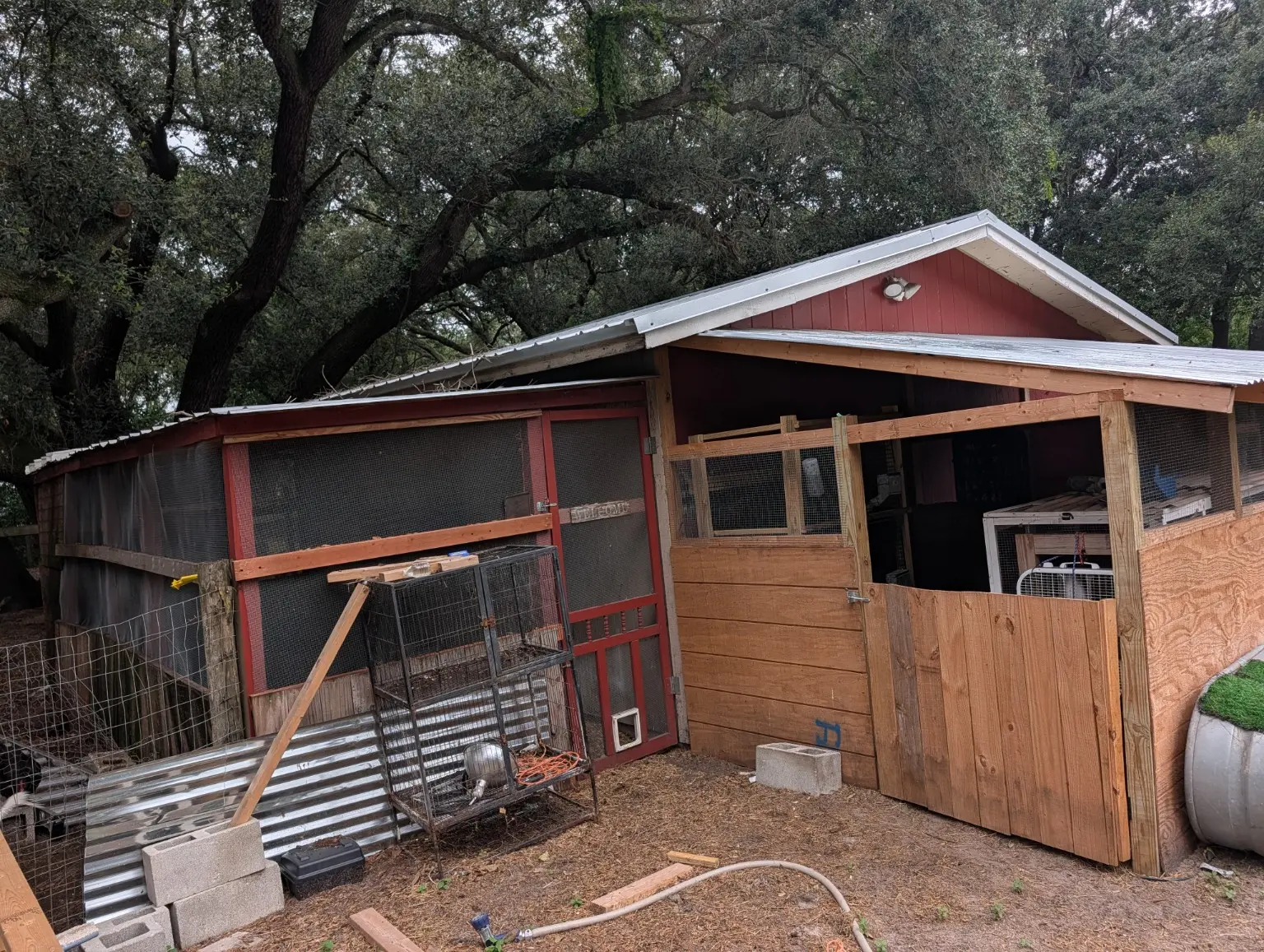
Our rabbitry sits beside the chicken coop beneath large oaks. We chose that shared chore area because it keeps the rabbits out of the harshest direct sun and lets us check water, airflow and behavior during the same route.
Morning shade is not enough evidence. We watch the location through the afternoon because the sun angle changes and reflected heat can reach a structure that looked safe earlier.
02
Air must move through the housing
Shade can still trap heat when walls, tarps or stored items block the breeze. We keep the area open enough for air movement and use fans during dangerous conditions. Electrical cords, fan mounts and blades stay outside chewing reach and protected from weather.
A fan moving very hot air is not a complete cooling plan. It works as part of the larger system.
03
We check flow, not just the container
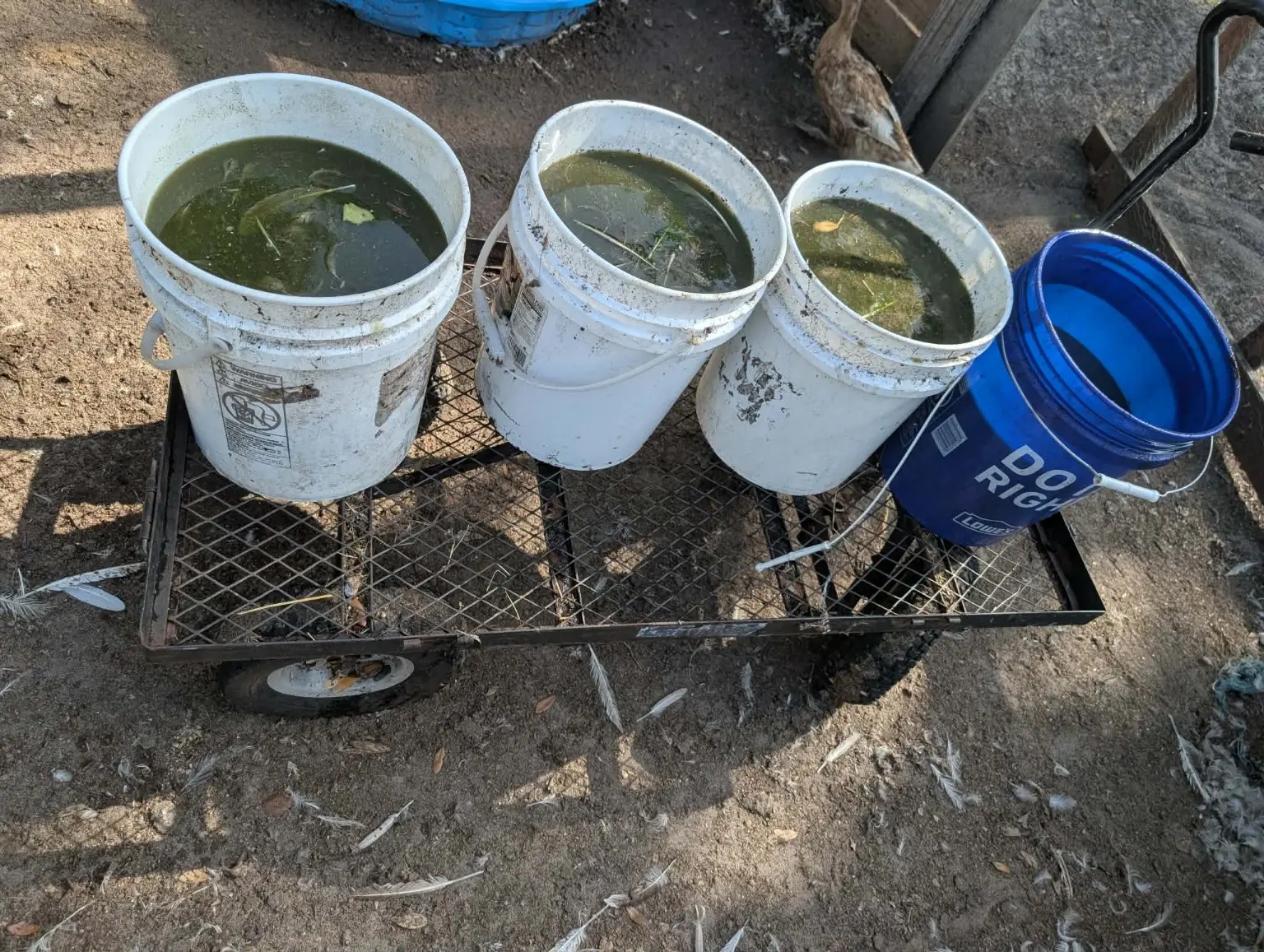
A full bottle can still fail to dispense. A bowl can tip or fill with debris. We use redundant water where practical and physically confirm that water is available.
Stored backup water matters because a well, pump, hose or power source can fail on the same day the heat makes water most urgent.
04
Frozen bottles give rabbits a cooler surface
We rotate frozen bottles or similar safe cold surfaces so a rabbit can choose to rest beside one. They thaw quickly in Florida, so rotation and freezer capacity are part of the chore plan.
We do not treat a bottle as proof that the enclosure is cool. Shade, airflow, water and observation still do the foundational work.
05
Behavior changes the response
We look for a rabbit that is acting unlike itself, breathing unusually, refusing normal food or water, becoming weak or losing coordination. A concerning change is not the time to rely on an article.
We keep carriers and a cooler safe location ready and use an established veterinarian or emergency contact for individualized direction. Rapid temperature changes and improvised treatment can create additional risk, so qualified help matters.
06
What we would improve before adding rabbits
We would prove the afternoon shade, airflow, water redundancy, freezer capacity and emergency move location before adding another enclosure. More rabbits multiply heat checks and failure points.
The easiest heat emergency to manage is the one prevented by a simpler, more observable system.
Watch the ranch story
Florida Rabbit Care: Beat the Summer Heat
See the DiamondTrail Ranch rabbitry and the heat-management challenge behind this written guide.
The written guide on this page contains the practical summary. The YouTube player provides caption controls when captions are available.