
Weather & Preparedness
A Backup Water System Is Not Optional During Florida Storm Season
A backup water plan must work when the well, pump, hose or fitting does not, and household drinking water and animal water must be calculated separately.
Immediate answer
What readers need to know first
A Florida homestead needs at least one backup that does not depend on the same electricity, pump, hose and fitting as the primary supply. Store household drinking water separately from animal-water calculations, test manual transport and keep an evacuation portion that can leave with the family and animals.
Plan for the real failure point
A well can contain water while an electric pump cannot deliver it. Municipal water can be interrupted or placed under a notice. A sound pump can still feed a broken hose, valve or automatic waterer. The backup must bypass the failed link, not merely duplicate the same dependency.
Draw the system from source to animal or faucet: power, pump, pressure tank, treatment, plumbing, hose, fittings and container. Circle every point that can stop delivery.
- Primary source
- Electric or manual delivery
- Pressure and treatment equipment
- Main plumbing and outdoor spigots
- Hoses, valves and automatic bowls
- Storage and manual transport
- Evacuation containers
Calculate household and animal water separately
Emergency household guidance provides a starting point for people, but it does not include a mixed group of animals, cleaning needs or heat-related demand. List every species, number of animals, normal measured use and a cautious weather allowance. Ask a veterinarian or Extension professional when species needs are uncertain.
Do not publish or rely on one universal gallon figure for all livestock. Body size, production status, feed, temperature, health and water content of the diet all change demand.
| Category | Record | Do not forget |
|---|---|---|
| People | Drinking and basic sanitation | Medication and infant needs where applicable |
| Poultry | Measured flock use in heat | Spillage and container cleaning |
| Small livestock | Normal group use | Lactation, illness and heat |
| Larger animals | Measured daily use | Safe manual transport capacity |
| Garden/other | Only essential survival needs | Food crops do not outrank drinking water |
Choose storage that can be cleaned, labeled and moved
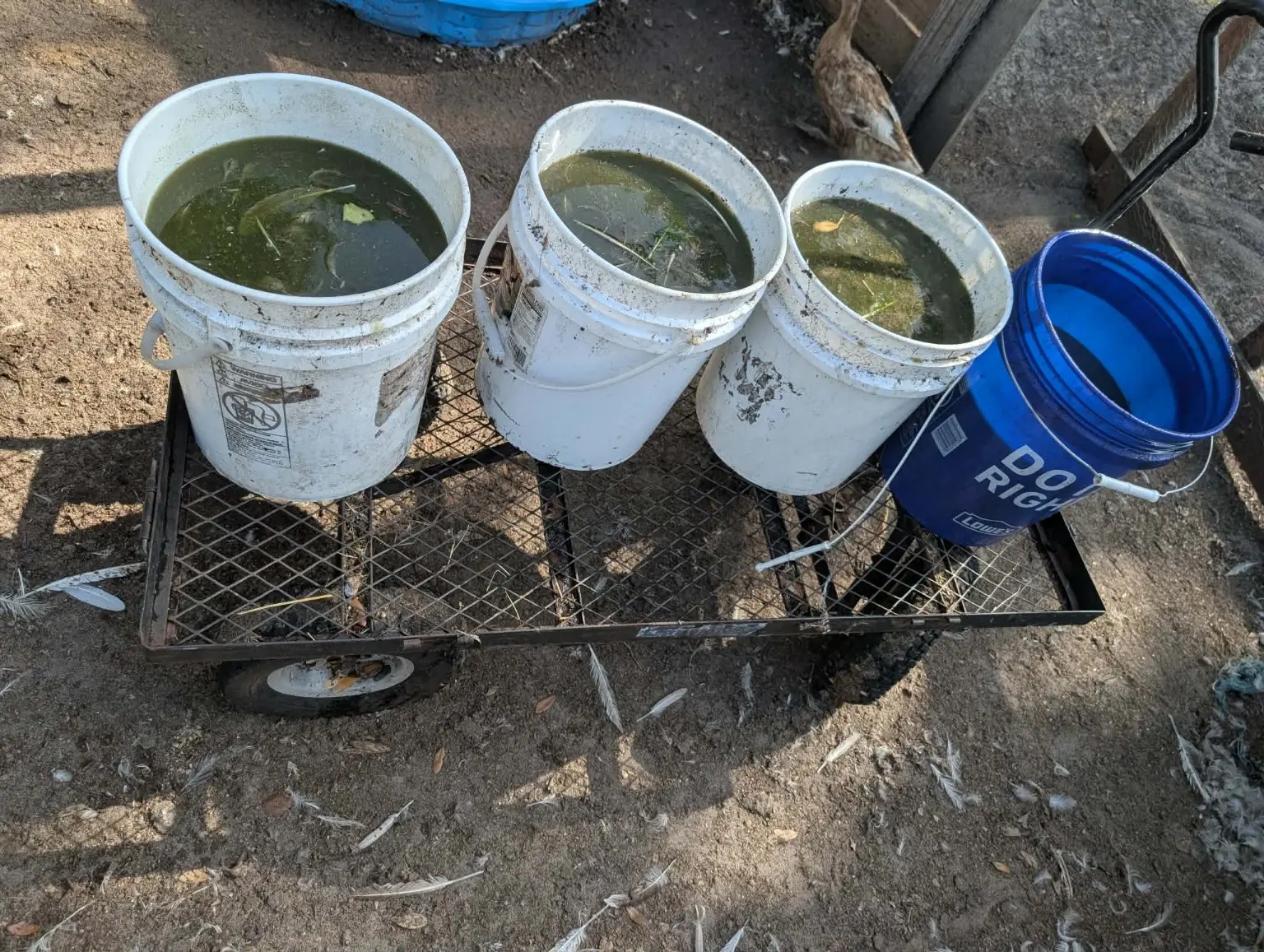
A large container may hold useful volume but become impossible to move without a working pump. Several smaller food-safe containers can add flexibility, while a larger stationary reserve may support bulk animal needs. The plan can use both.
Label potable and nonpotable uses clearly. Protect containers from contamination, heat, fuel and pesticides. Follow manufacturer and official public-health guidance for preparation, storage and rotation.
- Food-safe material for drinking water
- Tight, clean closures
- Date and intended use
- A manual spigot or transfer method
- Weight a family member can actually move
- Separate evacuation containers
Test the system with the primary source turned off
A written plan can hide impossible lifting, missing adapters and routes blocked by gates. Conduct a calm test: do not use the normal hose or pump, move the planned containers and water every required station.
Record the time, trips and spills. A nearly two-acre property can make manual transport a major chore even when the total volume looked manageable on paper.
Prepare for heat, debris and evacuation
An outage after a Florida storm may arrive with dangerous heat. Outdoor fittings can be damaged, roads can be blocked and normal feed or ice purchases can be delayed. Protect the water route before the storm and stop work when conditions are unsafe.
Keep a portion ready to travel with household members and animals. Evacuation planning must include destination rules, carriers, records, restraint equipment and current local instructions, not water alone.
- Fill and stage approved containers before conditions deteriorate
- Protect hoses and fittings from debris and vehicles
- Keep transfer tools with the containers
- Recheck labels and cleanliness
- Follow local emergency management and boil-water notices
- Never enter floodwater or unsafe structures to reach stored supplies
Know the plan’s limits
Stored water runs out. Heat can raise demand. A sick animal may need professional care. A prolonged outage may require relocation or outside assistance. Write the trigger for calling for help or leaving before the reserve reaches a critical point.
This article is general preparedness education. Current emergency orders, public-health notices and veterinary advice take priority.

About the author
Amanda Grimes-Shokes
Owner of DiamondTrail Ranch and News & Views editorAmanda owns and operates DiamondTrail Ranch and reviews News & Views through the practical lens of a real Florida family homestead. For recalls, food safety, health, regulations and other high-stakes topics, she checks the article against the responsible agency's primary notice, separates confirmed facts from ranch perspective and directs readers to the current official source for decisions.
Her byline identifies editorial responsibility and homestead perspective; it is not a claim of medical, veterinary, legal or professional food-safety credentials.
Meet Amanda and the DiamondTrail Ranch family →Sources and further reading
Verify the important facts
Primary sources are labeled. Open the current official notice when product, disease, weather or legal details may change.
If you see a factual error or a primary source has changed, email Diamondtrailranch@gmail.com or read our Corrections and Updates Policy. Dates change only after a meaningful review.
Community discussion
Join the Conversation
Have you experienced this on your Florida homestead? Share what you are seeing in your area. Comments are moderated to keep the discussion useful, respectful and family-friendly.
0 approved comments