How We Build Redundancy Into Livestock Water Systems
A resilient livestock-water plan combines a reliable daily source, a second fill method, stored water, clean transfer equipment and an outage routine.
Amanda Grimes-ShokesOwner of DiamondTrail Ranch · Florida homesteader
Published Updated 8 minute read
The immediate answer
Backup Water for Animals
We build water redundancy by assuming any one part can fail: power, well pump, hose, automatic valve, trough or chore schedule. Each animal area needs a primary source, a practical backup and enough stored or movable water to bridge the outage we can realistically manage.
Key takeaways
What matters most
A second identical automatic valve is not full redundancy if both depend on the same pump.
Store containers where they stay clean and usable.
Know how much can be moved safely, not only how much can be stored.
Test the outage routine in calm weather.
01
Map the whole chain
We start at the source and follow the water to the animal: electricity, well or utility, pump, pipe, hose, valve, container and daily check. A failure anywhere in that chain can leave a full-looking system dry.
The goal is not expensive complexity. It is knowing which failure leaves us with no water and putting a second path around that point.
02
Keep the daily system easy to inspect
Nearby water lines and hoses reduce labor, but every automatic or convenient system still receives an eyes-on check. We look at the actual water level and function rather than assuming the hardware worked.
Containers should be positioned so they can be scrubbed, drained and refilled without creating mud, blocked gates or unsafe lifting.
03
Use a genuinely different backup
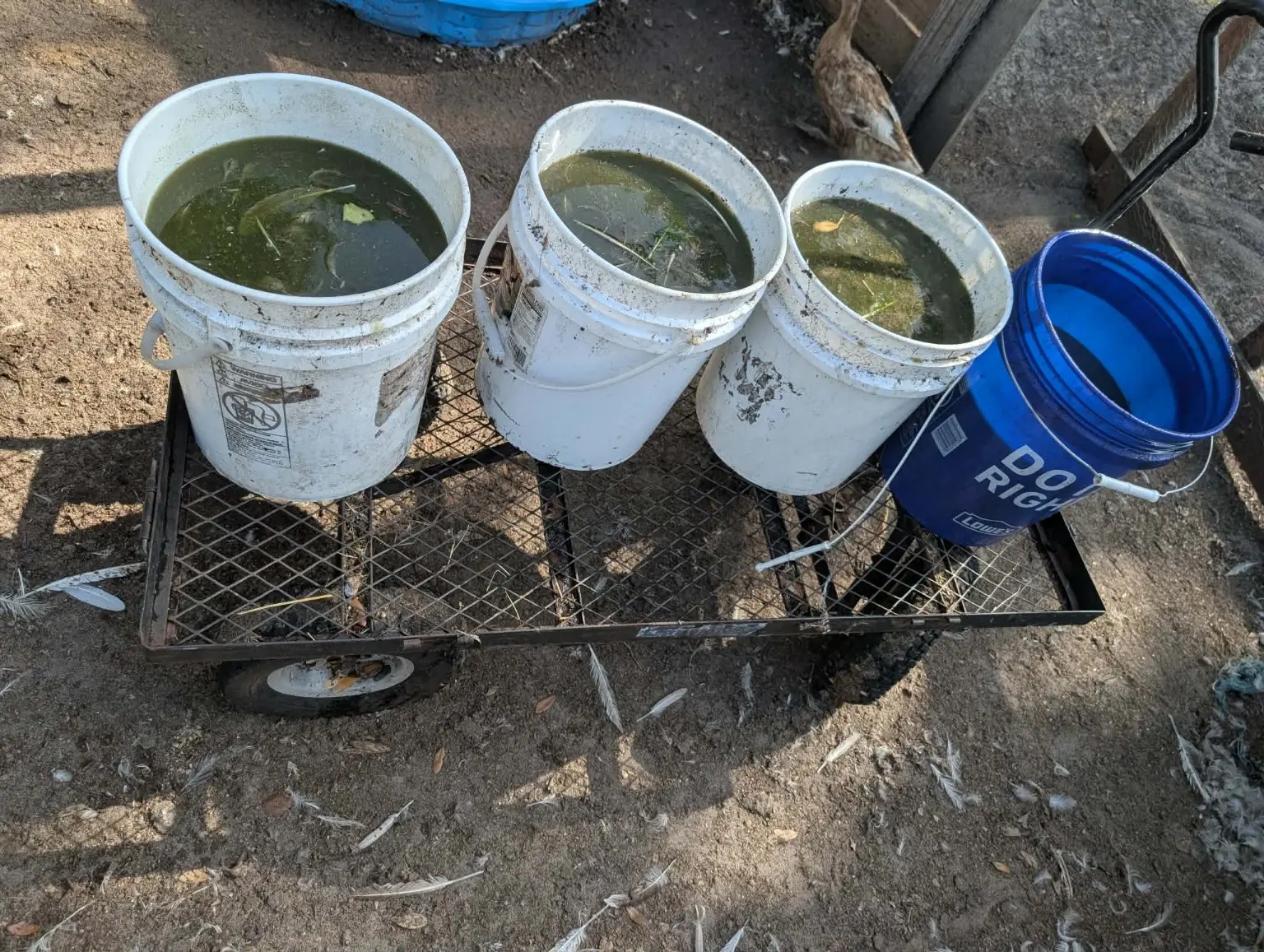
Stored water can bridge a short pump outage. A second hose on the same dead well cannot. A portable tank, filled food-grade containers or access to another approved source may create a real second path.
The right reserve depends on species, number of animals, weather and how quickly more water can be obtained. We do not publish one universal gallon promise for every homestead.
04
Plan how the water moves
Water is heavy. We use smaller containers, carts and repeated safe trips rather than assuming a full barrel can be handled casually. The cart, trailer, straps and container all need load ratings appropriate to the actual filled weight.
Keep potable human water equipment separate from containers used for ponds, chemicals or uncertain materials. Labeling prevents a hurried mistake.
05
Practice the outage
Turn off the convenient path in safe weather and run one chore round from the backup. That reveals missing lids, weak handles, unreachable storage, dirty transfer hoses and a reserve that cannot be moved.
Write the steps so another responsible adult can water the animals if the person who designed the system is away.
Frequently asked questions
Questions readers ask next
How much water should I store?
Calculate from your actual animals, current professional guidance, weather and the time needed to restore or obtain more water. Revisit the number as animals and seasons change.
Does a second trough count as backup?
It helps with container failure, but not when both troughs depend on the same failed source.
Can rain barrels be livestock drinking water?
Do not assume untreated roof runoff is suitable drinking water. Collection surfaces, contamination, storage and animal health all matter; use appropriate qualified guidance.
What happened next
The backup is only real if you can use it today.
Walk the route, lift the container, open the valve and complete a full chore round before calling the plan redundant.