Boundaries, livestock and patient development
Working Dogs on a Florida Homestead
A livestock guardian dog is not a conventional pet placed in a pasture and not a herding dog with a different coat. The work develops through genetics, maturity, supervision, livestock relationships and dependable boundaries.
The immediate answer
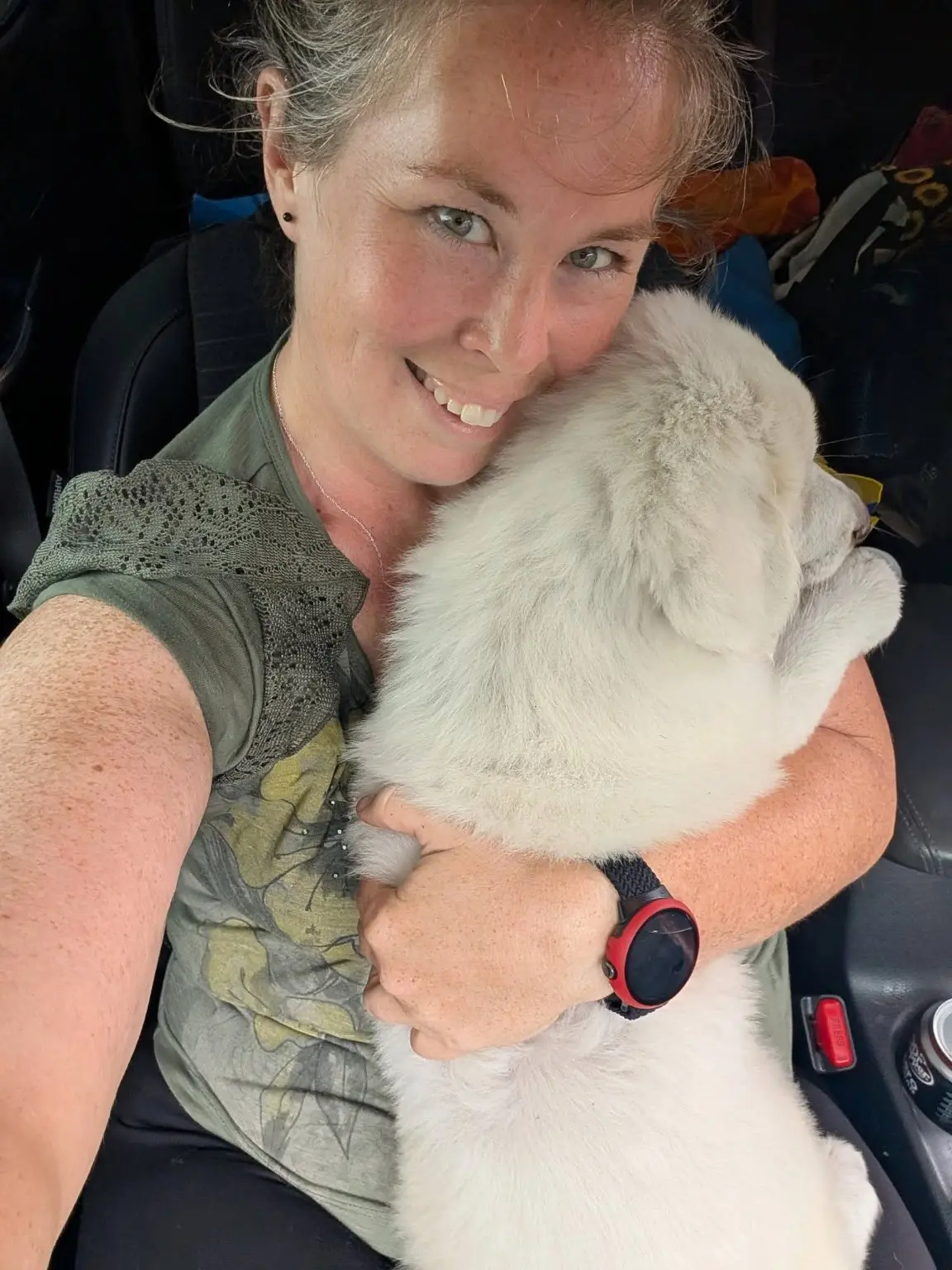
A puppy is not a finished guardian.
Young livestock guardian dogs need supervised introductions, safe fencing, clear boundaries and time to mature. Their future role may include predator deterrence and livestock presence, but independence must be earned through development, not assumed because of breed.
Guardian, herding dog and pet are different jobs
Herding dogs move stock in response to a handler. Livestock guardian dogs live near animals and use presence, scent, barking and intervention to deter threats. A family companion may have neither job. Individual temperament, breeding, management and maturity still matter. For our family dogs and the preparations we make before bringing a dog home, see our homestead-dog guide.
Livestock introductions need supervision
Goats, poultry and rabbits create different risks for an exuberant puppy. Begin with controlled proximity and reward calm behavior. Prevent chasing from becoming rehearsal. Provide animals an escape from puppy attention and do not use livestock as unsupervised training equipment.
Fencing is part of training
Roaming is not solved by hoping a dog understands property lines. Build and maintain a physical boundary, close gaps, manage gates and remove climb or dig opportunities. Boundary habits are easier to build than to recover after repeated escapes.
Night barking has a purpose, and a neighbor impact
Guardian dogs often bark to announce and deter. That behavior can be useful while still requiring thoughtful placement, boundaries, observation and neighbor awareness. Sudden changes in barking also deserve investigation.
Florida heat changes the daily routine
Provide deep shade, clean water, airflow and cooler resting surfaces. Heavy coats, humidity, age, activity and acclimation affect risk. Avoid strenuous work during dangerous heat and seek veterinary help for signs of heat illness.
Progress should be documented honestly
A useful long-term series records age, introductions, boundary work, setbacks and changing responsibilities. It should never claim a milestone that has not happened or turn one puppy’s experience into a universal timeline.
Official perspective
Guardian dogs are one part of predator management.
USDA APHIS describes livestock protection dogs as a nonlethal tool and places predator protection within an integrated management approach. A dog does not replace sound fencing, livestock observation, secure night areas or local professional guidance.