
The immediate answer
Zero is learning around livestock under supervision.
Zero is a female Great Pyrenees puppy who joined DiamondTrail Ranch on August 3, 2026, at nine weeks old. We hope she will eventually live outdoors as a livestock guardian, but her first responsibility is to be a puppy who learns calm behavior, safe boundaries and the animals around her.
- Author
- Amanda Grimes-Shokes, owner of DiamondTrail Ranch
- Published
- Information current as of
- Experience status
- Firsthand, opening-week case study
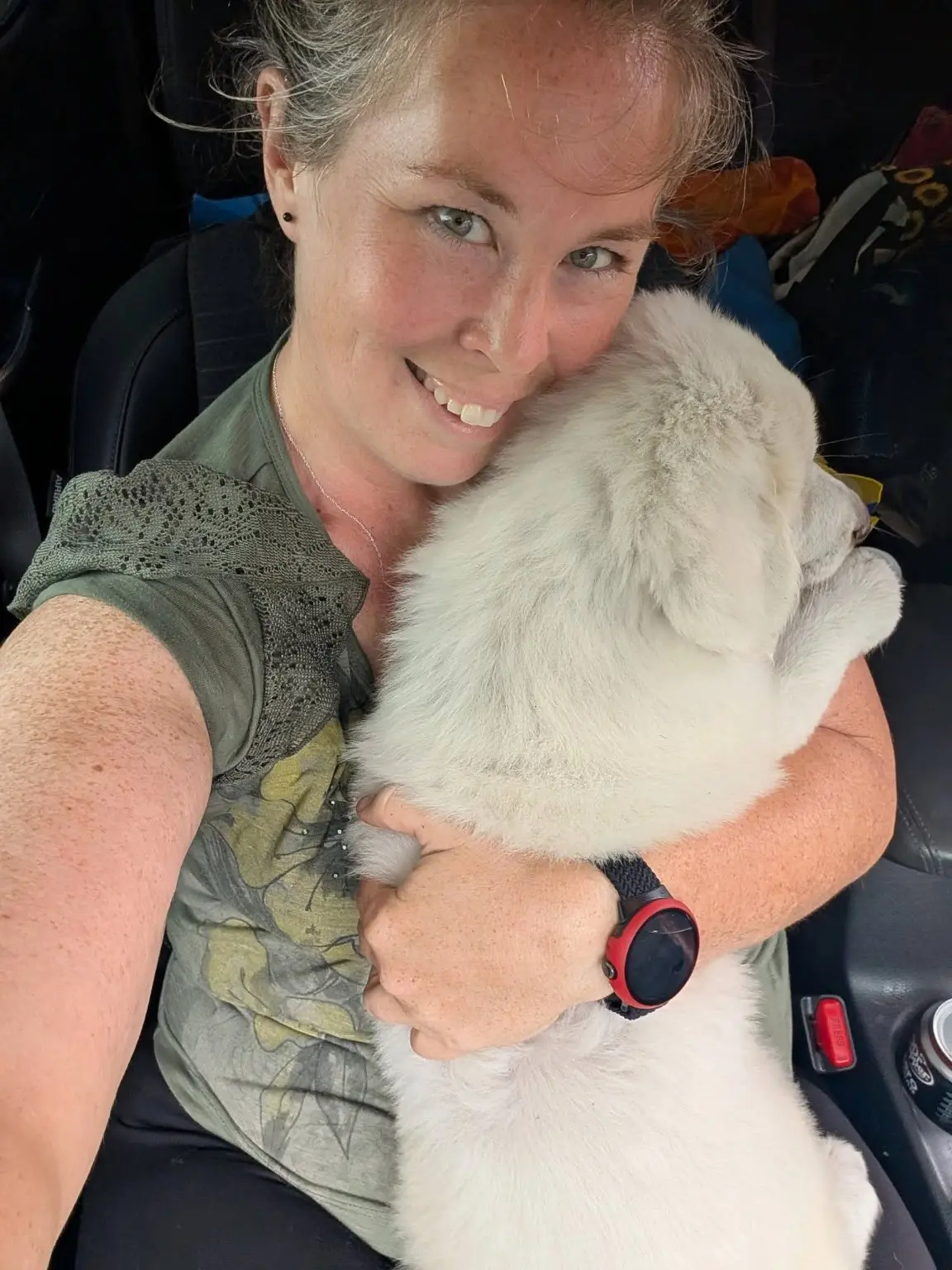
Arrival day
We brought home a puppy, not a job title.
Great Pyrenees are widely associated with livestock guardian work, but breed alone does not make a puppy safe with goats, cattle, pigs or poultry. Zero arrived with the potential for that role. What happens next depends on maturity, temperament, supervision, fencing and the relationships she develops with the animals.
That distinction matters because an enthusiastic puppy can chase, mouth, crowd or frighten livestock without understanding the consequences. Livestock can also injure a puppy that ignores a warning. We are treating every introduction as information, not as proof that she is ready for unsupervised work.
The first night
Start with a safe place to settle.
Zero spent her first night in a kennel on the porch. The goal was simple: give a nine-week-old puppy a contained place to rest while we learned her routine and she adjusted to unfamiliar sounds, people and animals.
Moving a puppy directly into a pasture and assuming instinct will handle the rest would have skipped the part where everyone learns to live safely together. The opening days are about observation. How does she respond to fencing? Does she settle? What gets her excited? Which animals are curious, tolerant or defensive?
Controlled proximity
Her next pen placed livestock nearby without granting full access.
We moved Zero into an open pen positioned between Mini, our Mini Zebu, and a buck goat. That arrangement allowed sight, scent and routine to become familiar while a physical boundary remained part of the lesson.
Bonding is not one dramatic introduction. It is repeated ordinary time near the animals: feeding, resting, listening and learning that livestock are part of the environment rather than toys to chase.
What we actually observed
The animals had their own opinions.
These are observations from Zero’s opening days, not universal predictions for every puppy or herd.
Mini gave a short chase
Mini chased Zero briefly, then moved on. We did not interpret that as instant acceptance or permanent rejection. It was one interaction that reinforced why distance, escape space and supervision matter.
The pig investigated by scent
Our pig approached and sniffed. Curiosity is useful information, but it is not permission to leave a very young puppy and a much larger animal together without watching.
The goats enforced boundaries
The goats used headbutts to tell Zero when she was too close. One made contact hard enough for us to intervene. A puppy must have a safe way out, and we have to be close enough to end an interaction before a correction becomes an injury.
Zero roamed and whimpered
She moved around the new space and whimpered as she adjusted. We are recording behavior without turning every sound into a diagnosis or a training conclusion. A new environment is a large change for a young puppy.
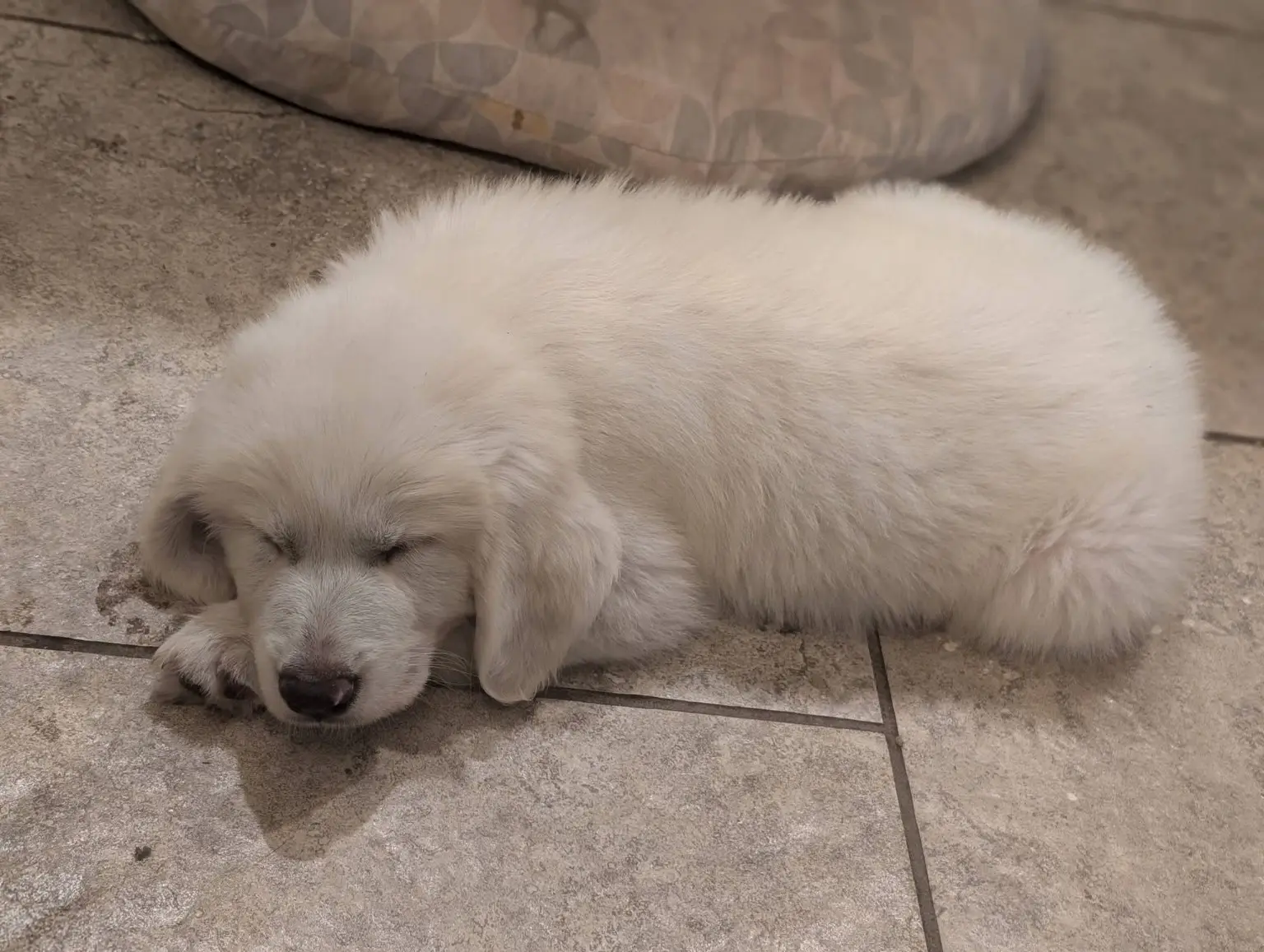
Health belongs in the record
A urinary concern prompted a veterinary visit.
Two days after Zero arrived, a possible urinary problem was concerning enough that we took her to a veterinarian. That is the accurate limit of what this article claims. We are not publishing a diagnosis, treatment plan or medical lesson from incomplete information.
The practical lesson is to watch a new puppy closely. Appetite, drinking, urination, stool, energy, movement and behavior help an owner notice when something has changed. When a puppy seems unwell, internet guesses are not a substitute for veterinary care.
Florida changes the setup
Shade, water and a cool resting place are daily infrastructure.
A heavy-coated puppy in Florida cannot be managed as if climate is an afterthought. Zero needs dependable shade, clean water, airflow and access to a cooler place to rest. Activity and introductions also need to fit the weather instead of a convenient human schedule.
We will not use a single comfortable afternoon to claim that a setup is summer-ready. Heat management is something we evaluate over time as Zero grows, her coat changes and her outdoor responsibilities develop.
What we are watching next
Progress will be measured in ordinary, repeatable behavior.
The point of this series is not to produce a fast transformation. It is to document the slow work honestly.
- Calm livestock presenceCan Zero rest near animals without persistent chasing, crowding or rough play?
- Respect for boundariesDoes she remain inside secure fencing and respond consistently around gates?
- Safe animal relationshipsWhich species need more distance, and which introductions can progress?
- Florida weather routineDo shade, water and cooler resting areas remain dependable as conditions change?
- Health and maturityIs the responsibility appropriate for her age, physical development and veterinary needs?
Our opening-week lesson
Supervision is not a temporary inconvenience. It is the work.
the clearest thing we can say about Zero today is that she is promising, young and still learning. She has not earned unsupervised responsibility simply because she is a Great Pyrenees.
We will update this case study only when something meaningful changes. Setbacks will belong in the record beside successes, because that is what makes a firsthand story useful to another homesteader.
Official context
Livestock guardian dogs belong inside a larger protection system.
USDA APHIS describes livestock protection dogs as one nonlethal predator-management tool. That does not replace secure fencing, livestock observation, safe night areas or professional help when animal behavior or health exceeds an owner’s experience.
This is a firsthand ranch case study, not veterinary or professional dog-training advice. Use a veterinarian and a qualified behavior or livestock-guardian professional for individual health, safety and behavior concerns.
Continue learning