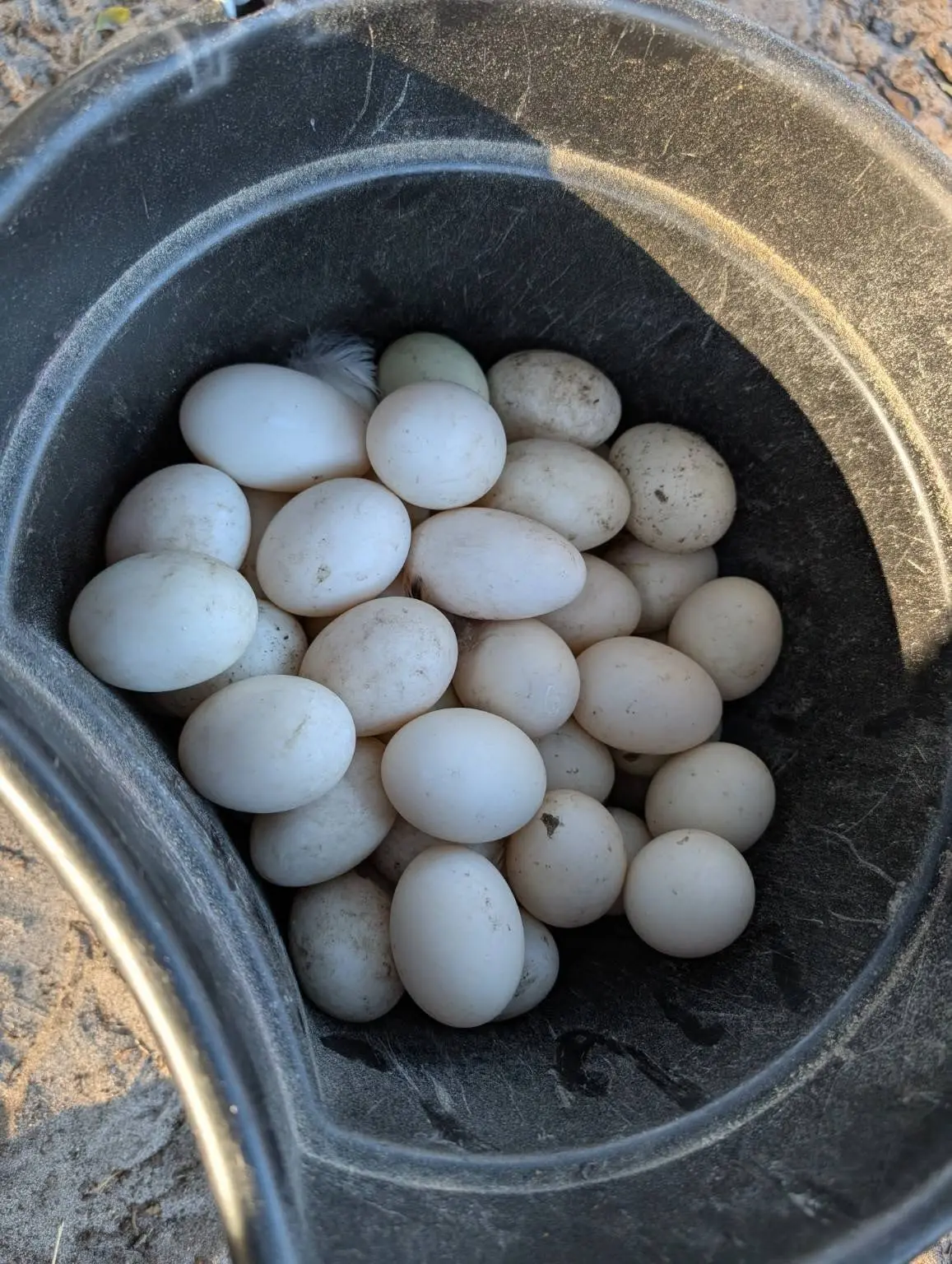
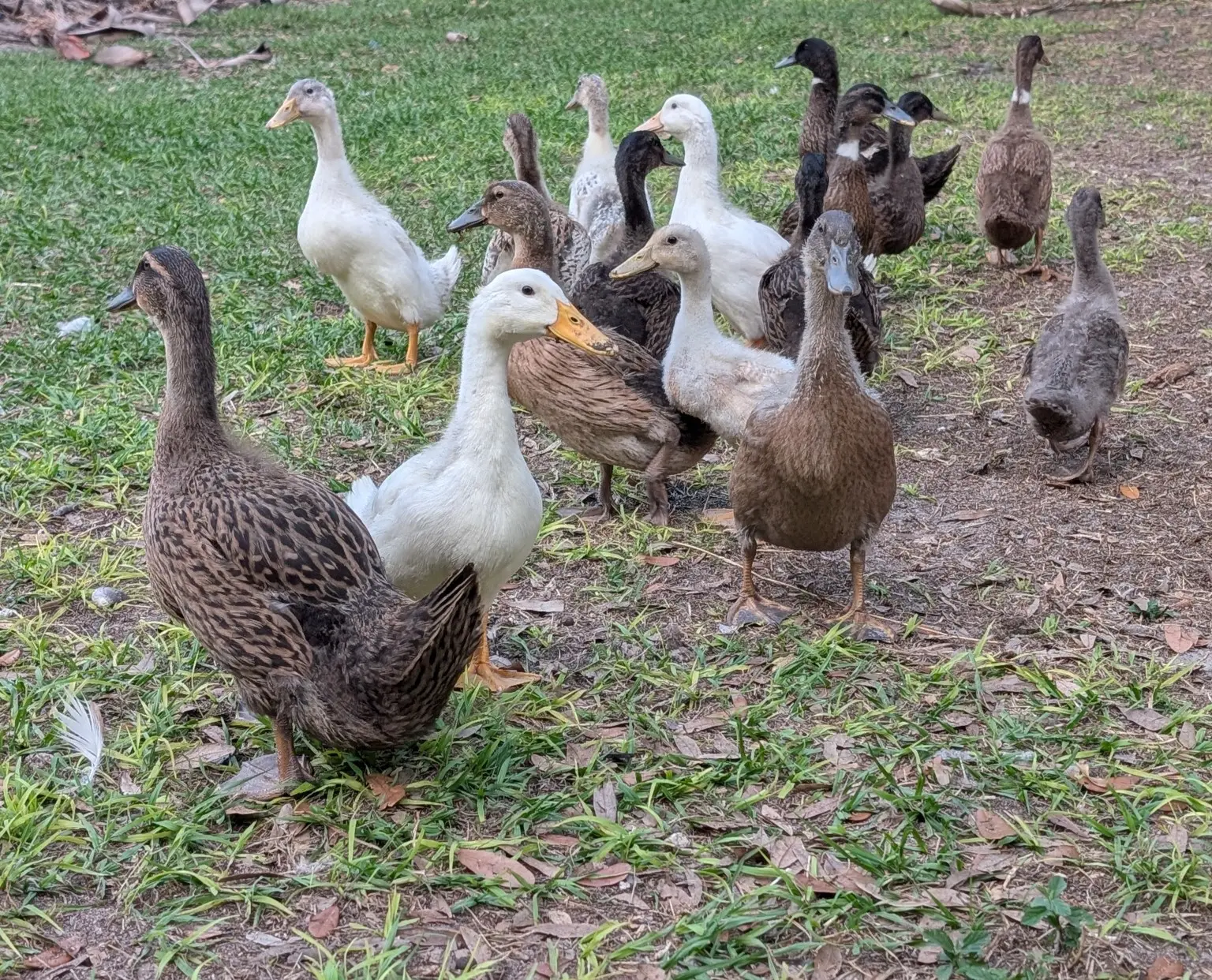
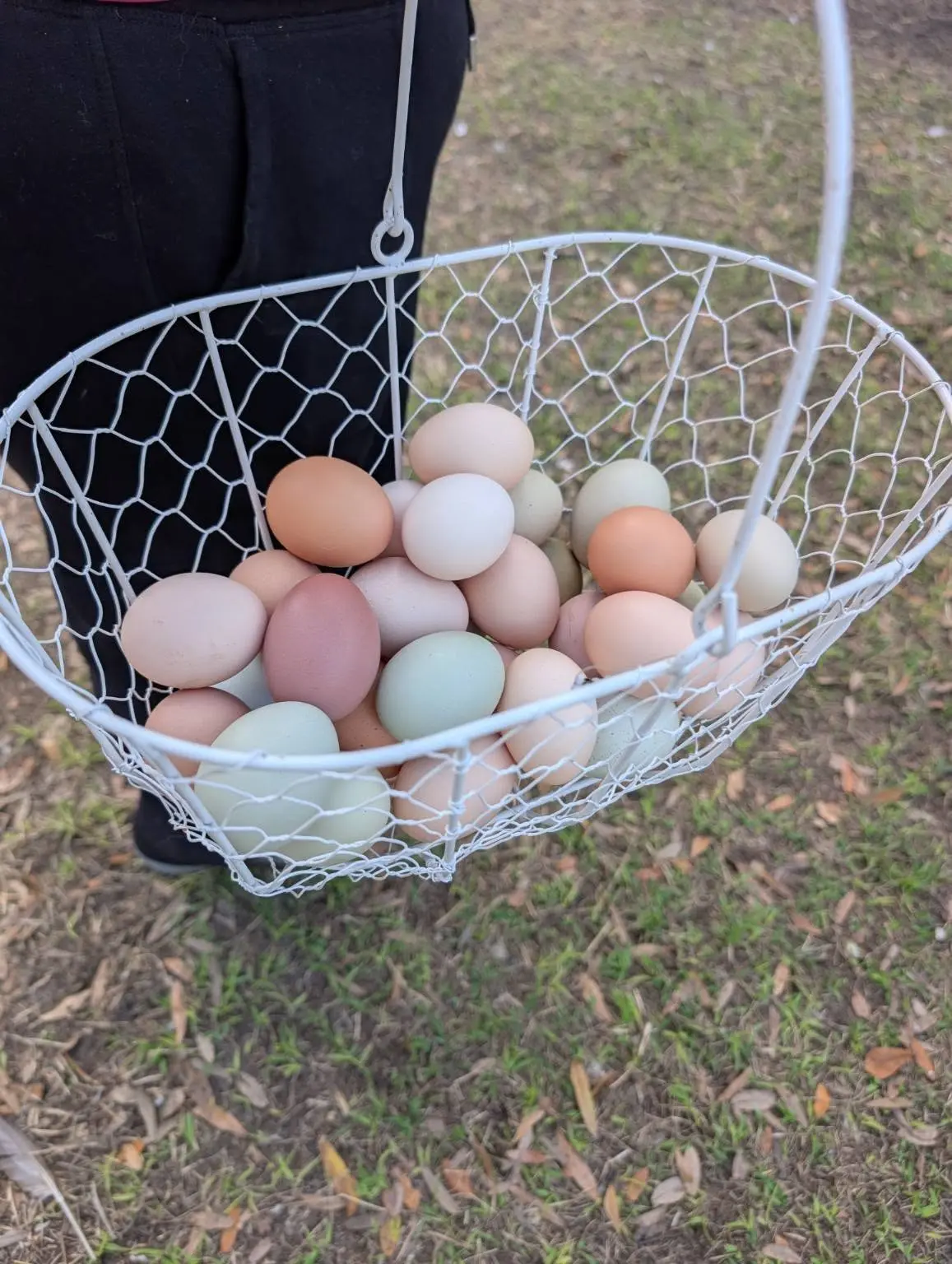
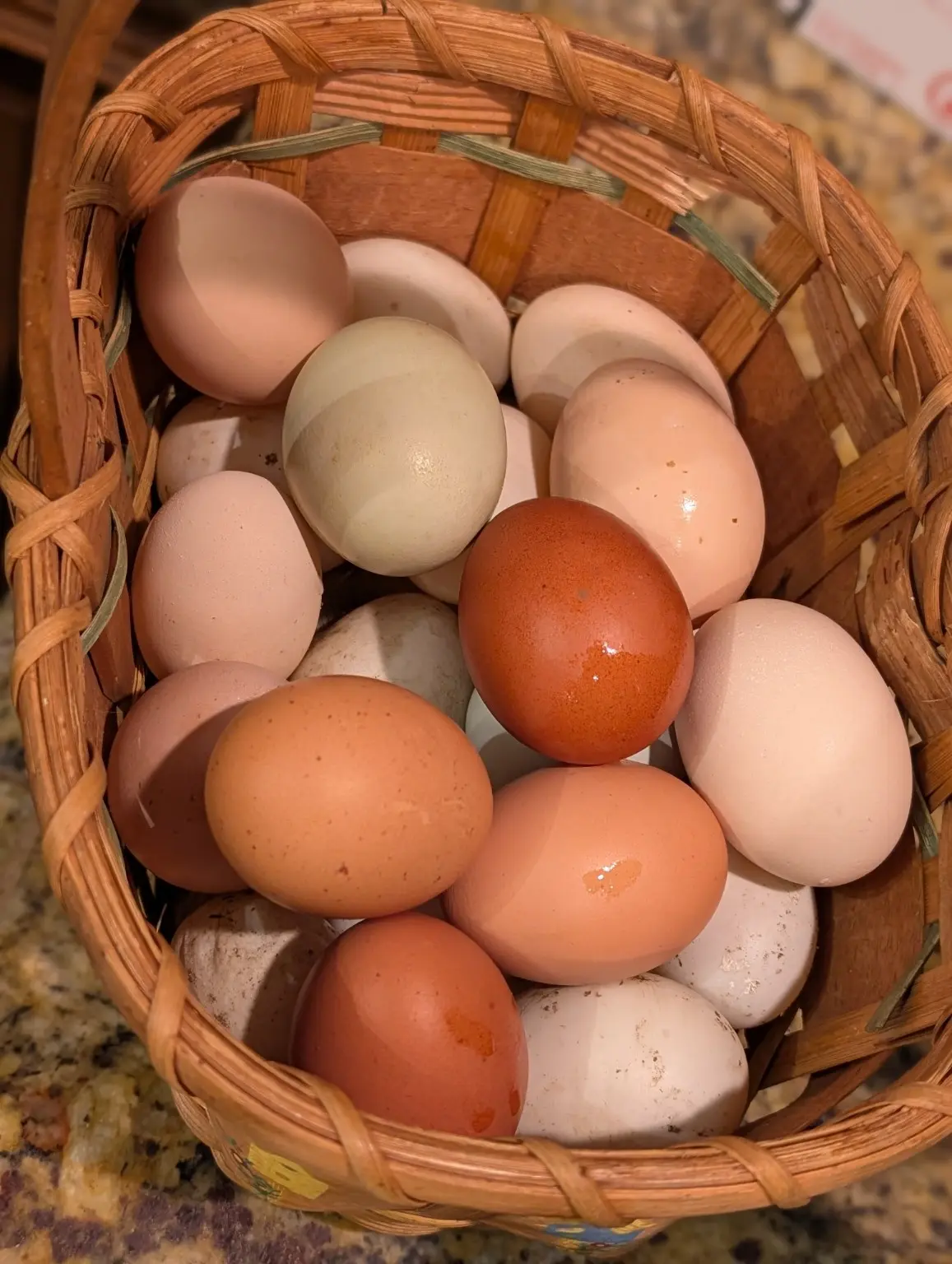
Baking With Duck Eggs: How to Substitute Them for Chicken Eggs
Learn when duck eggs can replace chicken eggs one-for-one, when to weigh them, and how extra egg mass changes cakes, cookies, brownies, custards and quick breads.
Amanda Grimes-ShokesOwner of DiamondTrail Ranch · Florida homesteader
Published Updated 11 minute read
The immediate answer
Baking With Duck Eggs
Duck eggs can replace chicken eggs in many recipes, but one-for-one works best only when the eggs are similar in edible weight and the recipe is forgiving. For cakes, custards, delicate bakes and large batches, crack and whisk the duck egg, then weigh the amount the recipe expects. Duck egg size varies too much for one universal ratio.
Key takeaways
What matters most
Do not assume one-for-one substitution in a precise recipe.
Crack each egg separately before adding it to the bowl.
Weighing beaten egg is the simplest repeatable baking method.
More egg can change structure, moisture and richness.
Cook and refrigerate according to current shell-egg guidance.
01
Measure the egg the recipe expects
A recipe written around large chicken eggs assumes a certain amount of liquid and solids. A larger duck egg can change that balance.
For cakes, custards and enriched doughs, beat the duck egg and weigh or measure the portion needed. Save the remainder safely for another immediate use rather than guessing through the whole batch.
Choose the substitution method by recipe
Recipe type
Practical approach
Why
Scramble or omelet
Use whole eggs to appetite
Exact structure is less sensitive
Cookies or quick breads
One-for-one may work; note size
Often forgiving, still variable
Cakes and custards
Weigh or measure beaten egg
Structure and moisture matter
Large batch
Scale by total egg weight
Consistency across eggs
02
Crack separately and inspect
Duck shells may feel different from chicken shells. Crack against a clean surface or bowl edge in a way that limits shell fragments, then add the inspected egg to the recipe.
Discard an egg with a cracked storage shell, unusual contamination or uncertain time-temperature history instead of relying only on smell.
03
Choose the method by recipe type
Some bakers prefer duck eggs for richness or structure, but outcomes depend on egg size, recipe chemistry and technique. One successful cake does not create a universal ratio.
Record the weight and result when adapting a favorite recipe. That turns a guess into a repeatable household method.
Where duck egg substitutions need the most care
Recipe
Likely flexibility
Best first approach
Pancakes and waffles
High
Use a similar-size egg and adjust batter consistency
Brownies
Moderate
Match weight to preserve fudgy versus cakey balance
Cookies
Moderate
Add measured beaten egg; watch spread and dough texture
Quick breads
Moderate
Match weight when the duck egg is substantially larger
Pound cake
Lower
Weigh every egg because egg mass drives structure
Custard
Lower
Keep the egg-to-liquid ratio precise
04
Use the weight method step by step
Estimate the chicken-egg target from the recipe, then weigh the duck eggs without shells. A USDA large chicken egg is a useful starting point at roughly 50 grams of edible egg, but recipe authors and real eggs vary.
Crack the duck egg into a separate bowl, whisk yolk and white together, place a clean bowl on the scale and tare it, then pour the target weight. Refrigerate the remainder promptly for another immediate use. This is more reliable than trying to divide a raw yolk and white separately.
Our calculator performs the same weight match and lets you enter the actual size of the duck eggs in your kitchen. It is a planning aid, not a claim that species differences disappear when the scale matches.
Start with the recipe’s intended chicken-egg size
Weigh edible egg without shell
Use total beaten-egg weight
Write down the result for the next batch
05
Use ordinary shell-egg safety
USDA advises cooking eggs until yolk and white are firm and cooking egg dishes to 160°F unless a validated recipe or pasteurized product provides a safe alternative.
Refrigerate leftovers promptly and use current USDA storage guidance. People at higher risk from foodborne illness should follow clinician and public-health advice.
Frequently asked questions
Questions readers ask next
Can I fry a duck egg like a chicken egg?
Yes, but the egg may be larger and take a different amount of time. Follow current safe-cooking guidance.
How many chicken eggs equal one duck egg?
There is no universal ratio. Egg sizes vary; weigh or measure for accuracy.
Are duck eggs good for cakes?
They can work very well, but the extra egg mass can change structure and moisture. Match the recipe’s expected amount.
Can I eat duck eggs with a runny yolk?
USDA advises cooking shell eggs until yolk and white are firm unless using an appropriately pasteurized product. People at higher risk should be especially cautious.
Supporting references
Where the outside information came from
We separate our family’s experience from outside guidance. These sources support the general information used on this page.