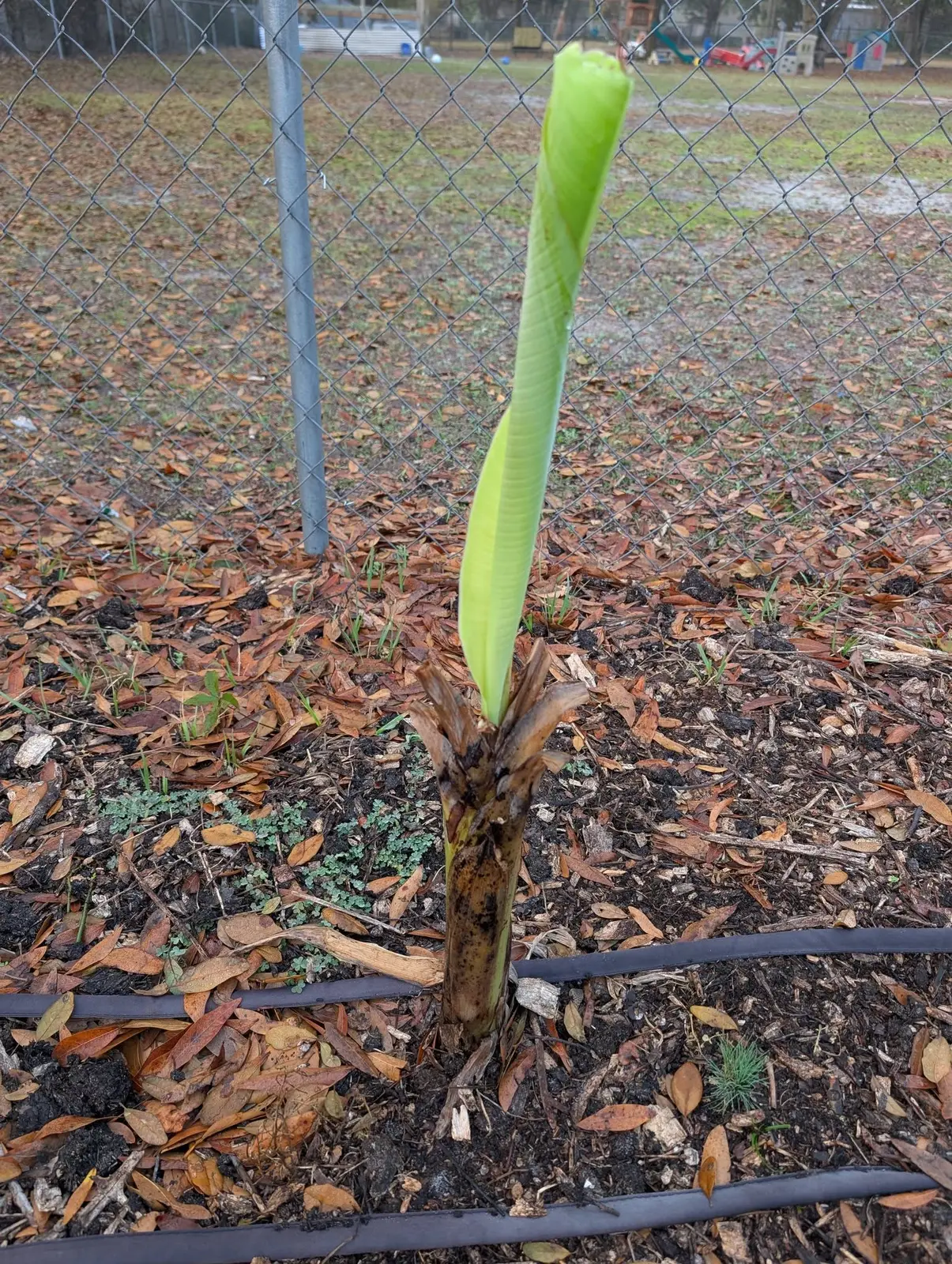
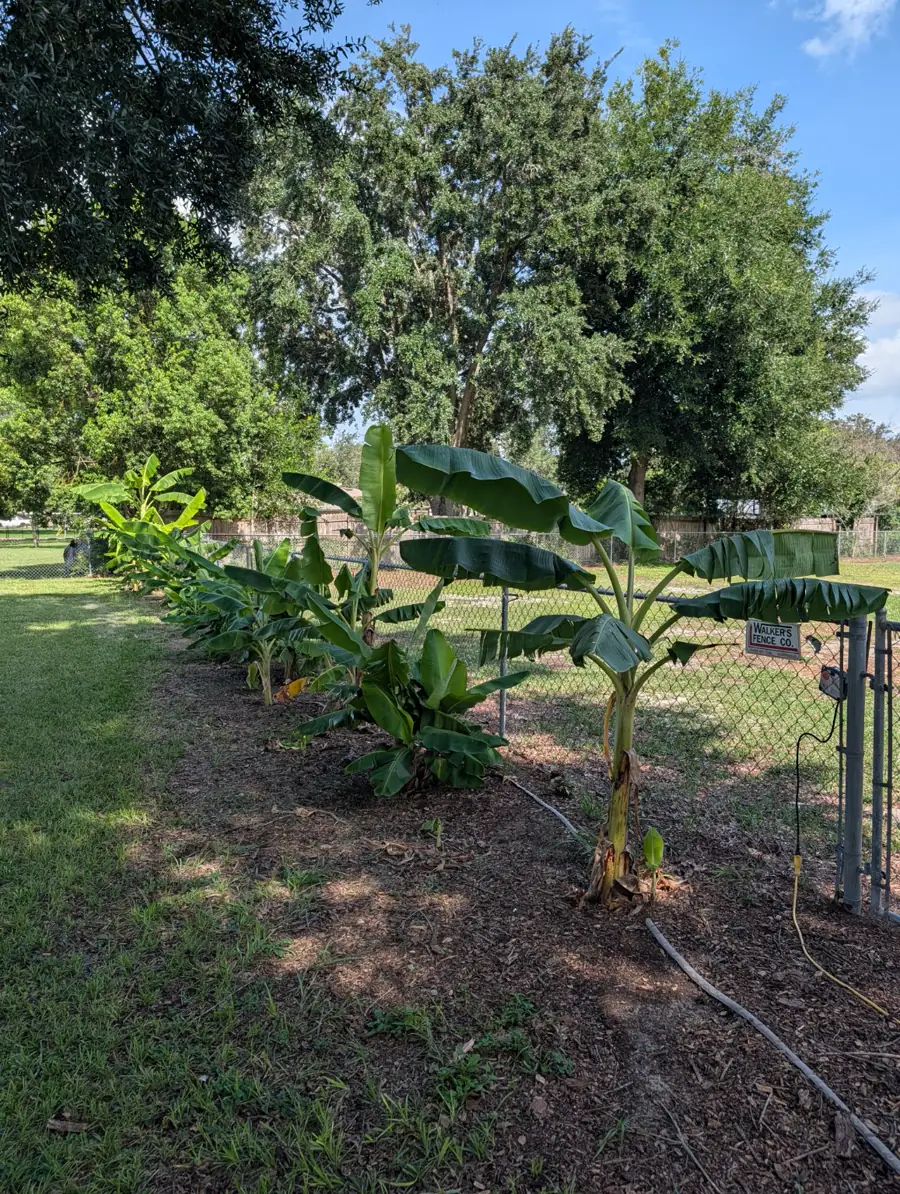
Assess stability and tissue condition
A browned leaf is not the same as a soft pseudostem. Look for leaning, splitting, sour odor, leaking tissue and a base that can no longer support itself. Remove material that could fall into a path, fence or neighboring plant.
If the pseudostem remains firm and upright, waiting can preserve tissue while you learn whether the center will move again.
Make a clean, manageable cut
Use a sharp clean blade and cut damaged material in sections you can control. Do not stand where a heavy wet pseudostem will fall. The cut height is less important than keeping the work safe and avoiding unnecessary injury to nearby pups.
Clean tools before moving to another mat, especially when disease is a concern.
Leave the underground mat unless removal is intentional
Our recovery happened because the mat stayed in the ground. Digging out the entire base during winter cleanup would have removed the buds that later produced seven plants.
Mark the location, keep mulch from burying the center in a wet mass and watch for pups as warm weather returns.
Handle the removed material honestly
Clean freeze-damaged leaves and pseudostem pieces can break down, but questionable diseased tissue should not be casually spread through the garden. Local disposal or disease guidance may be appropriate when symptoms are not simply cold injury.
Large wet pieces decompose faster when cut smaller, but only do that with tools and handling you can control safely.