Learn how to separate a banana pup with attached corm tissue and roots, move it promptly and judge recovery by new center growth.
Amanda Grimes-ShokesOwner of DiamondTrail Ranch · Florida homesteader
Published Updated 7 minute read
The immediate answer
Separate Banana Pups
To separate a banana pup, expose the connection to the mother mat, make a clean cut that keeps some corm tissue and roots with the pup, replant promptly, water it in and watch the center leaf for new growth.
Key takeaways
What matters most
Choose a well-established pup when possible.
A clean cut is better than repeated tearing.
Keep attached corm tissue and healthy roots.
Expect outer-leaf stress and judge progress by the center.
01
Choose the pup and the destination first
Prepare the pot or planting hole before cutting. A separated pup should not sit in the sun while you decide where it belongs. UF/IFAS prefers vigorous sword suckers for propagation; a broad-leaved, weakly attached water sucker may be less promising for fruit production.
Our seven plants were not identical, so we worked with the attachments we actually had. We did not label every pup type with certainty.
02
Expose and cut the connection
Pull soil back carefully until the direction of the connection is clearer. Place a clean sharp spade so the pup keeps part of the underground tissue. Press or strike decisively. Repeated levering can tear more roots than one deliberate cut.
Wear eye protection and stable footwear.
Keep hands out of the tool path.
Clean the tool before moving between plantings.
Discard tissue that is extensively dark, soft or foul-smelling.
03
Replant at the original depth
Set the pup so the base is not buried far deeper than it was growing. Firm the soil enough to remove large air pockets without compacting it into a hard block. Water thoroughly to settle the root zone.
For a container, use a pot with dependable drainage and enough weight to resist a top-heavy plant. A small pup in an enormous constantly wet pot can be harder to manage than a correctly sized container.
04
Expect transplant stress
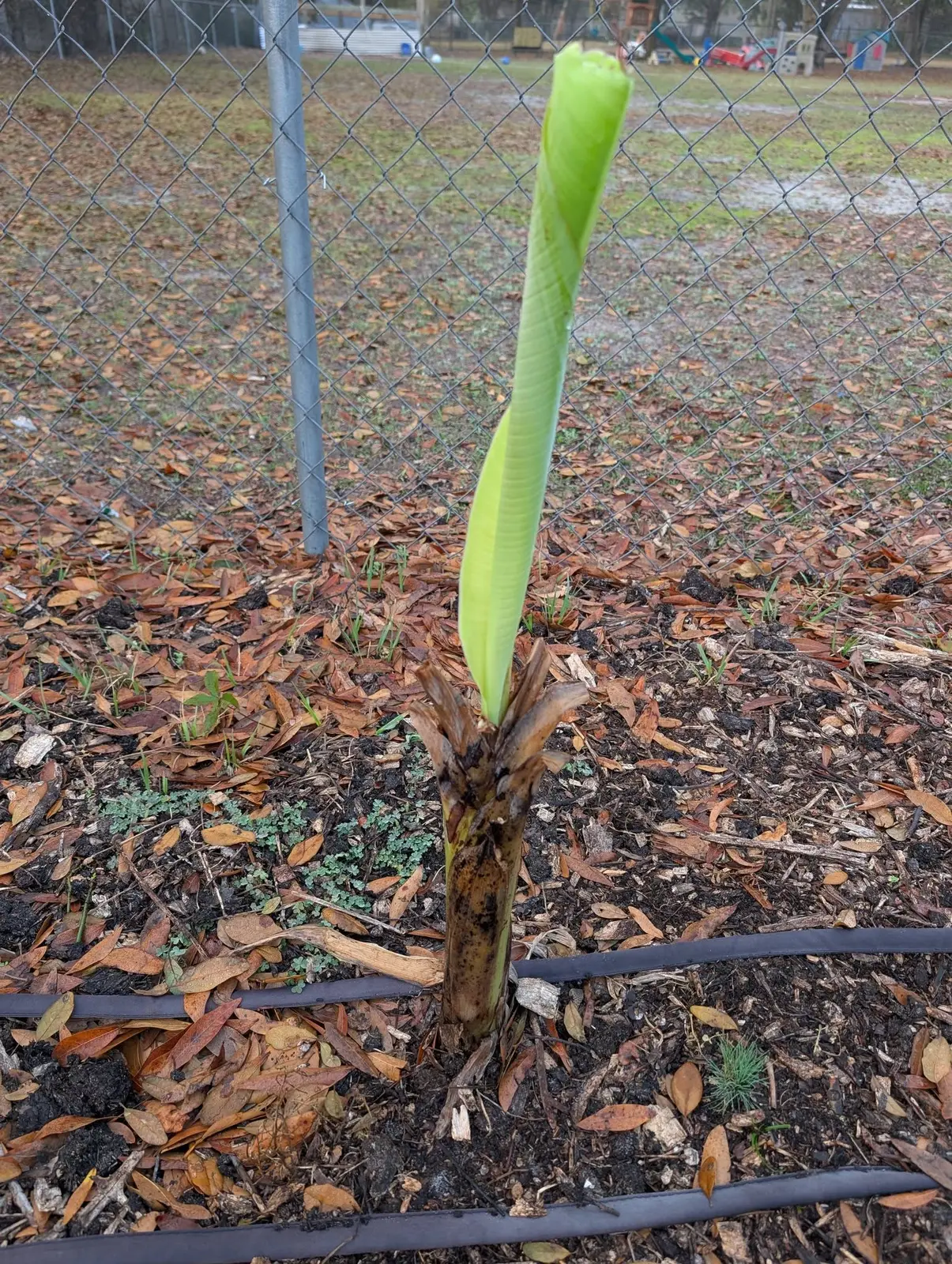
Outer leaves may fold, yellow or tear. That is not automatically failure. Watch the newest rolled center leaf. Continued movement or a fresh leaf is stronger evidence than the appearance of the oldest leaf.
Keep moisture consistent but do not leave the roots in stagnant water. Adjust shade temporarily when a newly separated pup is losing water faster than its reduced roots can replace it.
05
How our pups were used
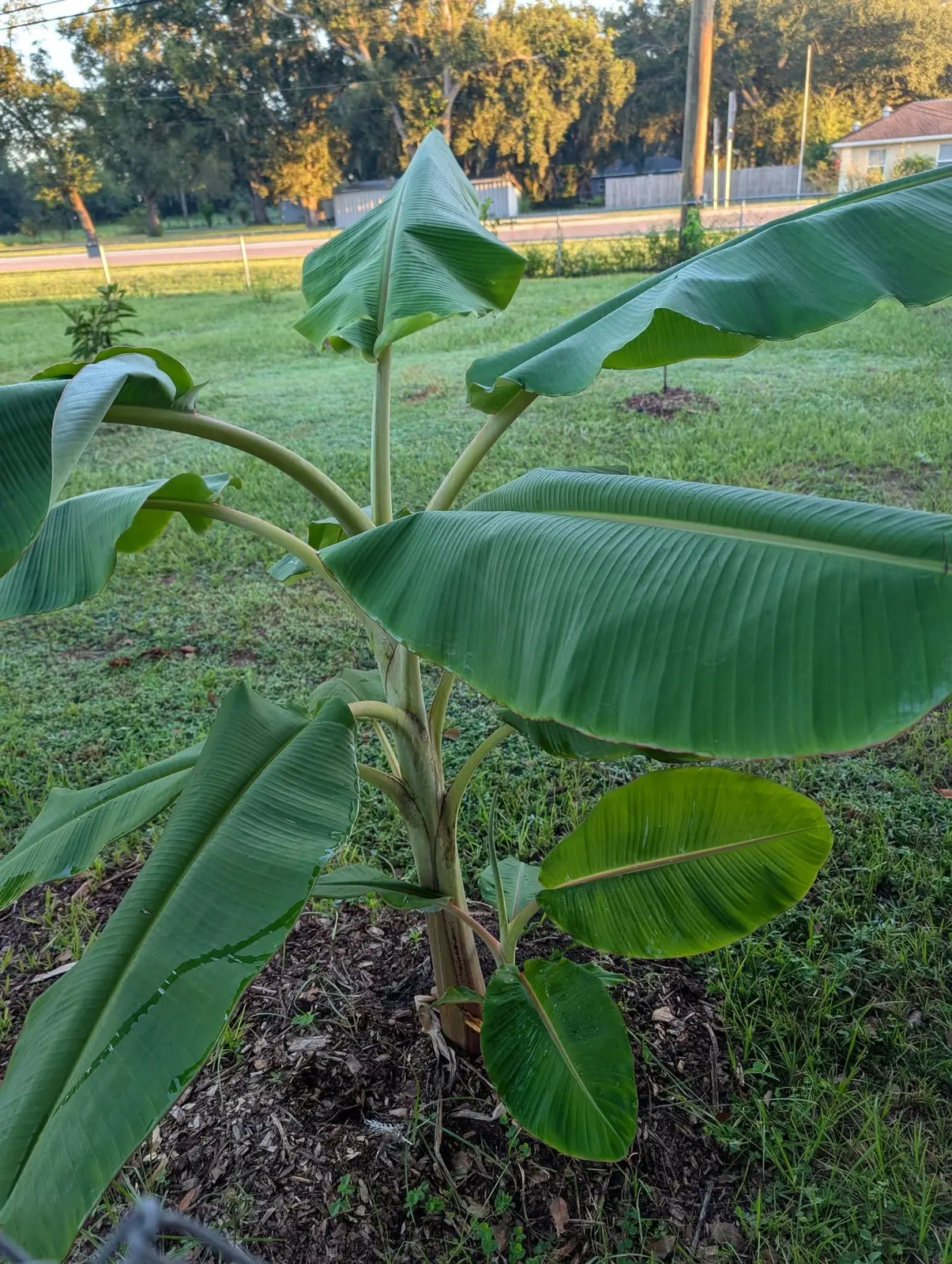
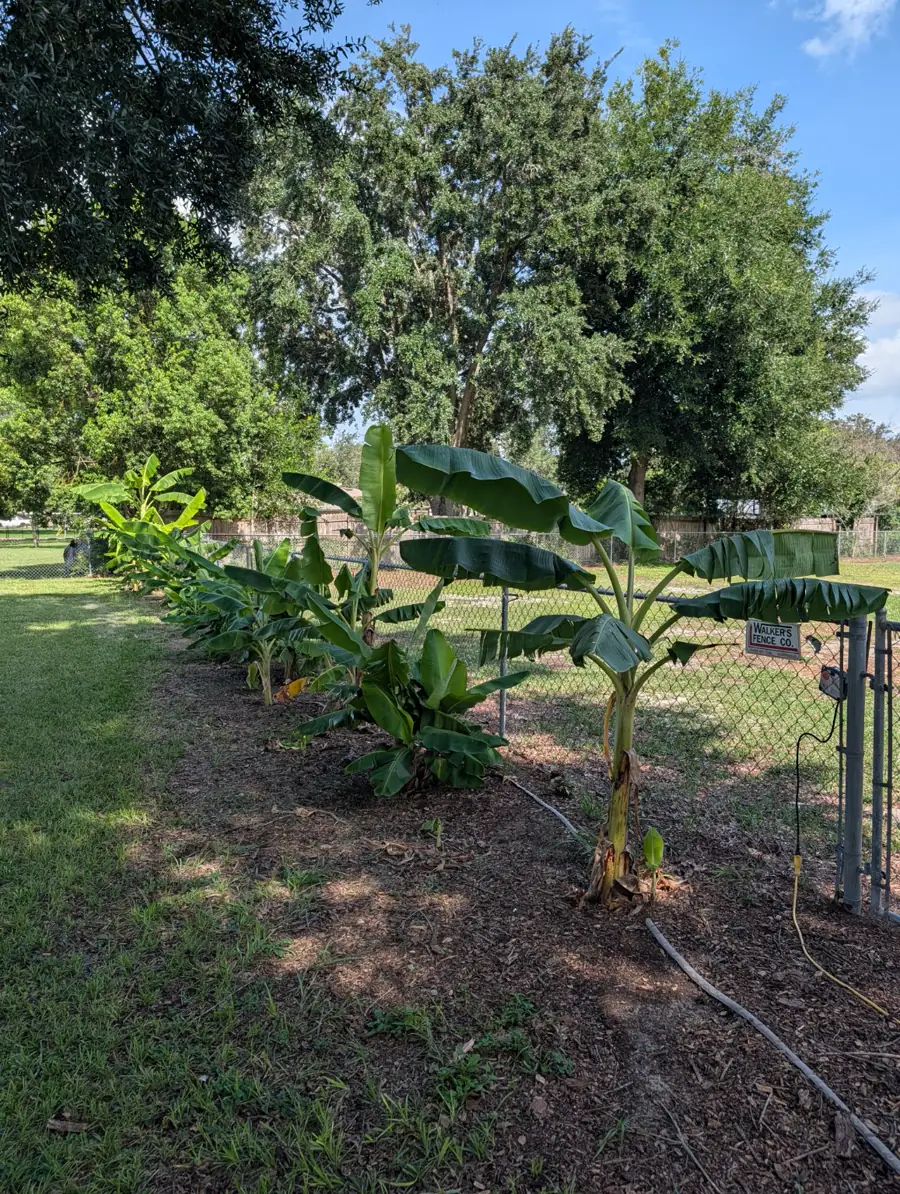
We potted several pups so we could watch them closely and hold them until permanent sites were ready. Other plants were intended for the fence line as part of a living privacy wall.
We did not claim seven perfectly uniform divisions. We treated each plant according to the roots and attachment it had.
Frequently asked questions
Questions readers ask next
How big should a banana pup be before separation?
Larger, well-rooted sword suckers are preferred propagation material. Smaller pups can be moved, but they may have fewer reserves and need closer aftercare.
Should I remove the leaves?
Reducing damaged or excessive leaf area can lower water demand, but do not cut blindly. Preserve the center growing point.
Can I pot a banana pup?
Yes, with a stable container, drainage, suitable mix, adequate light and a plan to prevent the pot from staying saturated.
Supporting references
Where the outside information came from
We separate our family’s experience from outside guidance. These sources support the general information used on this page.