Florida Goat Water and Shelter: Heat, Shade, Rain and Mud
Plan goat shade, airflow, dry sleeping space, drainage and redundant water for Florida heat, downpours and outages.
Amanda Grimes-ShokesOwner of DiamondTrail Ranch · Florida goat keeper
Published Updated 9 minute read
The immediate answer
Goat Water and Shelter
Florida goats need deep shade, moving air, a genuinely dry resting area and more than one way to receive clean water. Place containers where they stay shaded and observable, route runoff away from shelters and gates, and keep backup buckets or storage ready for pump, hose and power failures.
Key takeaways
What matters most
Shade without airflow can still trap heat
Water redundancy includes containers, transport and manual filling
Roof runoff needs a destination
Mud control begins with traffic and drainage, not endless bedding
01
Build a water chain, not one container
Trace water from source to animal: well or utility, power, pump, pipe, hose, valve and trough. Every connection can fail. A second container does not help if both depend on the same broken hose.
Keep water shaded when practical, check flow daily and scrub before algae and residue become established. Automatic valves save labor but still need manual verification.
02
Combine shade with airflow
A roof or tree canopy can reduce solar load, but a tightly enclosed shelter may hold heat and humidity. Orient openings to useful breezes while maintaining rain protection and structural stability.
Watch the animals, not only the thermometer. Heat tolerance varies with age, body condition, coat, health, acclimation and humidity. Distress requires prompt cooling and veterinary guidance.
03
Give heavy rain somewhere to go
Downspouts, compacted paths, gate traffic and bare soil can concentrate water exactly where goats must stand. Grade and stabilize high-use areas carefully, move feeders out of runoff and protect a dry sleeping surface.
Repeatedly adding bedding over saturated soil can create a deeper wet pack. Fixing roof discharge and traffic flow usually matters more than hiding the surface.
04
Shelter can be simple, but not careless
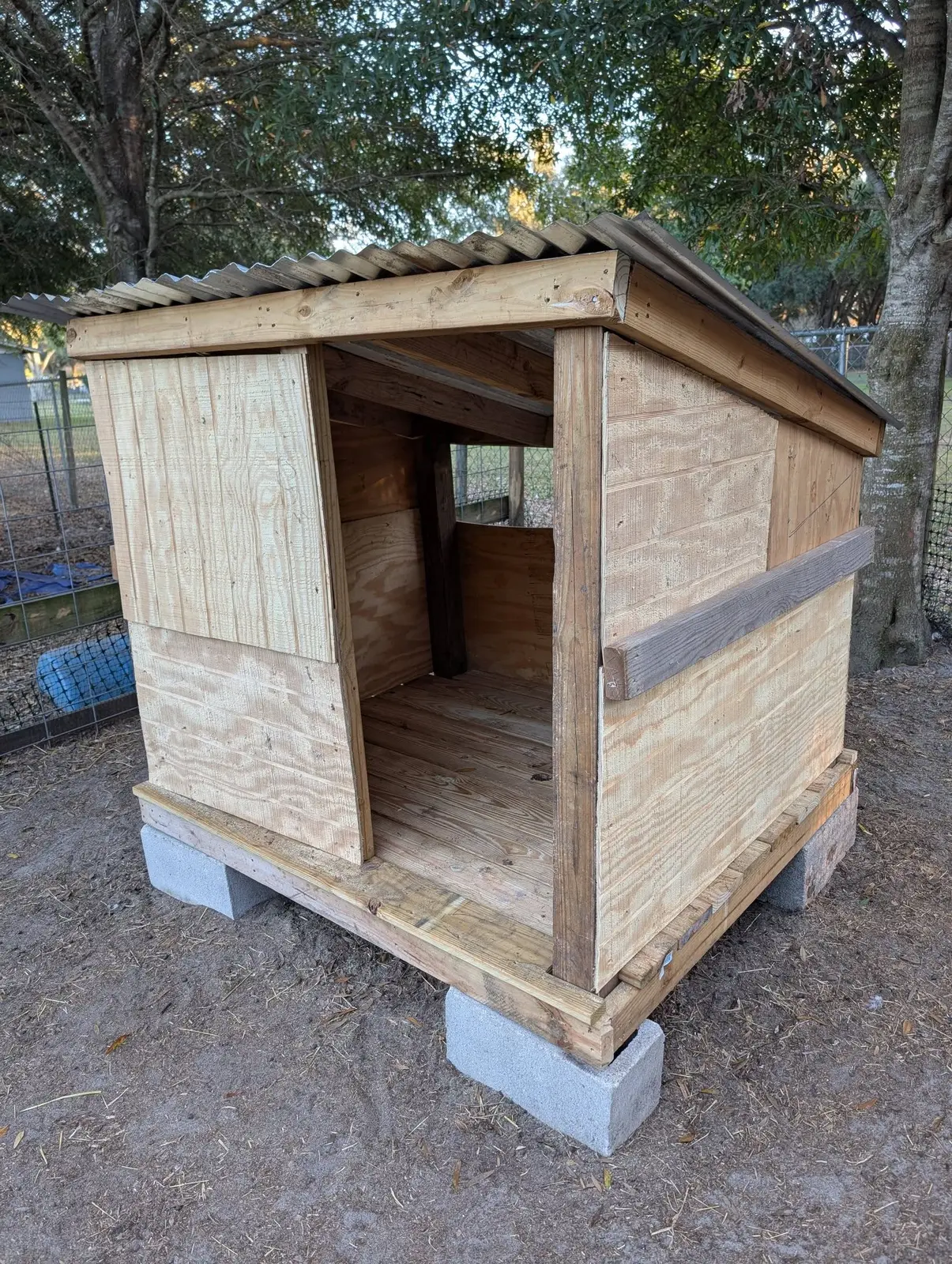
Goats need space to rest without being crowded out, protection from wind-driven rain and surfaces that can be cleaned and inspected. Portable shelters add flexibility; permanent structures may better support storage and storms. Both require safe anchoring and ventilation.
Separate feed storage from animal access, remove sharp edges and inspect after strong weather. A structure that looks sturdy from the yard may still have a loose panel at goat height.
05
Practice the outage before summer
Know how much water the herd uses on a hot day, how containers will be moved and which route remains passable after rain. Label potable and nonpotable storage clearly and use food-safe containers for drinking water.
A calculator can help size a starting reserve, but observation and measured use on your property should replace generic assumptions.
Frequently asked questions
Questions readers ask next
How much water does a goat drink in Florida?
There is no single number. Temperature, body size, diet, lactation, health and individual behavior change intake. Measure your herd’s use and plan extra capacity for heat.
Do goats need an enclosed barn?
Not necessarily. They need a safe, dry, well-ventilated resting area with weather protection; the right structure depends on the property and storm plan.
How do I stop a goat pen from becoming mud?
Redirect roof water, reduce concentrated traffic, stabilize high-use areas, protect ground cover and avoid overstocking. One surface product rarely fixes the whole drainage problem.
Supporting references
Where the outside information came from
We separate our family’s experience from outside guidance. These sources support the general information used on this page.