Protect backyard chickens during Florida heat with deep shade, open airflow, redundant cool water, lower-stress chores and a plan for birds that stop coping.
Amanda Grimes-ShokesOwner of DiamondTrail Ranch · Florida homesteader
Published Updated 11 minute read
From our homestead
The flock will tell you where the useful shade is
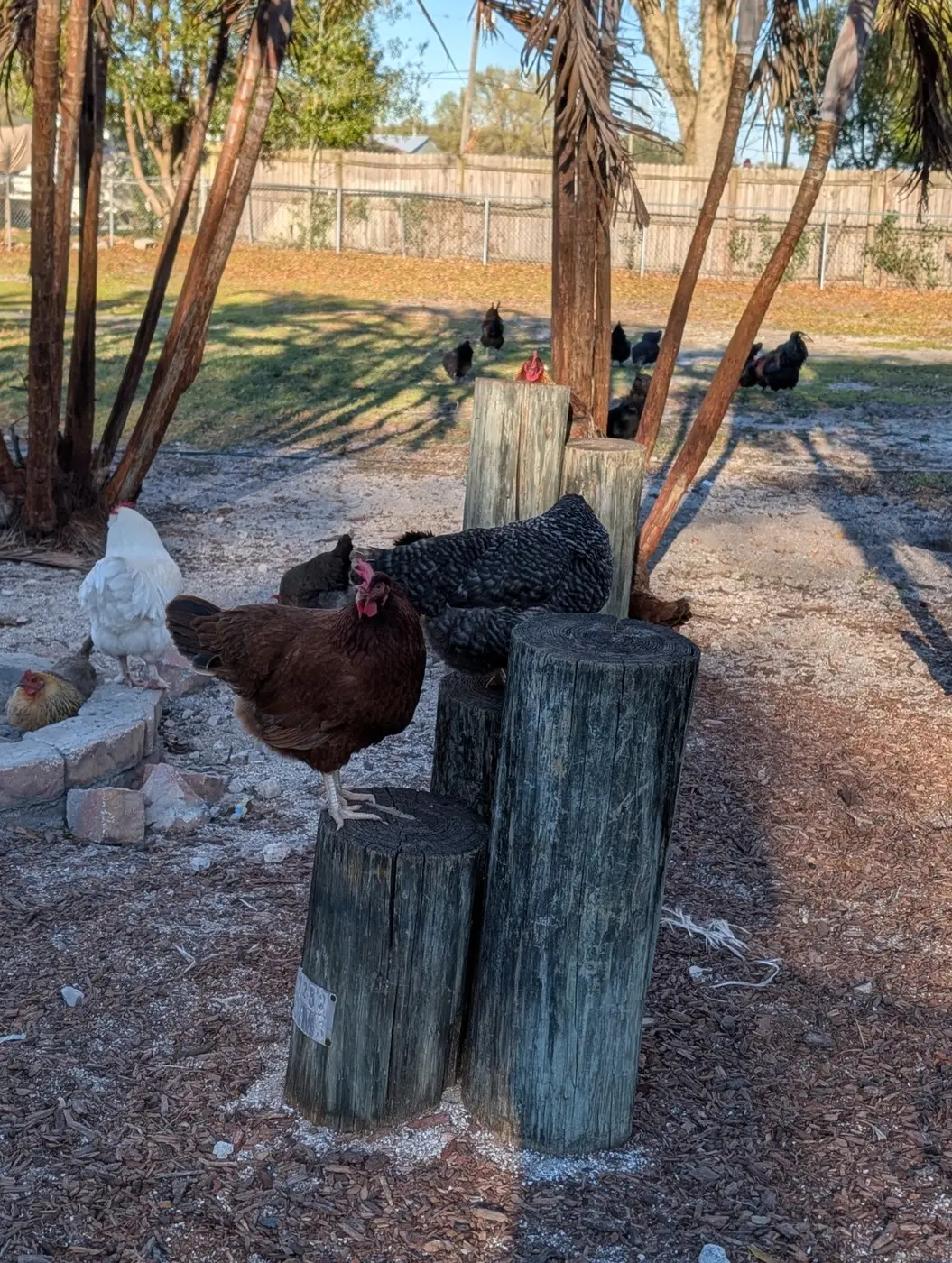
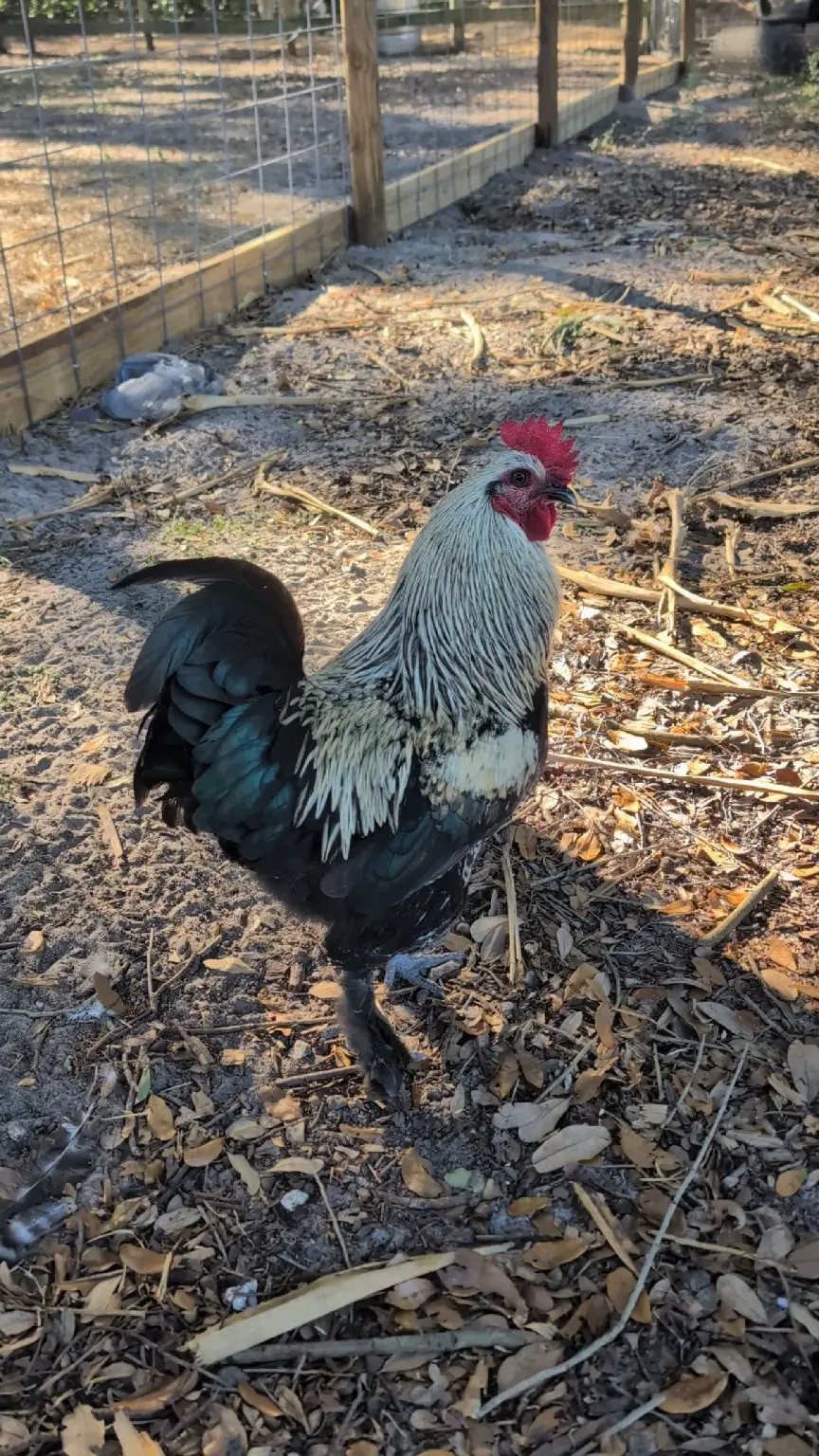
On a hot Florida afternoon, our chickens spread toward tree shade, cooler ground and the places where air still moves. That behavior is useful information. A shade patch that looked generous at breakfast may hold only a few birds when the sun shifts.
Heat management is a stack of protections: shade, airflow, clean water, low-stress timing and observation. We do not treat frozen fruit, one fan or a heat-tolerant breed as permission to neglect the rest of the system.
The immediate answer
Chicken Heat Management
Keep chickens cooler in Florida by combining deep afternoon shade, unrestricted safe airflow, more than one clean water point, dry ground, low-stress handling and frequent observation. No frozen treat or fan can make up for a closed hot coop or failed water source.
Key takeaways
What matters most
Shade must cover the birds during the hottest afternoon hours.
Water should remain clean, reachable and backed up.
Panting and wing spreading are warnings to observe, not a diagnosis.
Air movement should not depend on one powered fan.
A bird that is collapsing, unresponsive or struggling to breathe needs urgent qualified help.
01
Start with shade that follows the sun
Morning shade can disappear when heat peaks. Watch the enclosure through the afternoon and note where every bird can stand without crowding. Roof shade, trees and shade cloth can work together, but airflow still needs an open path.
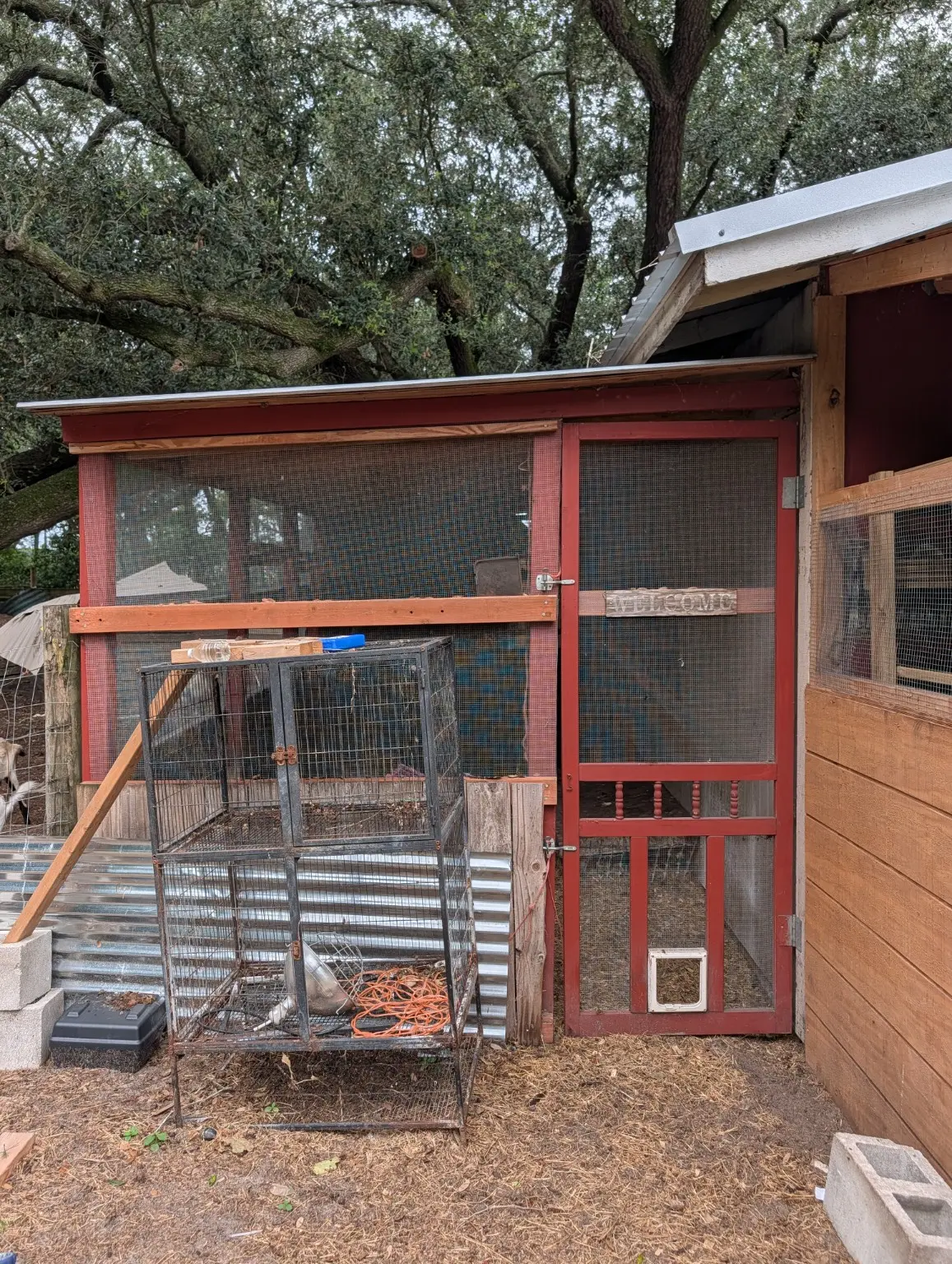
A metal roof or dark enclosed box can radiate heat downward. Shade the structure itself where possible and avoid sealing the coop in an attempt to block every rain angle.
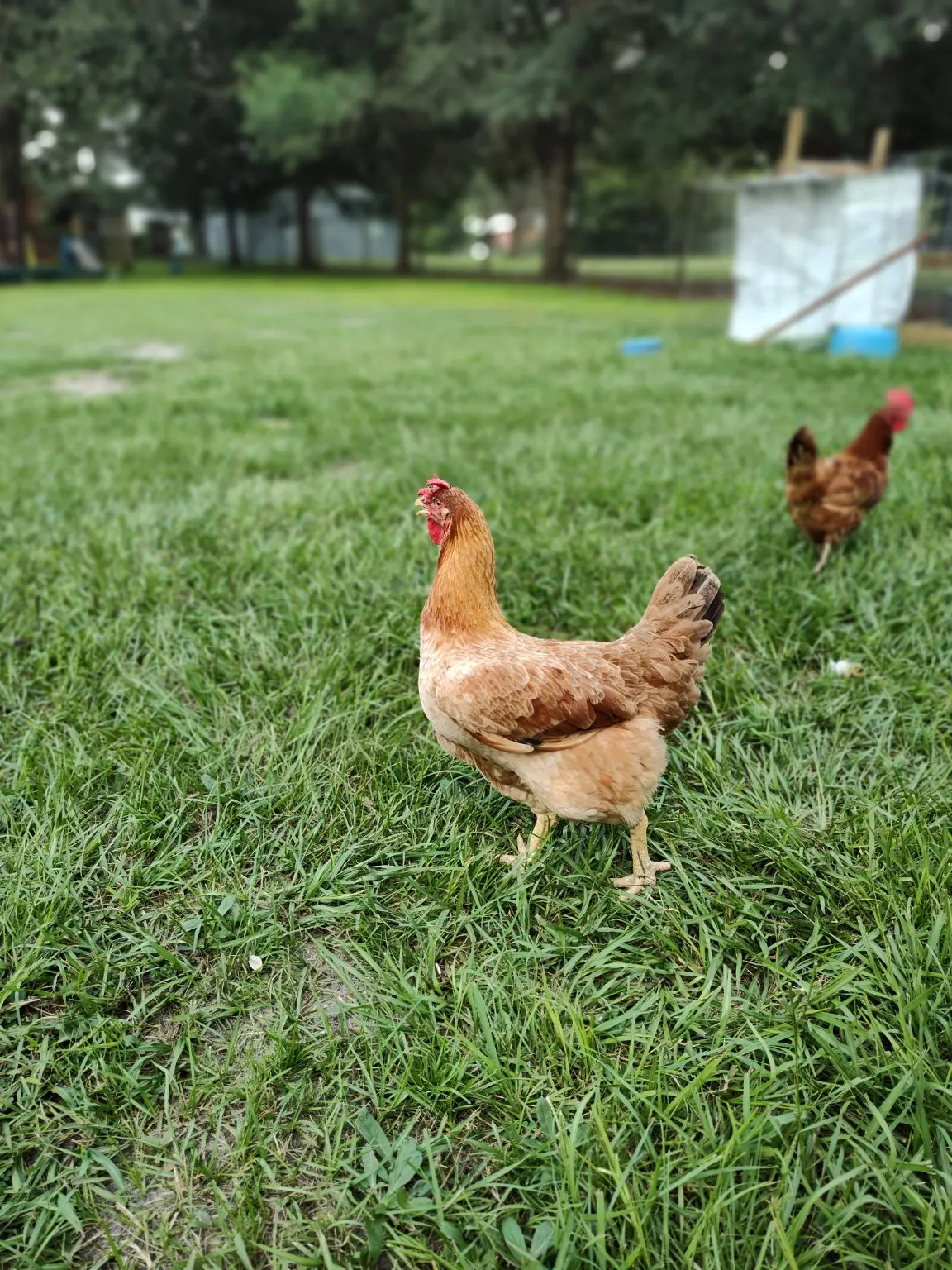
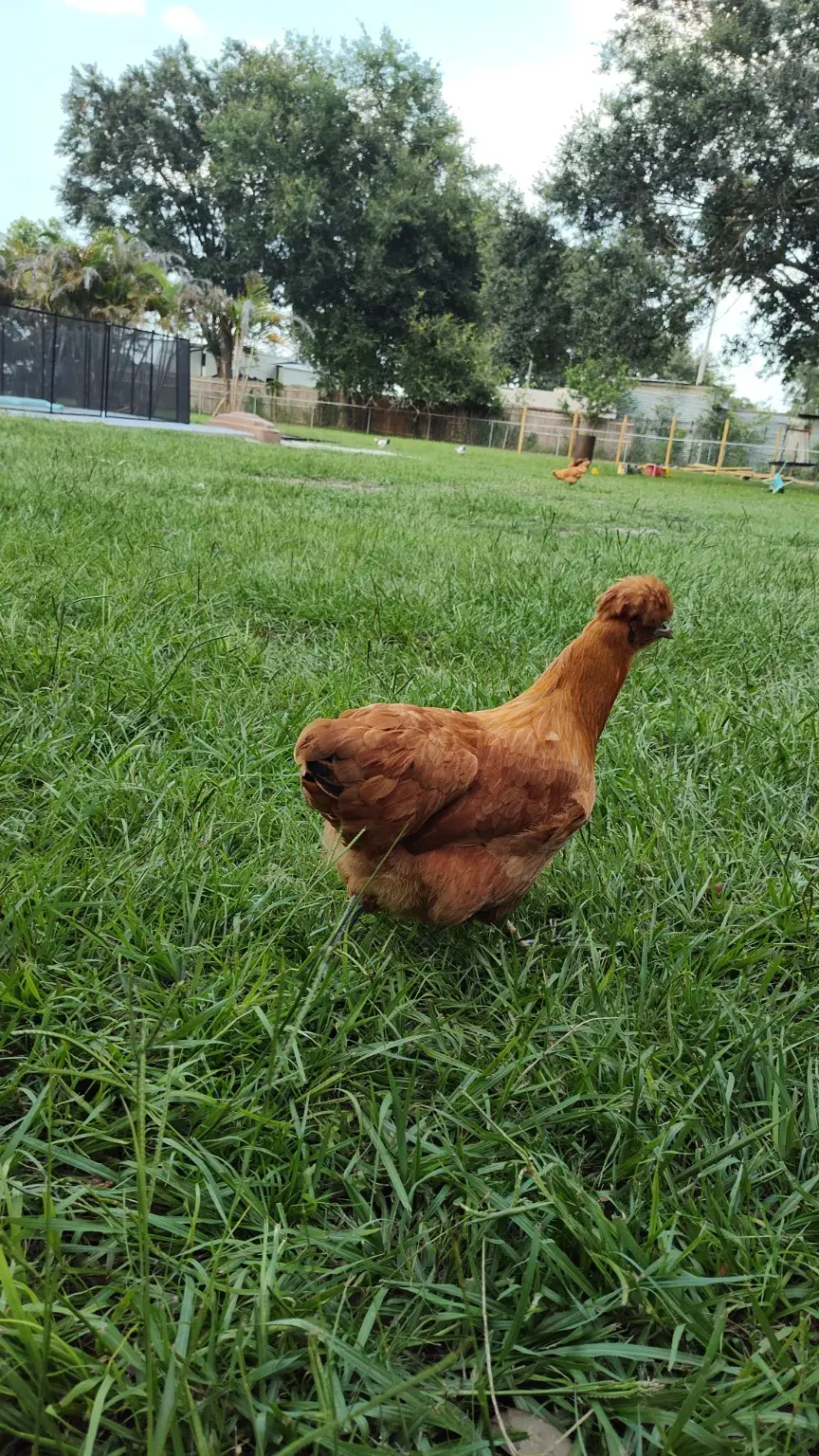
Open ground can look comfortable in a photograph; the same space needs a dependable shaded refuge when the afternoon sun moves across it.
02
Treat water as the first heat-safety system
Place multiple containers so a dominant bird, tipped pan, clogged valve or hot sunny location does not remove the flock’s only water. Check the actual water, not only the hose or reservoir.
Clean containers frequently because Florida warmth encourages algae and biofilm. Keep cords and wet areas managed so fans, pumps and people do not share an unsafe muddy route.
Use more than one drinking location.
Place water in dependable shade.
Scrub rather than only topping off.
Keep a non-electric backup for powered systems.
03
Watch the flock before the emergency
Panting, holding wings away from the body, reduced activity, crowding shade and reduced feed intake can accompany heat stress. Those signs are reasons to reduce stress, improve conditions and observe closely, not proof of one diagnosis.
Know which qualified veterinarian or extension contact you would call. Sudden collapse, severe breathing difficulty, loss of coordination or a bird that does not respond to improved conditions should not wait for internet guessing.
A practical heat-observation ladder
What you see
Immediate system check
Next step
Flock seeks shade
Is enough deep shade available?
Expand usable shade and observe
Panting or wings held out
Water, airflow, crowding, handling
Reduce stress and monitor closely
One bird isolates
Compare with the rest of the flock
Move only if safe; seek guidance
Collapse or severe distress
Do not delay for a perfect diagnosis
Contact urgent veterinary help
04
Build a heat plan that survives a power outage
Powered fans can improve air movement, but the enclosure should not become immediately dangerous when power fails. Large passive openings, roof-level exhaust paths and shade continue working without electricity.
Write down how to move water, which enclosure is coolest, how birds can be separated and who can complete the checks if the primary caretaker is away.
Frequently asked questions
Questions readers ask next
Should I put ice in chicken water?
Cool water may help, but clean availability and frequent checks matter more than relying on ice. Avoid creating slippery wet areas or assuming ice replaces shade and airflow.
Do chickens need a fan in Florida?
A safely installed fan can help in some layouts, but passive ventilation and shade should still protect the flock when electricity or the fan fails.
Should I feed chickens during the hottest part of the day?
Keep a complete ration available according to your feeding plan, but schedule stressful handling and major chores for cooler periods when possible.
When is heat stress an emergency?
Collapse, severe respiratory effort, loss of coordination, unresponsiveness or rapid deterioration requires urgent qualified veterinary guidance.
Supporting references
Where the outside information came from
We separate our family’s experience from outside guidance. These sources support the general information used on this page.