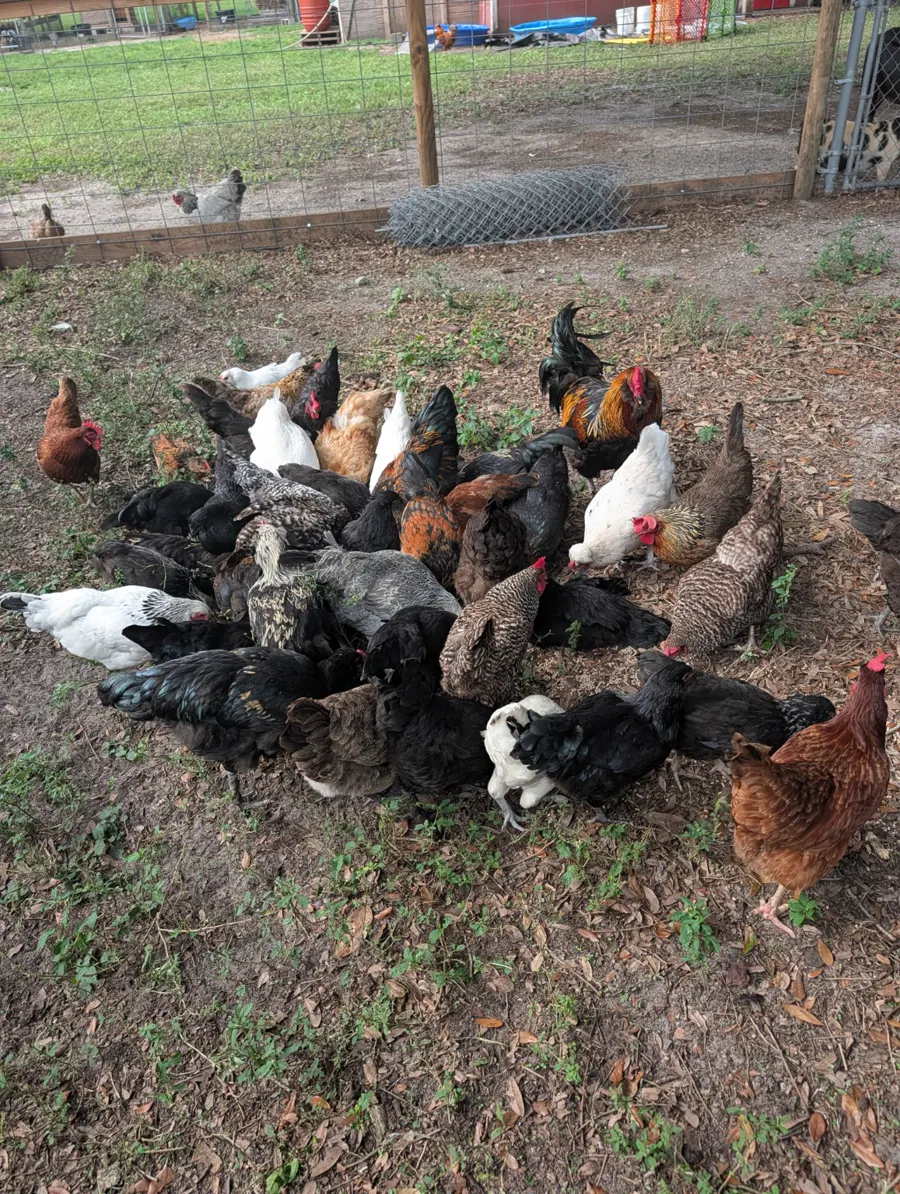
Common Florida Backyard Chicken Problems: What to Check First
Use a calm first check for heat stress, respiratory changes, parasites, injuries, production drops and sudden illness without diagnosing online.
Amanda Grimes-ShokesOwner of DiamondTrail Ranch · Florida homesteader
Published Updated 12 minute read
From our homestead
Know normal before you need to describe abnormal
Counts, feeding and water checks create a daily picture of the flock without turning every chore into a medical exam. When one bird stands apart, breathes differently or stops competing for food, that ordinary baseline makes the change easier to describe.
This guide is intentionally not a symptom-to-remedy chart. Heat stress, injury, parasites, respiratory disease and flock pressure can overlap. The useful first step is to reduce obvious hazards, document the change and know which signs need veterinary or animal-health help.
The immediate answer
Common Chicken Problems
When a Florida chicken seems wrong, first reduce immediate hazards, compare the bird with the flock, verify water, feed, shade and ventilation, document the signs and contact a poultry veterinarian or official animal-health source when illness is severe, sudden, spreading or unexplained.
Key takeaways
What matters most
One sign rarely identifies one disease.
Isolate only in a space that remains safe, shaded and ventilated.
Do not move equipment between pens without cleaning and biosecurity thought.
Sudden deaths or unusual spreading illness may be reportable.
Human handwashing and dedicated poultry footwear protect the family and flock.
01
Use the same first check every time
Record which bird changed, when it began, whether others are affected and what changed in weather, feed, water, housing or flock membership. Photograph visible signs and droppings without relying on a photograph for diagnosis.
Verify the basics physically: water is flowing, feed is fresh, shade is usable, the coop is not overheated and the bird is not trapped, injured or excluded by the flock.
Observation is not diagnosis
Observation
System checks
Escalation reason
Panting
Heat, airflow, water, handling
Severe effort, collapse, no improvement
Reduced laying
Age, molt, daylight, heat, feed
Sudden flock-wide change with illness
Respiratory noise
Dust, ammonia, ventilation, spread
Discharge, swelling, multiple birds
Lameness
Foot, leg, perch, injury, surface
Severe pain, open wound, inability to move
Sudden death
Do not handle casually
Contact veterinarian or animal-health officials
02
Keep one problem from becoming a flock problem
USDA biosecurity guidance includes limiting unnecessary visitors, using dedicated footwear, cleaning equipment and watching for illness. New birds and equipment from another flock deserve particular caution.
An isolation pen should have its own water and feed equipment where practical. Care for healthy birds before the questionable bird, then clean hands, footwear and tools.
Wild birds can visit the same property. Keep poultry feed and water protected from wildlife where practical and follow current biosecurity guidance.
03
Know when Florida officials need the call
FDACS lists warning signs associated with avian influenza, including sudden death, lack of energy or appetite, decreased egg production, swelling, discoloration, respiratory signs, incoordination and diarrhea. Those signs can have other causes; testing is what determines the disease.
FDACS asks people to report unusual sickness or die-offs in domestic poultry. Use the current official contact information on the linked FDACS page rather than relying on an old saved number.
04
Protect people during every flock check
CDC recommends handwashing after birds, eggs or poultry equipment; dedicated outdoor shoes; outdoor equipment cleaning; and keeping poultry out of household food areas.
Do not let the search for an answer lead to unsafe handling of a sick or dead bird. Follow current veterinary, FDACS and public-health instructions.
Frequently asked questions
Questions readers ask next
Can I diagnose a sick chicken from one symptom?
No. Many conditions share signs. Document what you see and use a poultry veterinarian, extension professional or animal-health official.
Should I isolate every quiet chicken?
A bird that is being injured, excluded or may spread illness may need separation, but the isolation space must be safe and the move should not add dangerous stress.
When should I call FDACS?
Use the current FDACS avian-influenza and reportable-disease pages for unusual sickness, sudden deaths or suspected reportable disease.
Can healthy-looking chickens carry germs that affect people?
Yes. CDC notes that backyard poultry can carry Salmonella and other germs while appearing healthy.
Supporting references
Where the outside information came from
We separate our family’s experience from outside guidance. These sources support the general information used on this page.