Florida Chicken Coop Ventilation: Move Heat and Moisture Out
A Florida chicken coop needs large protected airflow paths, roof-level heat escape, dry roosting space and rain control without becoming a sealed hot box.
Amanda Grimes-ShokesOwner of DiamondTrail Ranch · Florida homesteader
Published Updated 10 minute read
From our homestead
Florida airflow has to work on still, humid nights
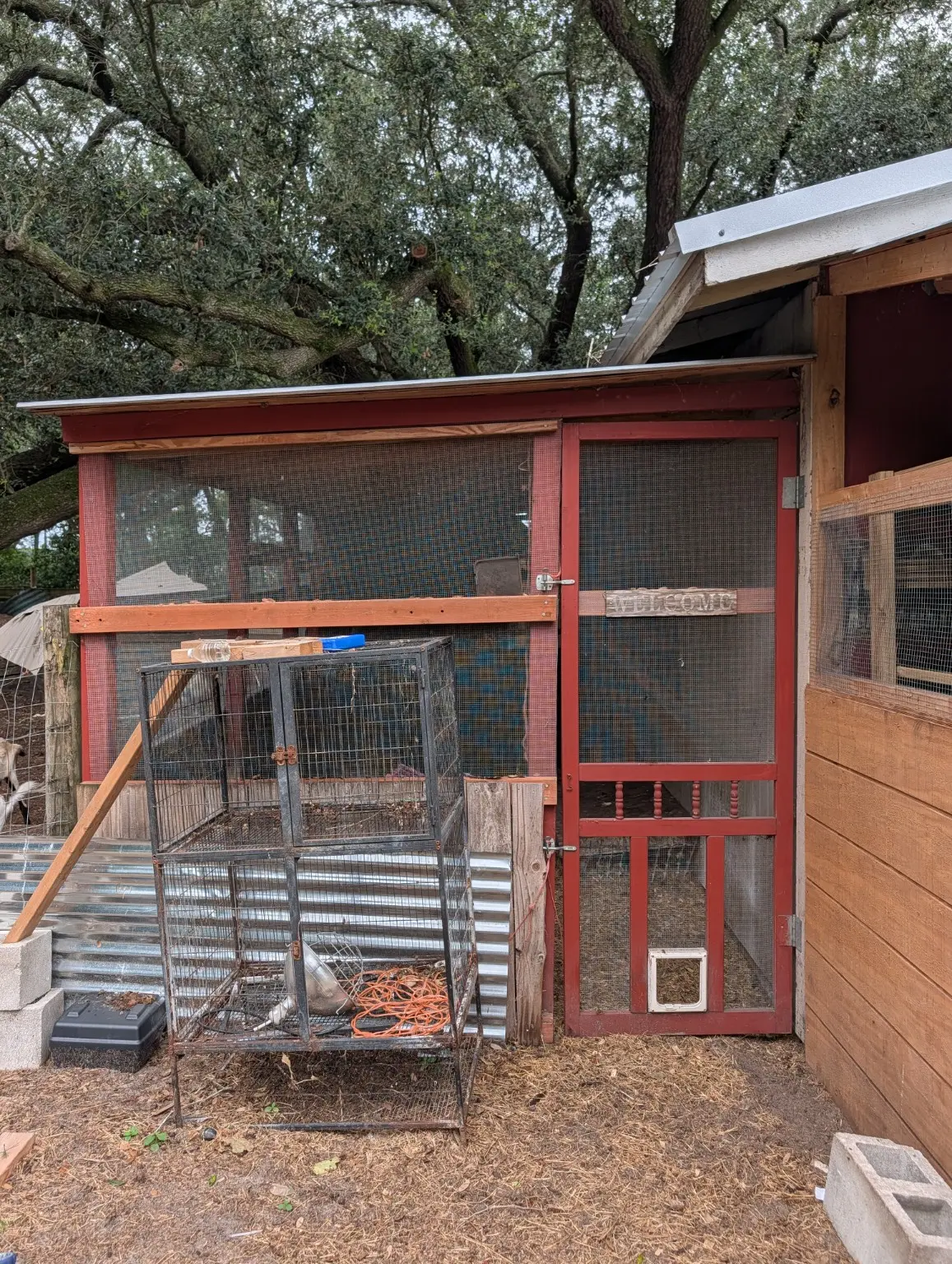
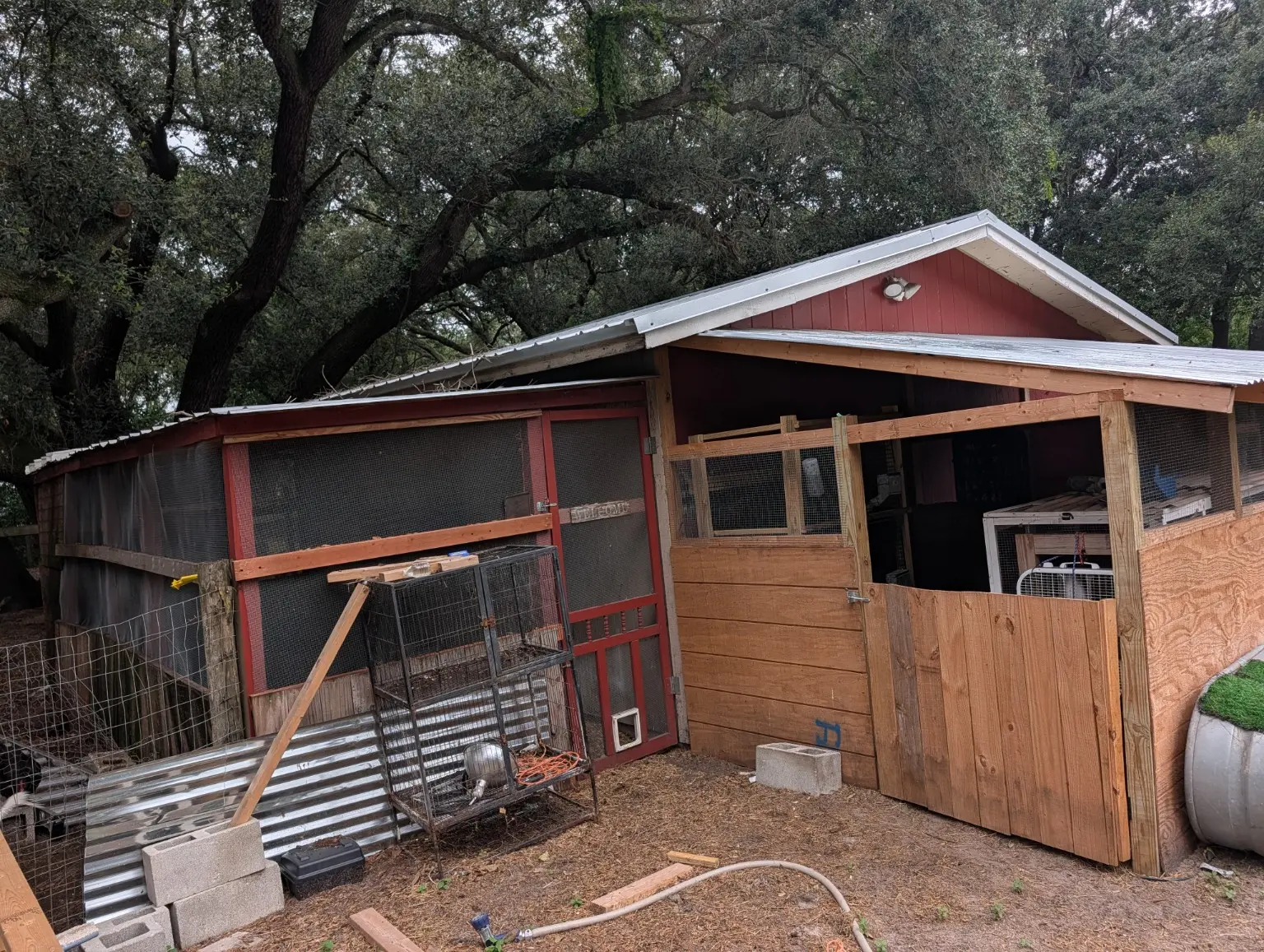
Our coop photographs show large screened sections and the surrounding shade, but a photograph cannot prove airflow. We still have to stand at bird level, notice damp litter and odor and watch where the flock chooses to roost.
Ventilation is not a tiny decorative vent and it is not the same as placing sleeping birds in the path of storm-driven rain. The practical goal is continuous fresh-air exchange with a protected high path for warm, moist air to leave.
The immediate answer
Coop Ventilation
Ventilate a Florida chicken coop by giving hot, moist air a high escape path and cooler air a safe way in, while keeping roosts dry and protected from direct storm-driven drafts. Screen openings securely and make passive airflow the foundation.
Key takeaways
What matters most
Ventilation removes heat, moisture and ammonia; it is not the same as a hard draft on roosting birds.
High openings help rising hot air escape.
Protected open wall area often matters more than a tiny decorative vent.
Hardware and screening must serve predator security as well as airflow.
Inspect the coop during hard rain and calm humid weather.
01
Create a complete air path
One small vent cannot move much air if there is no inlet. Effective passive ventilation needs an entry and an exit, with the warmest air able to rise and leave near the roof.
Place roosts so birds are not trapped in a direct wind tunnel. The goal is fresh air exchange throughout the structure, not a narrow blast across sleeping birds.
Coop airflow questions to answer
Condition
What to inspect
Common mistake
Hot sunny afternoon
Roof heat and upper exhaust
Only opening the ground-level door
Still humid night
Passive cross-flow
Depending entirely on a fan
Hard Florida rain
Protected openings and dry roosts
Closing every vent
Cold snap
Moisture removal above roosts
Sealing the coop airtight
02
Control rain without sealing in humidity
Roof overhangs, vent hoods and correctly oriented openings can block much of the rain while preserving air exchange. Observe wind-driven rain from more than one direction.
Wet bedding and persistent ammonia odor are system warnings. Remove the moisture source, correct leaks or water spills and improve exchange rather than masking the odor.
Screened openings, roof protection and shade have to work together; closing one problem can create another.
03
Screen every opening as part of predator protection
Ventilation openings are also possible access points. Fasten appropriate sturdy mesh to framing rather than relying on weak staples or loose edges. Inspect corners, roof intersections and any opening created for a fan or cord.
Fans must be rated and installed for the environment, protected from birds and dust, and wired safely. Electrical work beyond an ordinary listed plug-in setup belongs with a qualified electrician.
04
Test with your senses and simple observations
Stand at bird level during different weather. Look for condensation, damp litter, stale odor, hot roof radiation and areas where birds avoid roosting. Compare the inside and outside temperature and humidity if you have reliable instruments.
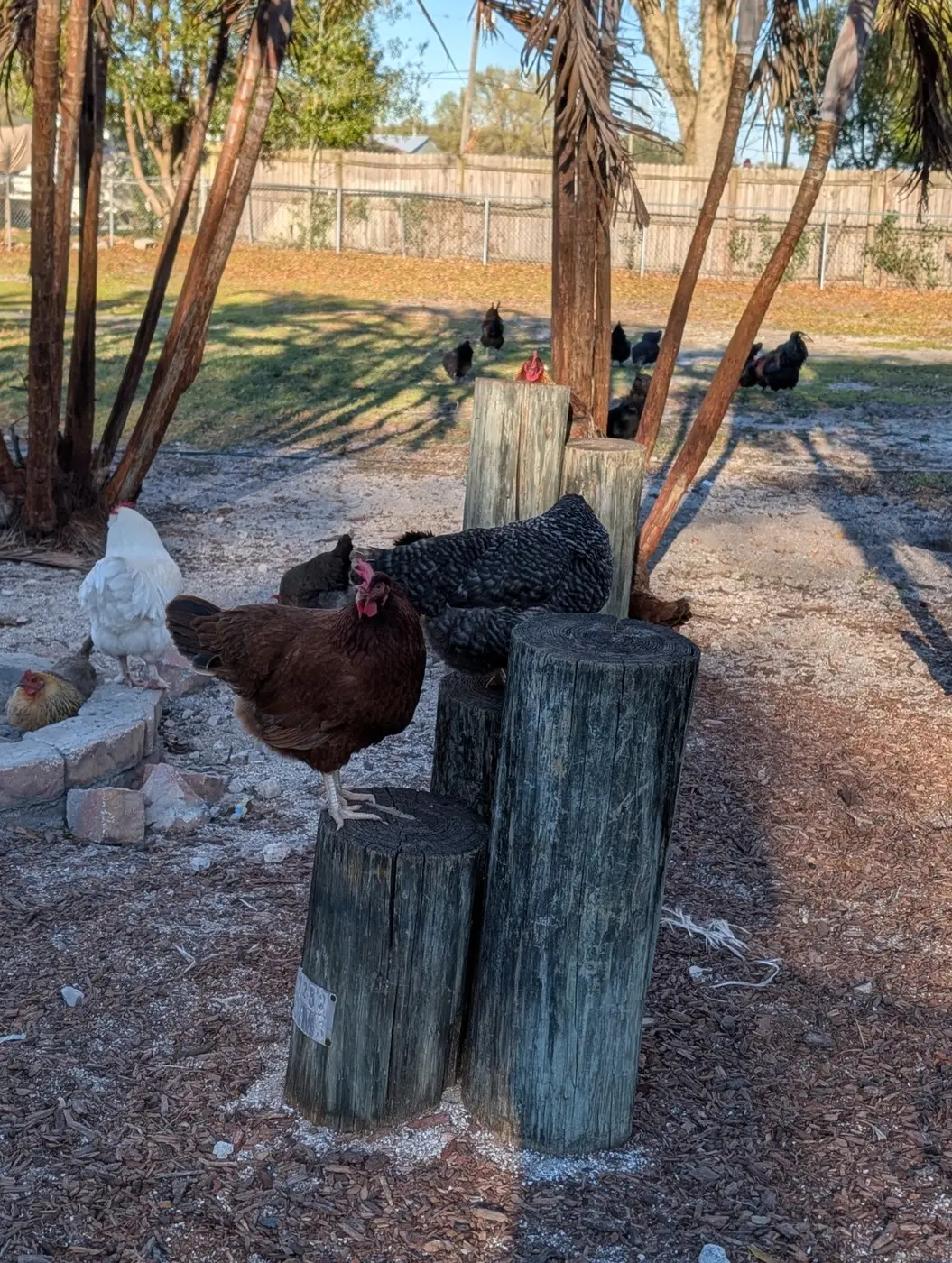
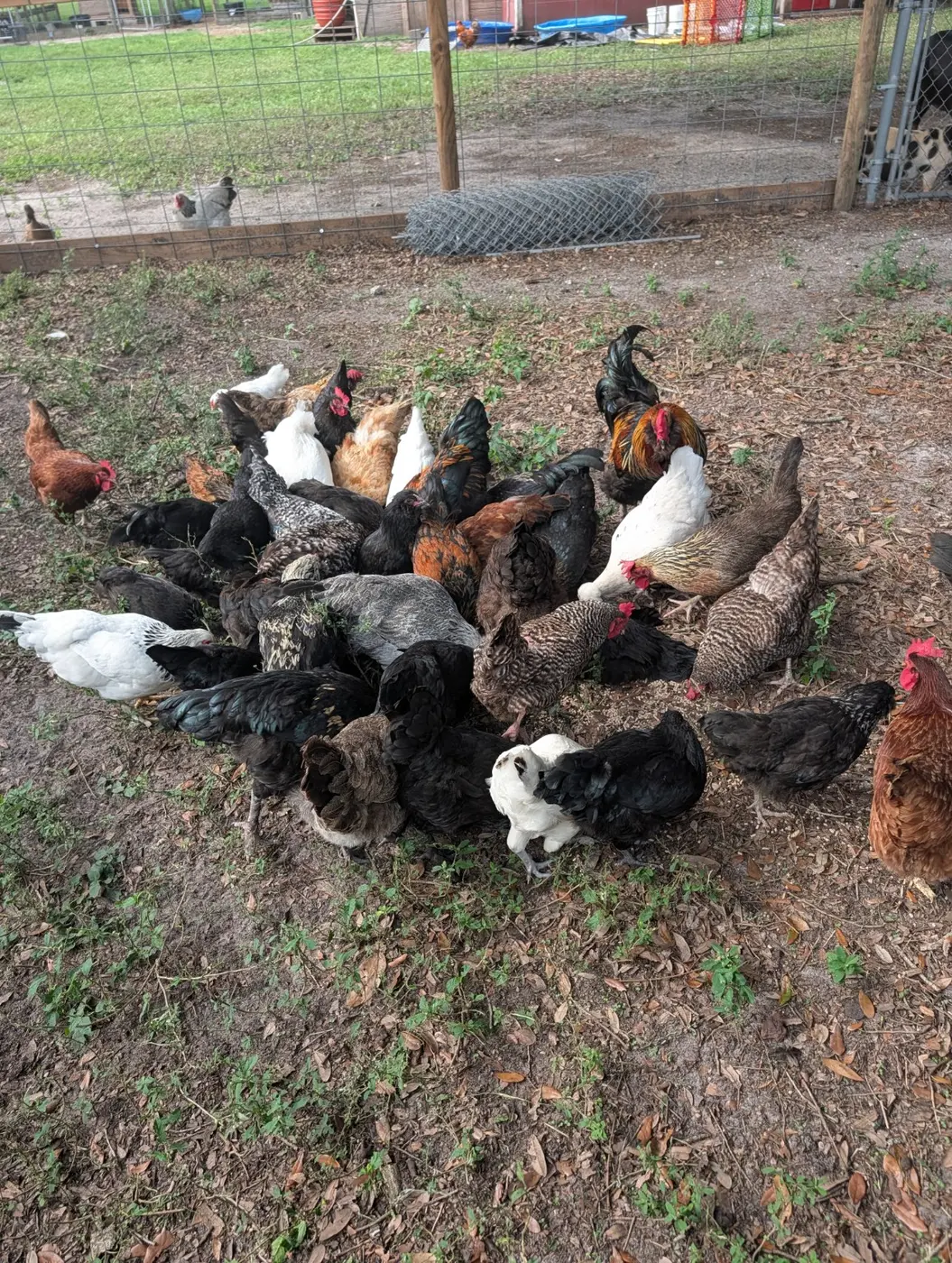
The flock’s location is useful evidence. Birds consistently crowding the doorway or refusing an enclosed roost may be telling you the inside conditions need work.
Frequently asked questions
Questions readers ask next
Can a chicken coop have too much ventilation?
Air exchange is essential, but poorly placed openings can expose birds to direct storms, wet roosts or unsafe cold drafts. Protect the roost while preserving high airflow.
Should I close coop vents during a Florida winter?
Do not seal the coop airtight. UF/IFAS emphasizes that ventilation remains important in cool weather because moisture and ammonia still accumulate.
Is a fan enough for coop ventilation?
No. A fan needs safe inlets and outlets, and power can fail. Build passive ventilation first.
How do I know the coop has an ammonia problem?
A strong ammonia odor, eye or respiratory irritation and persistently damp litter are reasons to improve cleaning, moisture control and ventilation promptly.
Supporting references
Where the outside information came from
We separate our family’s experience from outside guidance. These sources support the general information used on this page.