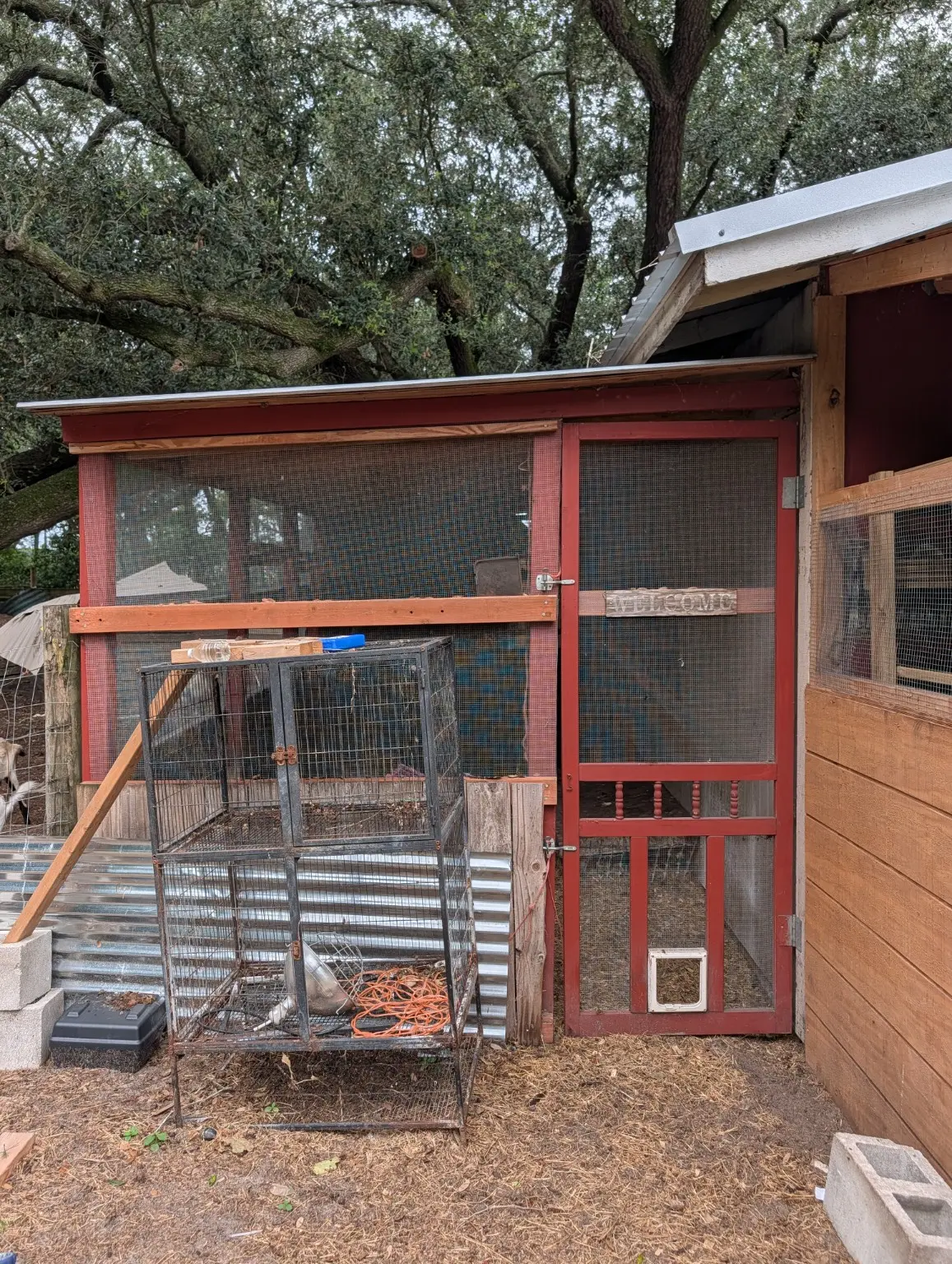
Use a Florida chicken calendar for spring repairs, summer heat, rainy-season drainage, hurricane backups, fall molt and short winter freezes.
Amanda Grimes-ShokesOwner of DiamondTrail Ranch · Florida homesteader
Published Updated 11 minute read
From our homestead
Florida chicken seasons are measured in pressure, not neat calendar boxes
Our flock moves through spring warming, long humid heat, sudden rain, tropical weather, molt and the occasional sharp cold night. Several of those pressures can overlap in the same month.
A useful calendar does not tell the birds what season it is. It reminds us to repair shade before summer, clear drainage before heavy rain, stage carriers before storms and preserve ventilation when a cold snap tempts people to close every opening.
The immediate answer
Seasonal Chicken Care
Florida chicken care changes less by four equal seasons and more by heat, rain, storms, daylight and occasional cold snaps. Build a repeatable calendar that checks shade and water before summer, drainage during rain, backups before storms, nutrition during molt and ventilation during winter protection.
Key takeaways
What matters most
Spring is the repair window before the longest heat.
Summer adds water, shade and observation checks.
Rainy season tests drainage, bedding and feed storage.
Fall molt can reduce production without automatically meaning illness.
Winter protection should not eliminate ventilation.
01
Use a Florida pressure calendar
A Florida flock may face high humidity, tropical systems and insects before it sees meaningful cold. Calendar dates help schedule inspections, but the actual weather and bird behavior decide when systems need changing.
Keep notes on shade movement, water use, feed use, egg count, molt and repairs. Year-to-year records make seasonal changes easier to recognize.
A practical Florida chicken year
Seasonal pressure
Priority checks
Prepare next
Spring warming
Roof, shade, fans, water, wire
Summer heat
Summer heat
Afternoon shade, water, panting
Storm outages
Rain and storms
Drainage, bedding, feed, closures
Repair window
Fall molt
Complete feed, feather growth, flock behavior
Cool nights
Cold snap
Dry roost, draft protection, open ventilation
Warm-up changes
02
Pair summer heat with storm redundancy
Heat plans that depend on grid power need a failure plan. Keep passive ventilation, non-electric water options and a written method for securing birds when wind and rain make normal chores unsafe.
Before a tropical system, check roofs, loose objects, feed supply, water storage, carriers, records and the route another adult would use to cover chores.
03
Expect production to change with molt and daylight
Hens may lay fewer eggs during molt, heat, stress or shorter days. Track the whole flock and compare production with feather condition, feed intake, age and behavior.
Do not force a diagnosis from a low egg count. Sudden changes paired with illness signs deserve veterinary or extension guidance.
Feather condition, behavior and the egg basket together provide more context than one daily egg count.
04
Protect from cold without trapping moisture
UF/IFAS notes that mature chickens in many Florida conditions do not need supplemental heat, while ventilation remains important during cool weather. Block direct wind and keep roosts dry without sealing the coop airtight.
Inspect water during freezes and watch combs, wattles and vulnerable birds. Use listed equipment according to its instructions and treat heat-lamp fire risk seriously.
Frequently asked questions
Questions readers ask next
Do Florida chickens need heat in winter?
Many healthy, fully feathered adult chickens can handle typical Florida cool weather with a dry, ventilated, draft-protected coop. Extended freezes and vulnerable birds require individual planning.
Why do hens stop laying in fall?
Molt, shorter daylight, age, nutrition, stress and health can all affect production.
What should I do before a hurricane?
Follow local emergency instructions and prepare secure shelter, water, feed, carriers, records, backup care and a safe post-storm inspection plan.
Should I close the coop before a tropical storm?
Birds need secure protection from wind and debris, but the structure must still provide safe ventilation. Follow current local emergency guidance and avoid unsafe last-minute work.
Supporting references
Where the outside information came from
We separate our family’s experience from outside guidance. These sources support the general information used on this page.