Starting Backyard Chickens in Florida: Build the System First
Start a Florida backyard flock with the coop, shade, ventilation, water, predator protection, feed storage and local-rule checks ready before the birds arrive.
Amanda Grimes-ShokesOwner of DiamondTrail Ranch · Florida homesteader
Published Updated 13 minute read
From our homestead
The chickens are the easy part to fall in love with
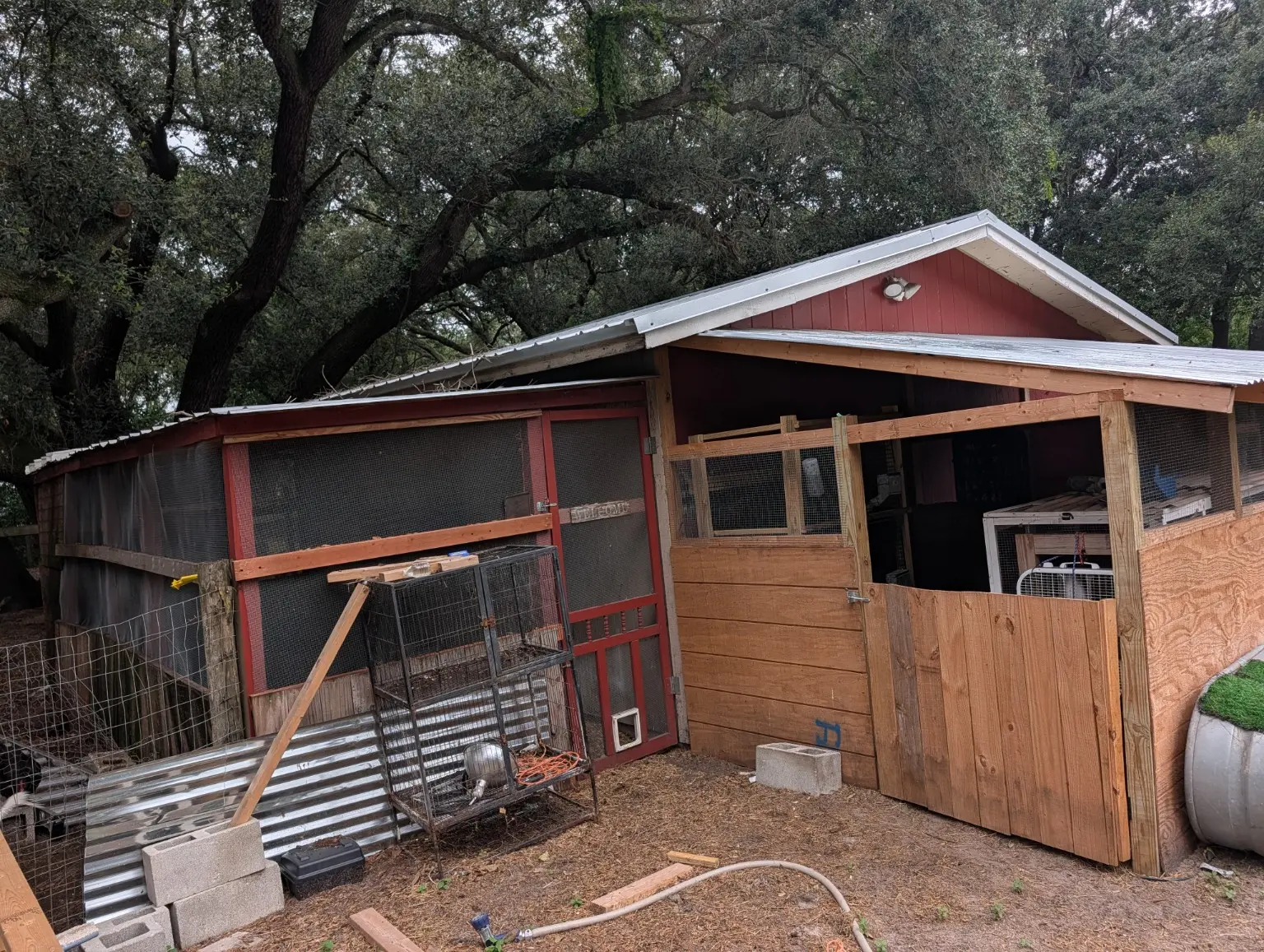
The feed-store chick bin makes the beginning look small. The real beginning is an adult coop, afternoon shade, water that still works in August, dry feed, secure latches and a routine someone can cover when the usual caretaker is away.
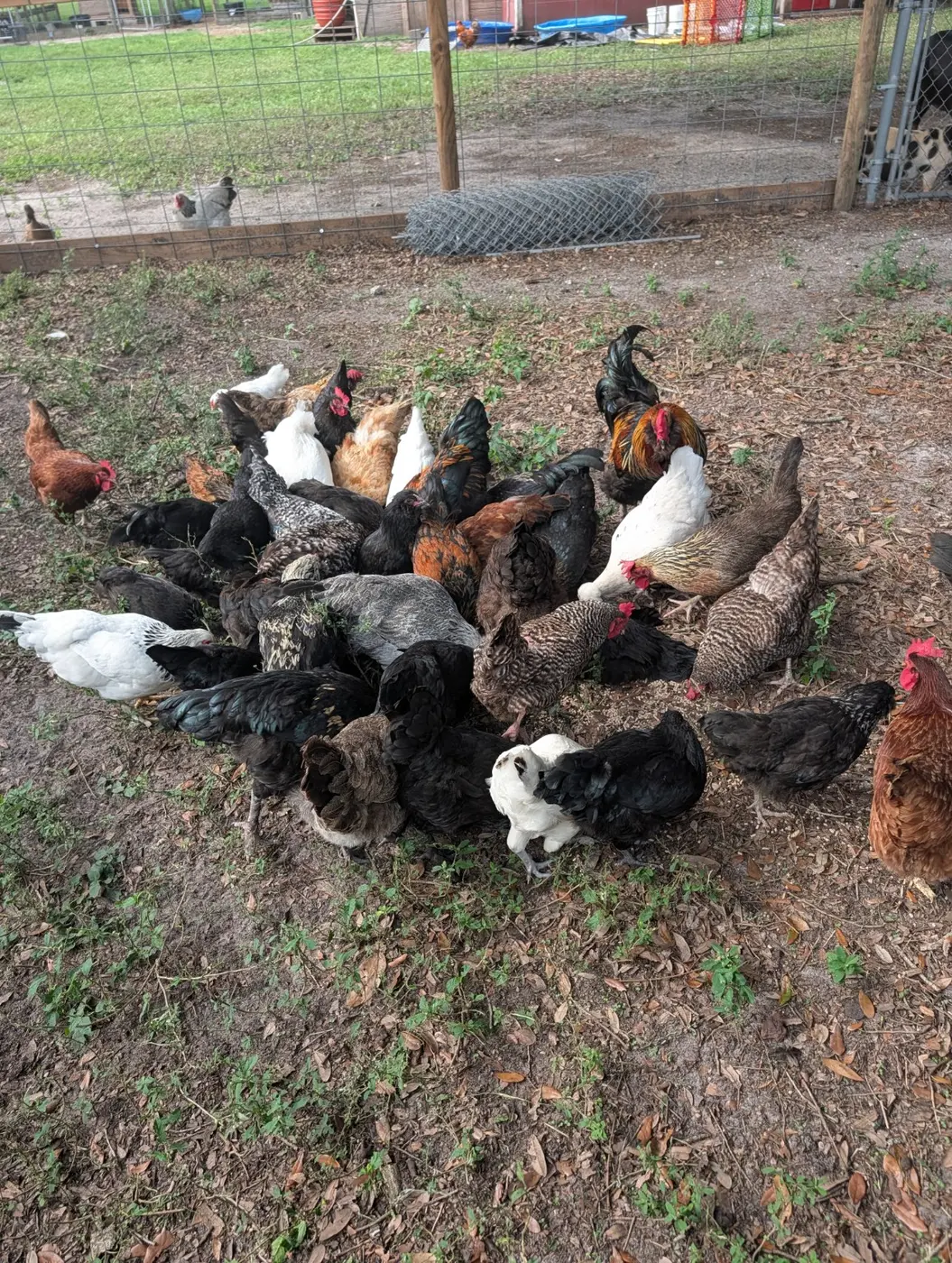
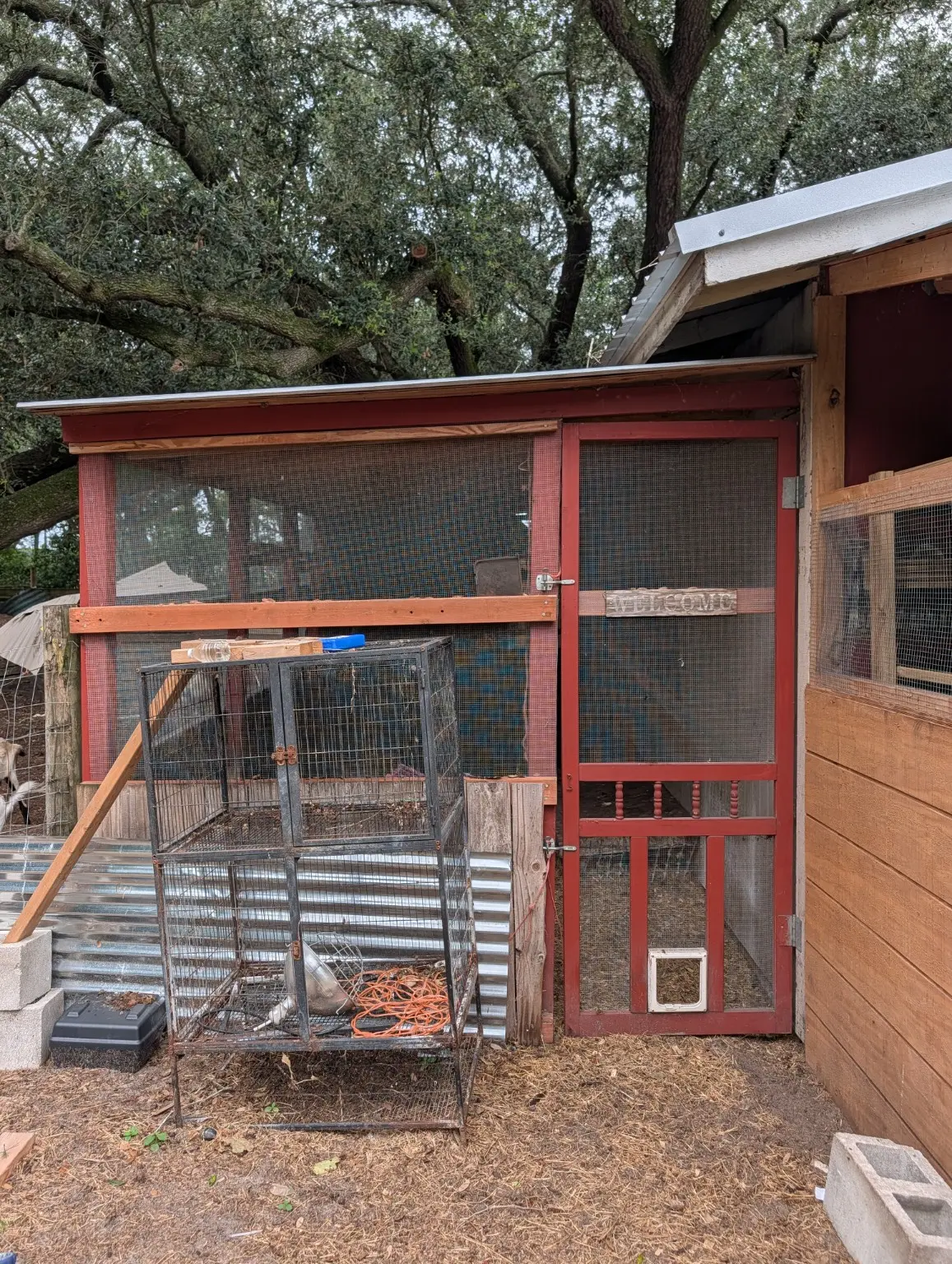
Our Florida flock uses a property shared with ducks, goats and other animals. That has made gates, feed storage, water routes and separation space just as important as the birds themselves. The mixed-flock photograph on this page shows the result; it does not show all the systems that had to exist first.
Start with fewer birds than the maximum you imagine. The first rainy season and first hot spell will show what the layout needs before more chickens make every weak point busier.
The immediate answer
Starting Chickens in Florida
The safest way to start backyard chickens in Florida is to build for adult birds and Florida weather before buying chicks: confirm local rules, create a dry and ventilated coop, secure the full enclosure, provide deep shade and redundant water, store feed dry and identify veterinary and extension help.
Key takeaways
What matters most
Check city, county, HOA and deed restrictions before buying birds.
Design for adult flock size, summer heat and wet-season drainage.
Chicken wire contains birds; stronger materials and closures address many predators.
A second water container buys time when heat or equipment creates a failure.
Start with fewer birds than the property could theoretically hold.
01
Answer the property questions before choosing birds
Florida chicken rules are local as well as state-level. A county address can still fall inside a municipality, and private HOA or deed restrictions may be more limiting than a county ordinance. UF/IFAS recommends checking the rules for the exact area, including possible limits on bird numbers, roosters, setbacks and coop requirements.
Then walk the property in afternoon sun and after heavy rain. The convenient empty corner may be the hottest or wettest place on the lot. A useful chicken area needs shade, drainage, water access, feed access and a safe route for daily cleaning.
Confirm whether hens, roosters and on-site egg sales are treated differently.
Measure the actual enclosure instead of estimating from the yard.
Choose a location that can be reached during rain, darkness and an outage.
Keep a temporary isolation space available before it is urgently needed.
02
Build the adult housing and chore system
Chicks are small for a short time. The coop, roosts, nest boxes, run, latches and feeders need to work for mature birds. Ventilation should release heat, moisture and ammonia without placing resting birds in a harsh direct draft.
Design the cleaning route at the same time as the shelter. If wet bedding, dirty water and manure cannot be removed without flooding the feed area or carrying everything through the house, routine care will become harder than it needs to be.
The system to prepare before chickens arrive
System
Florida question
Failure to avoid
Shade
Where is the deep afternoon shade?
A coop that becomes the hottest place
Airflow
Where can hot, moist air escape?
Closing every opening to stop rain
Water
What works if one container tips or clogs?
One unverified water point
Security
Can a raccoon manipulate the latch?
Depending on daytime fencing at night
Feed
Will humidity or rodents reach it?
Long storage in a damp structure
Build the adult housing before brooder growth or an impulse purchase sets the deadline.
03
Make the daily routine obvious
Every day needs an eyes-on water check, feed check, bird count and quick scan for changes in posture, breathing, movement, droppings and appetite. Automatic equipment reduces labor but does not replace verification.
Collect eggs often, remove broken eggs and keep nest areas clean. CDC guidance also emphasizes handwashing after handling birds, eggs or equipment, dedicated outdoor footwear and keeping poultry equipment out of food-preparation areas.
Morning: count, release safely, verify water flow and inspect feed.
Hot afternoon: recheck shade, panting, water and crowding.
Evening: collect eggs, count again and secure every closure.
Treat the first month as observation, not expansion
A new flock reveals where water splashes, which area stays damp, how much feed disappears and whether birds crowd one shade patch. Fix those findings before adding more birds or another species.
Keep purchase records and identify the source of every bird. USDA recommends hatcheries participating in the National Poultry Improvement Plan, while basic biosecurity includes limiting unnecessary traffic, cleaning shared equipment and separating new or questionable birds.
Watch the ranch story
Backyard Chickens & Ducks at DiamondTrail Ranch
Our poultry playlist shows the birds, coops, egg routines and everyday Florida flock work behind these written guides.
The written guide on this page contains the practical summary. The YouTube player provides caption controls when captions are available.
How many chickens should a Florida beginner start with?
Start with a number your completed coop, run, water system, budget and daily schedule can support. Local limits and the birds’ adult space matter more than a universal number.
Can chickens live outside year-round in Florida?
Adult chickens can live outdoors with appropriate shelter, shade, ventilation, dry resting areas and weather planning. Chicks and vulnerable birds have different needs.
Do I need a rooster for hens to lay eggs?
No. Hens lay eggs without a rooster. A rooster is required only for fertile eggs, and local rules may restrict roosters.
Where should I check local chicken laws?
Check the county and municipality for the exact property, plus any HOA or deed restrictions. Ask specifically about bird numbers, roosters, setbacks, structures and sales.
Supporting references
Where the outside information came from
We separate our family’s experience from outside guidance. These sources support the general information used on this page.