Use a life-stage ration, protect it from Florida humidity, keep water dependable and treat treats and scratch as additions, not the diet.
Amanda Grimes-ShokesOwner of DiamondTrail Ranch · Florida homesteader
Published Updated 10 minute read
From our homestead
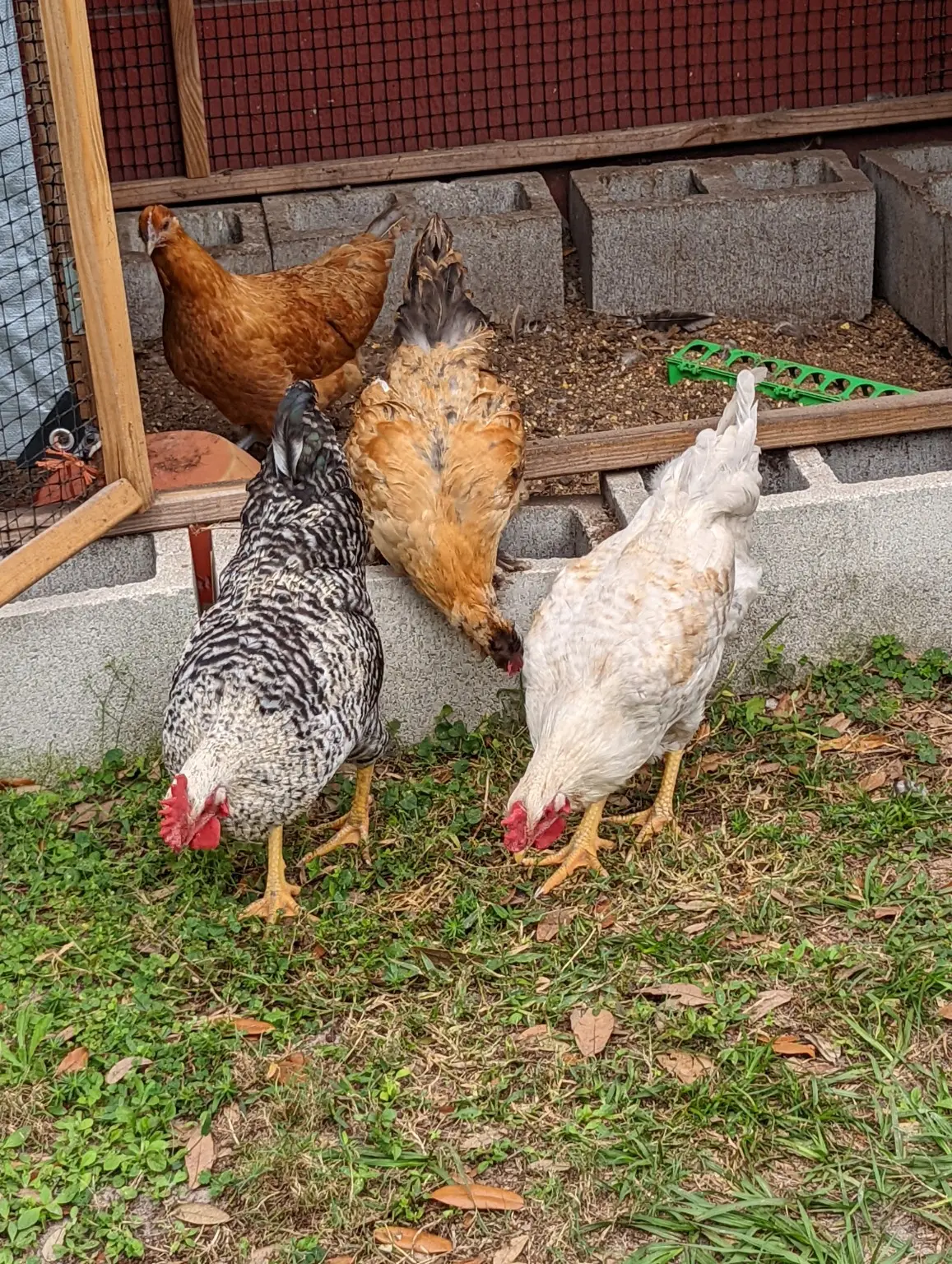
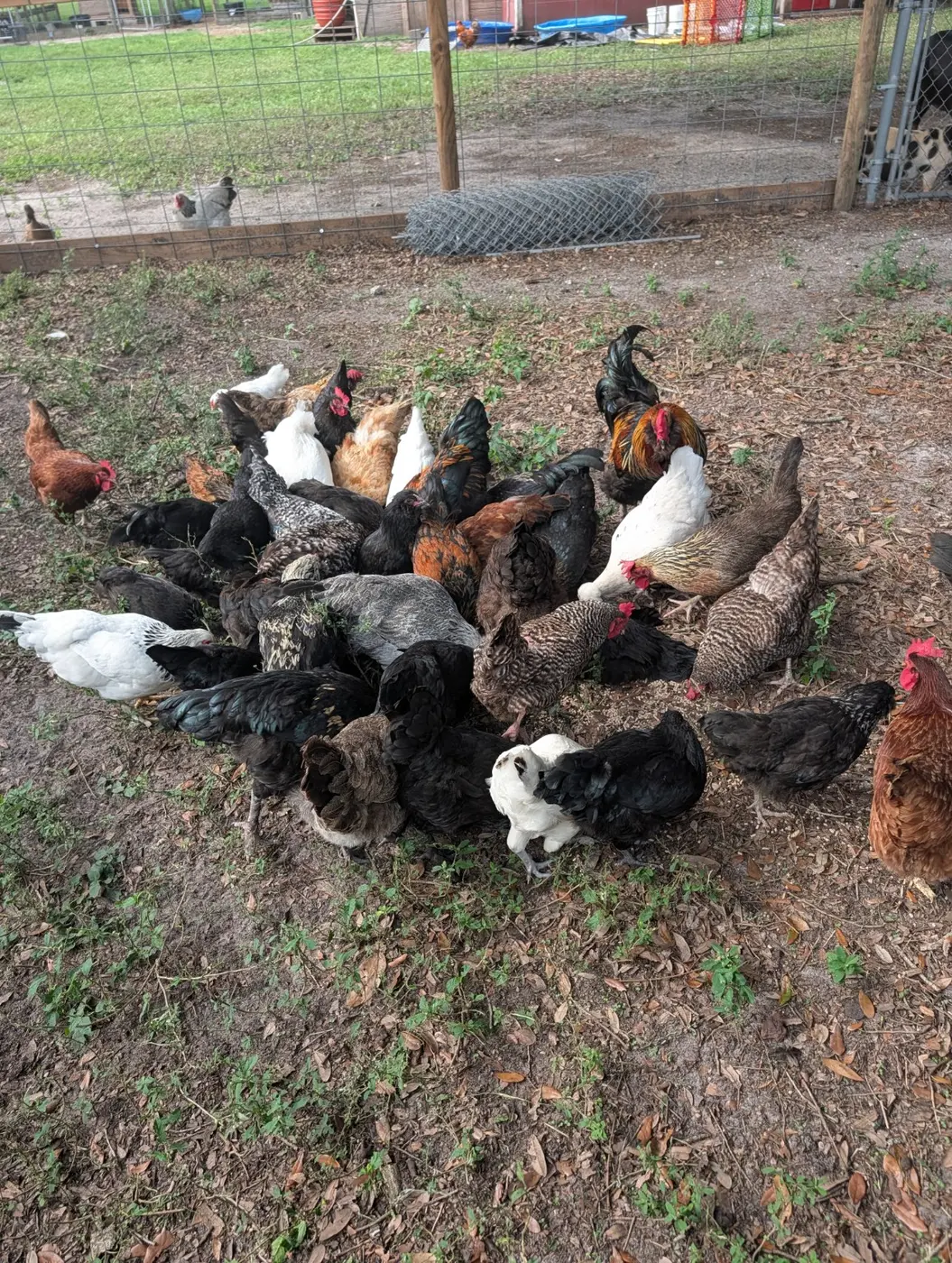
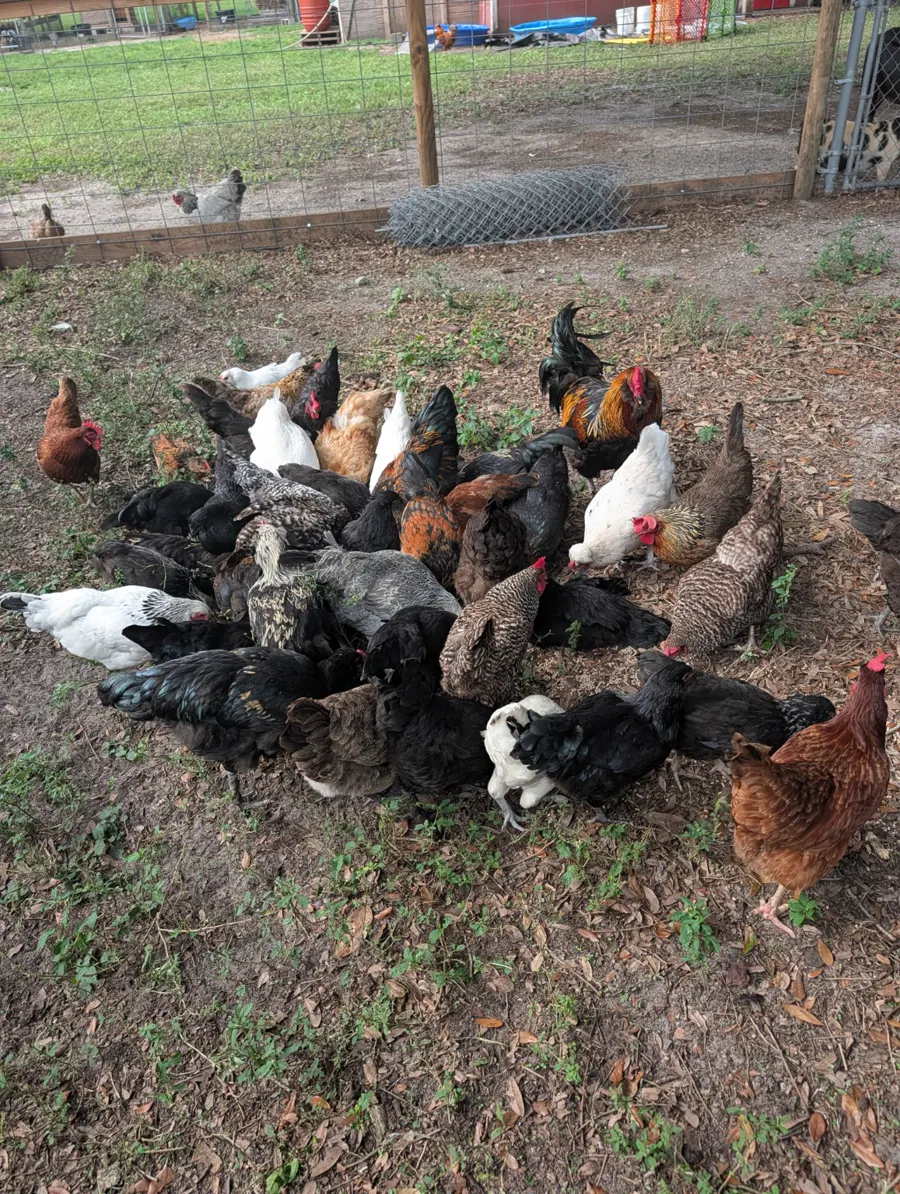
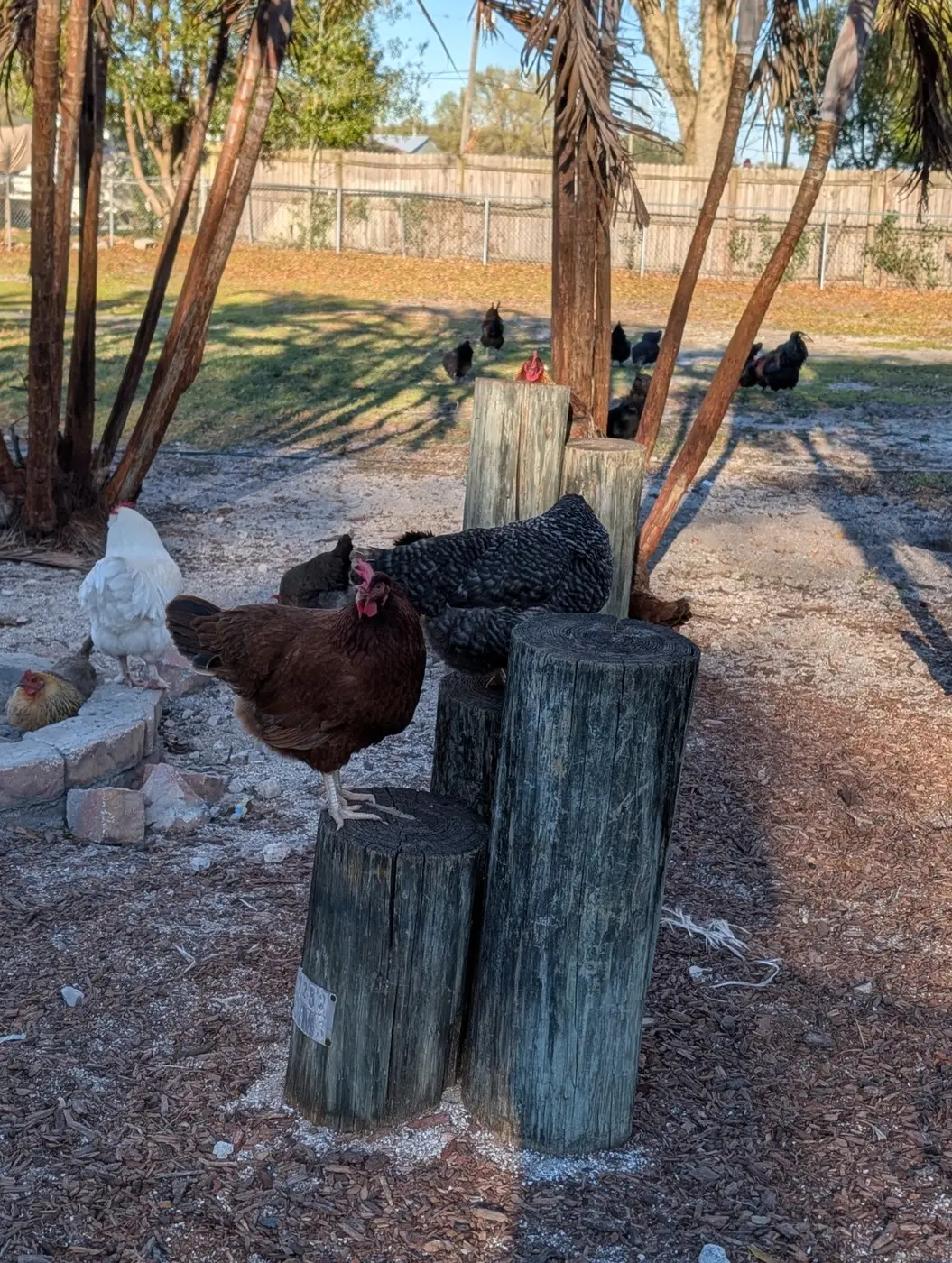
A busy feeding photo does not show whether the ration is balanced
Our flock gathers quickly when food appears, but enthusiasm is not a nutrition plan. The daily foundation is a complete ration for the bird’s life stage, stored dry and offered where every bird can reach it without one group controlling the feeder.
Florida heat and humidity add two quiet problems: birds may shift when they eat, and feed can take on moisture before the bag looks obviously ruined. Water, storage and intake observations belong beside the feed label.
The immediate answer
Feeding Florida Layers
Feed Florida laying hens a complete poultry ration made for their age and production stage, keep it dry and fresh, provide constant clean water and avoid diluting the balanced diet with too many treats or scratch grains. A sudden intake change is a reason to investigate.
Key takeaways
What matters most
Life-stage feed matters more than a homemade ingredient list.
Heat often changes when and how much birds eat.
Water failure can affect intake and production quickly.
Florida humidity can damage stored feed before the bag is empty.
Shell concerns can involve nutrition, stress, age or health and should not be diagnosed from one egg.
01
Let a complete ration do the nutritional work
Commercial complete feeds are formulated for chick, grower, all-flock or laying stages. The label matters. Feeding layer ration to birds that are not laying or mixing species and ages can require a different plan.
Scratch and kitchen treats are not complete feeds. Large additions can displace the protein, vitamins and minerals the ration was designed to provide.
Multiple breeds and sizes can share a feeding area, but the caretaker still has to verify that timid birds can reach the complete ration.
02
Connect feed intake to heat and water
Birds often shift more eating to cooler hours. Keep the ration available according to your system and watch actual intake instead of forcing a universal feeding clock.
Water supports every part of the system. A hen that cannot reach clean water may also reduce feed intake and laying. Verify flow and give the flock more than one drinking point.
03
Buy only what Florida storage can protect
Keep bags and bins under a sound roof, off damp floors and away from rain splash. Retain the feed label and lot information, rotate older feed first and inspect for moisture, clumps, insects, mold or unexpected odor.
Do not disguise questionable feed by mixing it with a fresh bag. Contact the manufacturer or an appropriate professional when a product seems compromised.
04
Investigate changes instead of adding random supplements
Reduced laying, thin shells or a flock eating less may involve age, molt, daylight, heat, stress, parasites, disease, diet or resource competition. One sign does not identify the cause.
Check feed label, freshness, water, access, weather and flock behavior. Persistent or severe changes belong with a poultry veterinarian or extension professional rather than an escalating stack of unverified supplements.
Frequently asked questions
Questions readers ask next
Do laying hens need oyster shell?
Many keepers offer an appropriate calcium source separately so laying birds can consume it as needed. Follow the feed label and qualified poultry guidance for your flock.
Can chickens eat only scratch grain?
Scratch grain is not a complete poultry ration and can dilute balanced nutrition when overfed.
Does Florida heat spoil chicken feed?
Heat and humidity increase storage pressure. Moisture, pests and long storage can damage feed; keep it dry, rotated and inspected.
Why did my hens stop eating?
Heat, water access, spoiled feed, stress, illness and other problems can reduce intake. Compare the whole flock, verify the basics and seek qualified help for persistent or severe change.
Supporting references
Where the outside information came from
We separate our family’s experience from outside guidance. These sources support the general information used on this page.