Build against climbing, digging and flying threats
How to Predator-Proof a Chicken Coop in Florida
Protect Florida chickens with a secured roof, sturdy mesh, backed-up latches, digging protection, clean feed storage and a nightly hands-on enclosure check.
Amanda Grimes-ShokesOwner of DiamondTrail Ranch · Florida homesteader
Published Updated 10 minute read
From our homestead
The flock is only as secure as the weakest small opening
On a mixed-species homestead, a fence that keeps a chicken in is not automatically a barrier that keeps every predator out. Night security depends on the roof, mesh, digging edge, door frame and latch working together.
We inspect after weather and ordinary wear because wood shifts, soil moves and a closure that felt tight last month can loosen. Predator-proof is a maintenance goal, not a permanent product label.
The immediate answer
Florida Predator Protection
A Florida chicken enclosure needs protection on all six sides: walls, roof, floor or digging edge, doors and every small opening. Use sturdy attached mesh, closures a raccoon cannot manipulate, secure birds before dark and remove feed or clutter that attracts rodents and larger predators.
Key takeaways
What matters most
Chicken wire is mainly containment, not a complete predator barrier.
Raccoons test latches and reach through openings.
Hawks and owls make an uncovered run vulnerable.
Digging pressure must be addressed at the perimeter.
A nightly physical check matters more than assuming an automatic door closed.
01
Plan for the way each predator enters
Florida poultry owners may encounter raccoons, snakes, rats, hawks, owls, foxes, coyotes, bobcats, dogs and other opportunistic animals. The right defense depends on whether the threat reaches, climbs, digs, squeezes, flies or pushes.
UF/IFAS identifies secure structures, covered runs, nighttime confinement, attractant removal and repeated inspection as core defenses. No material removes the need to check it after weather, rust or an animal encounter.
Match the weak point to the likely behavior
Pressure
Weak point
Practical response
Reaching or pulling
Large mesh beside roosts
Sturdy small-opening barrier
Latch manipulation
Simple hook or sliding bolt
Two-step or backed-up closure
Digging
Open soil at fence edge
Buried or outward apron system
Flying or climbing
Open run top
Secure roof or attached overhead barrier
Squeezing
Roof gaps and door corners
Inspect and close every small opening
02
Attach materials to structure, not hope
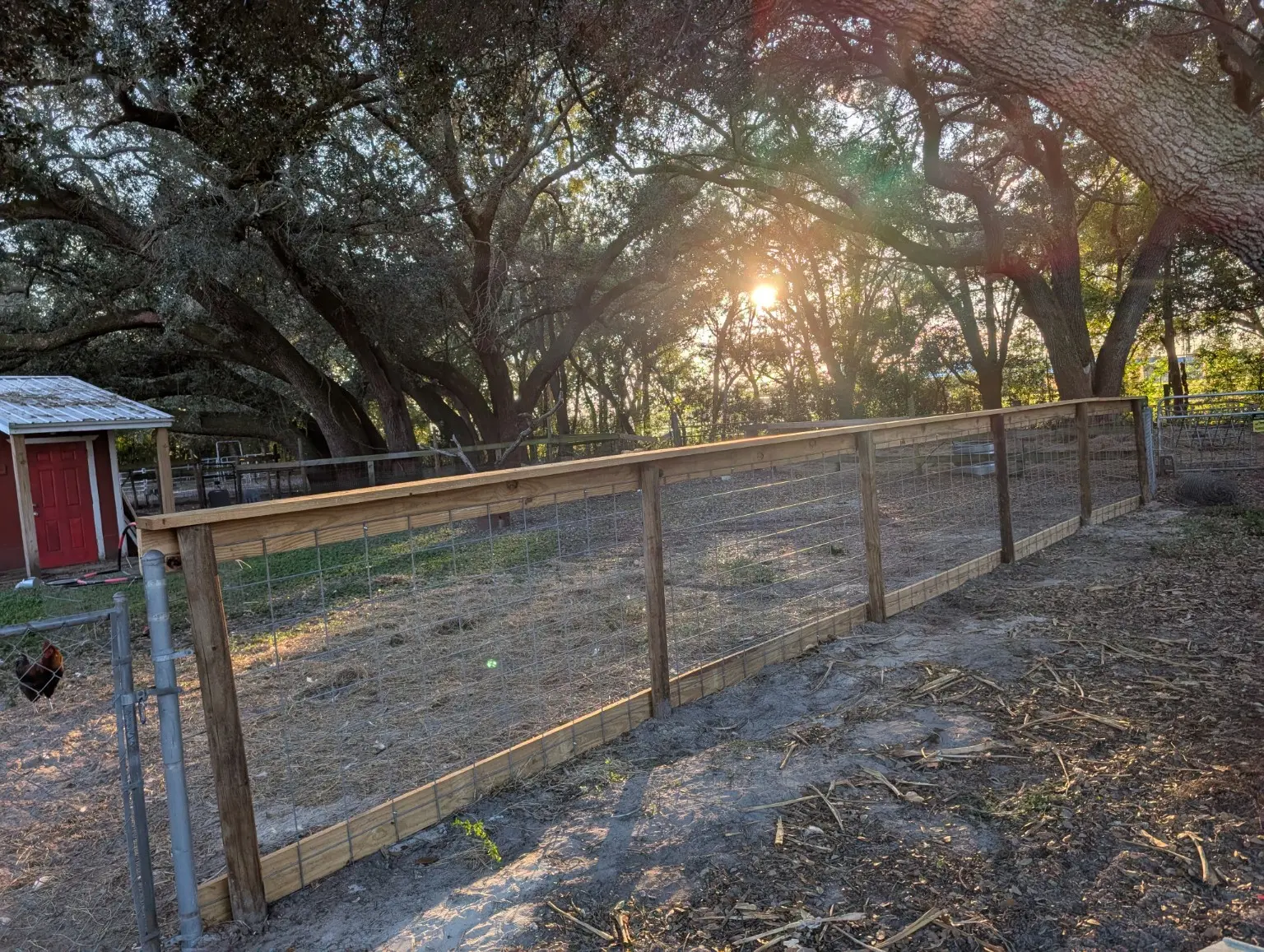
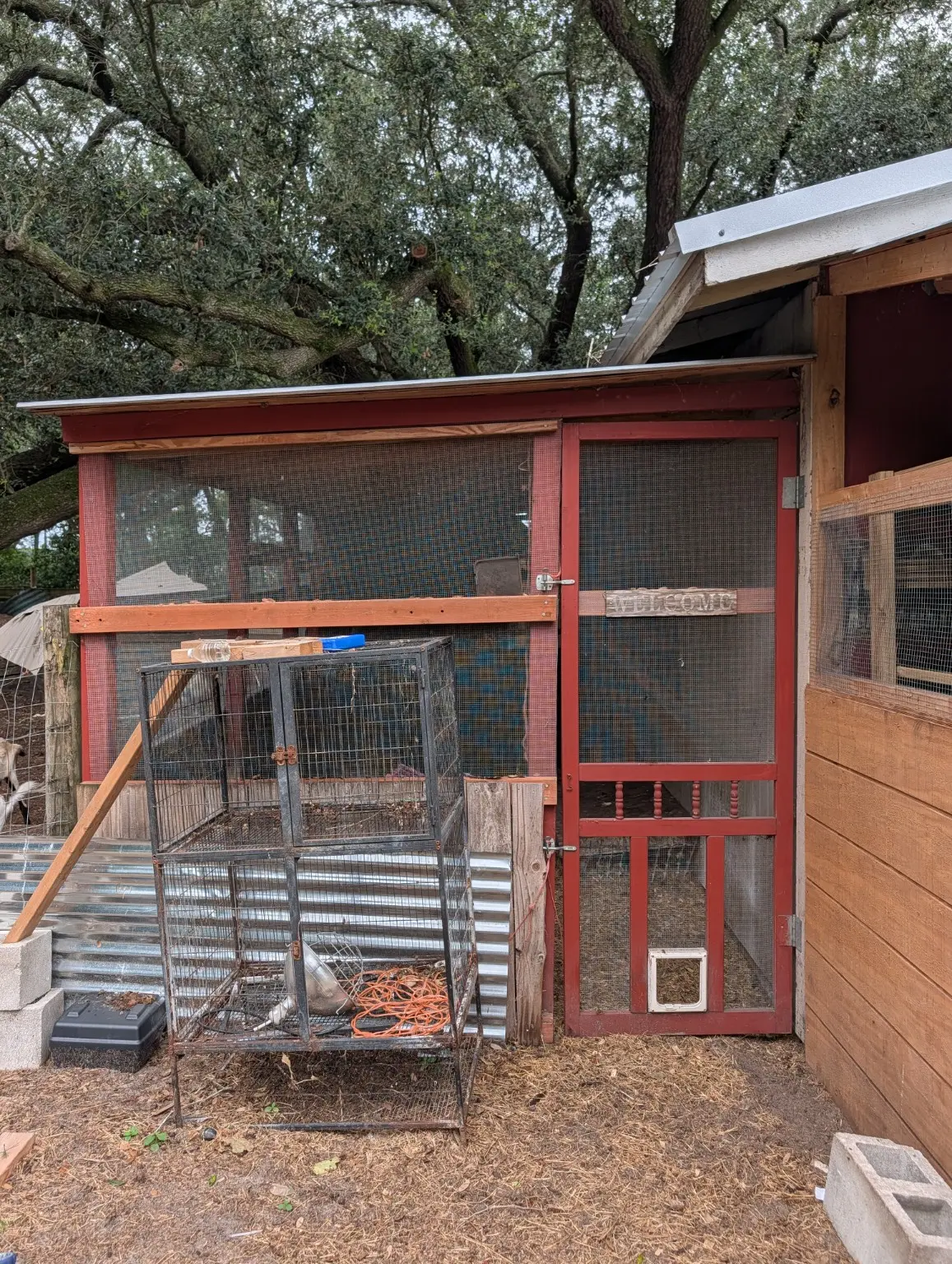
Sturdy mesh is useful only when edges, overlaps and fasteners remain connected to solid framing. A strong panel beside a weak door or loose roof corner still leaves one path in.
Inspect weathered wood, rusted fasteners and stretched wire. Florida humidity, storms and vegetation can hide gradual failure.
Every screened panel, door edge and roof joint is part of the nighttime enclosure.
03
Use a close-and-count evening routine
Bring birds into the secure sleeping area before the night predator window, count them and touch or visually confirm each critical closure. Automatic doors can help, but tracks, debris, a weak battery or one bird outside can defeat the routine.
Keep a flashlight and repair supplies in a permanent location. A damaged corner found after dark needs a safe temporary response, not a search for tools.
04
Reduce the reasons predators stay
Spilled feed attracts rodents, and rodents attract snakes and larger predators. Store feed dry and pest-resistant, clean spills and avoid creating brush or debris pockets directly against the enclosure.
Trail cameras can reveal timing and behavior, but they do not replace physical security. Use what you learn to repair the route instead of only documenting repeat visits.
Frequently asked questions
Questions readers ask next
Is chicken wire predator-proof?
It can contain chickens, but many poultry keepers use sturdier small-opening mesh and stronger framing where predator resistance is required.
Do I need to cover the chicken run in Florida?
An overhead barrier addresses flying and climbing threats and can add weather protection. Its design must remain secure and adequately ventilated.
What kind of latch stops raccoons?
Use a closure that requires more than one simple pull or slide and that remains secure under shaking. Test it deliberately and inspect it often.
Will free-ranging protect chickens by giving them escape space?
Free-ranging changes the risk but does not remove aerial, ground or roaming-dog threats. Supervision and a secure retreat still matter.
Supporting references
Where the outside information came from
We separate our family’s experience from outside guidance. These sources support the general information used on this page.